

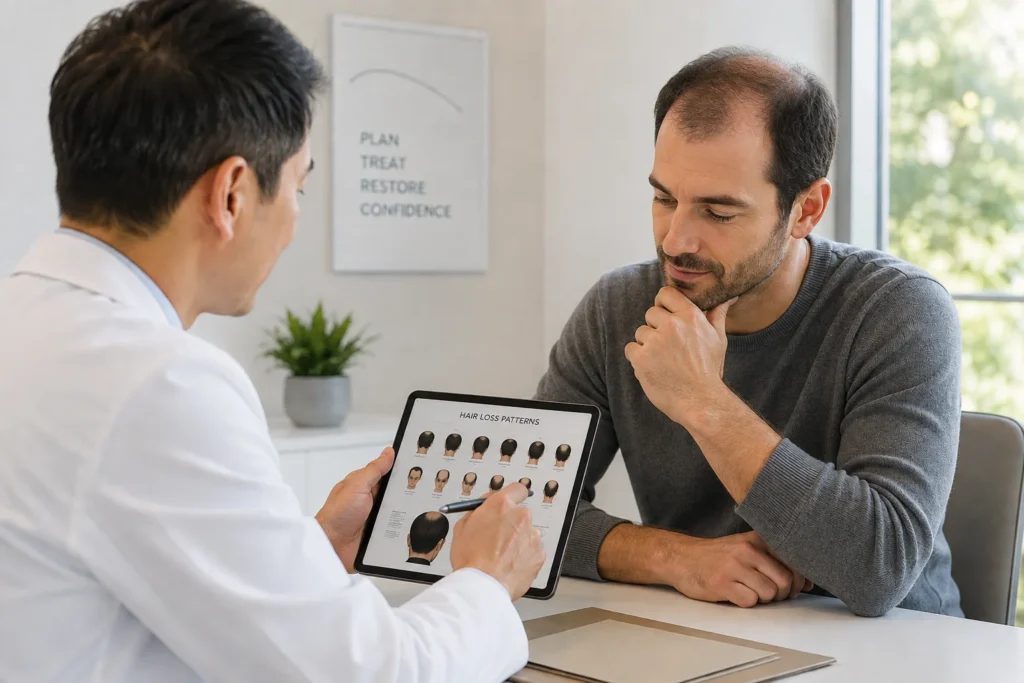
If you’re wondering “When should you get a hair transplant?”, you are not alone.
The best time to get a hair transplant is when your hair loss pattern has stabilized, you have adequate donor hair, and a qualified hair restoration surgeon has confirmed you are a good candidate. For most men, this occurs around age 25 or older, although candidacy depends more on hair loss stability than age alone.
You may be a good hair transplant candidate if:
- Your hair loss has remained stable for at least 6 to 12 months
- You have a healthy donor area with sufficient hair density
- You are 25 or older, or have documented hair loss that a qualified surgeon agrees warrants treatment
- You are generally healthy with no unmanaged thyroid, hormonal, or autoimmune conditions
- You have realistic expectations about results and the hair transplant timeline
The best hair transplant candidates typically have stable hair loss, adequate donor hair density, realistic expectations, and no active scalp disorders that could affect healing or graft survival. For men, this often corresponds to Norwood Stage III or higher, although candidacy is determined through consultation and donor area assessment.
Approximately two-thirds of American men experience some degree of hair loss by age 35, making hair restoration one of the most sought-after cosmetic procedures. However, timing is critical. Male pattern baldness can begin as early as 18. Undergoing surgery too early can lead to unnatural-looking results and future donor limitations, while waiting until the appropriate stage often produces the most natural and long-lasting outcome.
This guide explains the ideal age for a hair transplant, how surgeons determine candidacy, when to try medical treatments first, what older candidates can expect, and how to decide whether now is the right time to schedule a consultation.
What Is the Best Age for a Hair Transplant?
There is no single perfect age for a hair transplant. The best age for most patients depends on whether:
- Hair loss has stabilized
- The donor area is strong
- Medical causes of hair loss have been ruled out
- Long-term hair restoration goals have been established
- Future hair loss has been considered during planning
- Overall health
Ideal candidates are between ages 25 and 40 because hair loss patterns are often more predictable by that stage. However, healthy patients in their 50s or 60s+ with a stable pattern of hair loss can also be excellent candidates and achieve outstanding results.
Age matters in hair transplant planning. A 22-year-old with noticeable thinning may look very different at 35, and any transplant performed today has to account for that future state.
The Norwood Scale classifies male pattern hair loss. Patients in Stages III through V are often strong surgical candidates when their hair loss is stable. Patients in Stages I and II may benefit from medical therapy first, while Stage VI and VII cases require careful donor planning.
Younger patients aged 18 to 24 are often still actively progressing, meaning a hair transplant performed now may look patchy within five years as surrounding native hair continues to recede. Most surgeons recommend waiting until hair loss patterns have stabilized, typically around age 25 or older.
If you’re in your late teens or early 20s, what looks like a receding hairline may actually be a naturally maturing hairline. A normal adult hairline settles slightly higher than your childhood hairline. This is not ongoing loss and is easily mistaken for early-stage androgenetic alopecia. A consultation can determine whether true androgenetic alopecia is present or whether the hairline is simply transitioning into its adult position.
Hair loss is not exclusively a male concern. According to UCLA Health, approximately 40% of women notice hair thinning by their 50s, making that decade common for female candidacy. Women are assessed using the Ludwig Scale rather than the Norwood Scale, which maps diffuse thinning patterns more accurately.
Medications such as finasteride and minoxidil are often used in the months before surgery to maintain stability and protect surrounding native hair after the procedure.
The Norwood Scale
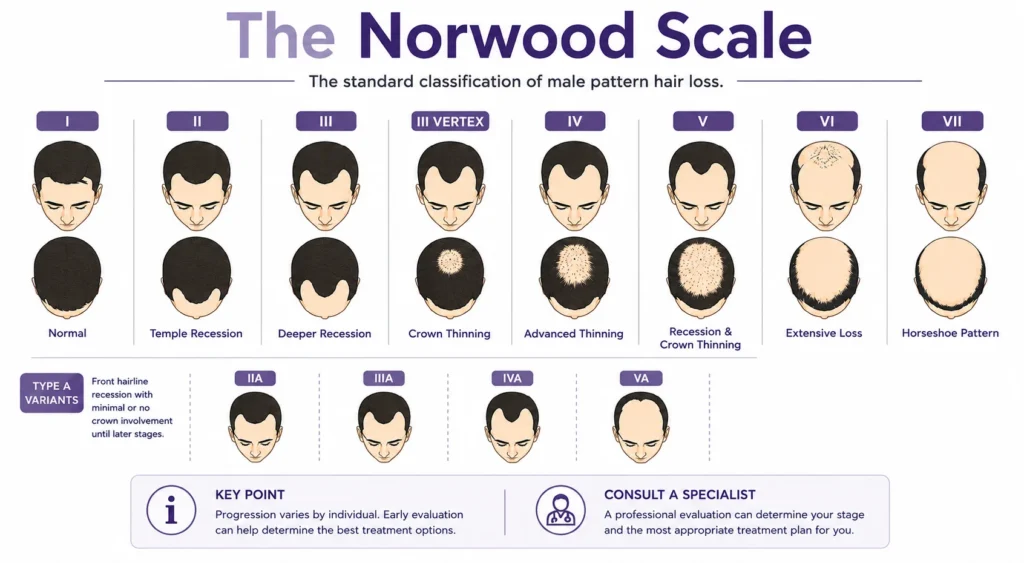
The Norwood Scale runs from Stage I (no recession) to Stage VII (horseshoe band of hair remaining). Patients with stable Stage III to Stage V hair loss are often the strongest candidates for hair transplantation. In contrast, those with early-stage hair loss may benefit from medical therapy before surgery.
Hair loss progression varies by individual, and a professional evaluation can confirm your stage and pattern.
How Surgeons Determine Candidacy
- Norwood or Ludwig classification
- Donor hair quality and density
- Donor-to-recipient area ratio analysis
- Scalp imaging and miniaturization analysis
- Medical history
- Future hair loss risk and long-term restoration goals
Am I Too Young for a Hair Transplant?

Most surgeons advise against hair transplants before age 25 to 30 unless hair loss is advanced and clearly stable. The risk for younger patients is that transplanted hair is permanent, but surrounding native hair will continue to shed. This creates an unnatural island of density surrounded by progressive thinning, which is cosmetically unattractive and difficult to correct.
Multi-phase possibility. Younger patients may require additional procedures later as hair loss progresses. Each person has a finite number of grafts available from the donor area; using grafts too aggressively early can restrict future options.
Whether 27 is too early for a hair transplant depends on hair loss stability, not age alone. A 27-year-old with a stable Norwood III pattern may be a good candidate. A 27-year-old who has been losing hair for six months is not.
Learn more about who is not a good candidate for a hair transplant in our guide!
Red Flags When Choosing a Hair Transplant Clinic
- No discussion of future hair loss progression or long-term hair loss planning
- Aggressive sales tactics
- Promises “permanent results”
- Guaranteed graft counts
- Ultra-low pricing
- Consultations conducted by sales personnel
Before Surgery: The 12 to 24 Month Medical Therapy Window
Patients who are borderline candidates, particularly those under 30, may benefit from completing a 6 to 12 month trial of medical treatments before surgery. This step is often underemphasized.
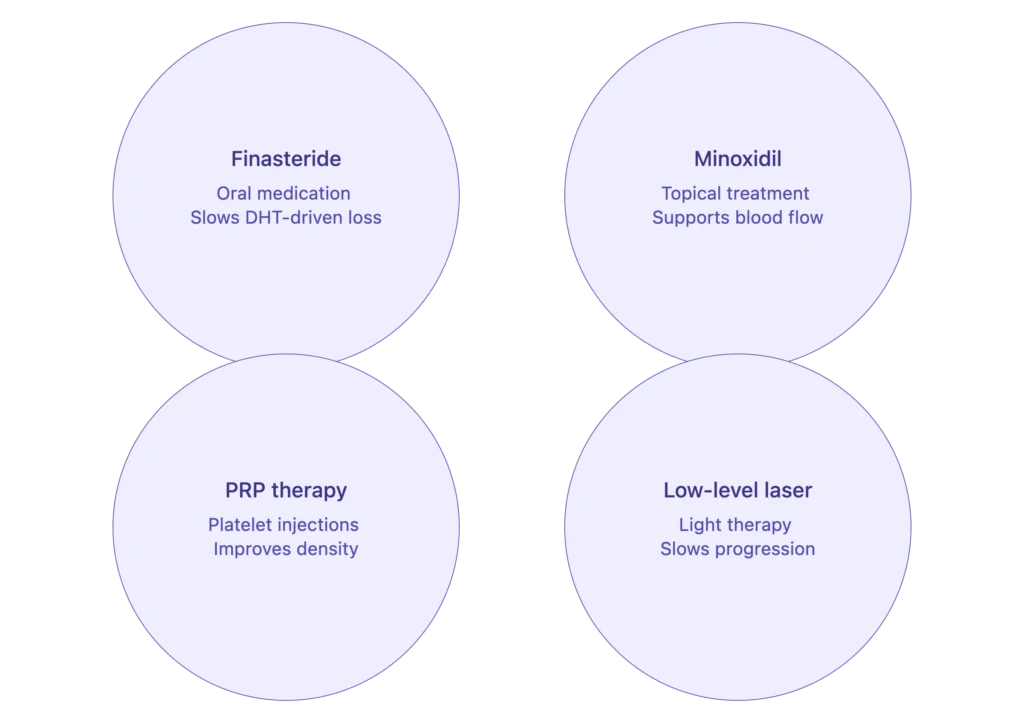
Starting medical therapy before a transplant. FDA-approved treatments such as finasteride and minoxidil may stabilize hair loss, improve density, and help determine whether surgery is appropriate. Even when a transplant remains necessary, medical therapy can improve and maintain long-term results by protecting existing native hair.
Non-surgical options, including platelet-rich plasma therapy and low-level laser therapy, can slow progression and improve density for early-stage patients. These options work best for Norwood Stage I and II and should be viewed as maintenance tools, not permanent solutions for advanced patterns.
A Practical Waiting Period Checklist When On Medical Treatments
- Begin medical therapy; monitor progress with photographs.
- Meet with a hair restoration specialist
- Learn about FUE and FUT procedures
- Plan financially. Hair transplants are typically not covered by insurance.
- Improve health: Manage conditions such as thyroid disorders, hormonal imbalances, and autoimmune conditions before surgery because they directly affect graft survival.
Can I Get a Hair Transplant at 45 or Older? Case for Older Candidates
Hair transplants can produce excellent results for older patients.
By the mid-40s and beyond, the hair loss pattern is typically fully established and stable, providing a clearer picture of hair loss and available donor supply. This makes surgical planning and outcomes more predictable.
Health matters more than age. The pre-surgical evaluation reviews overall health, scalp condition, and medication interactions.
FUE is a minimally invasive technique with a recovery period of approximately 7 to 10 days, making it practical for working professionals. Graft survival rates with modern FUE remain strong across age groups when patients are in good general health.
The direct answer to whether age is the deciding factor: it is not. Health, hair loss stability, and donor supply are the three variables that matter. A 52-year-old in good health with a stable pattern and adequate donor density is a stronger candidate than a 24-year-old whose pattern is still actively progressing.
What to Expect After a Hair Transplant: The Result Timeline
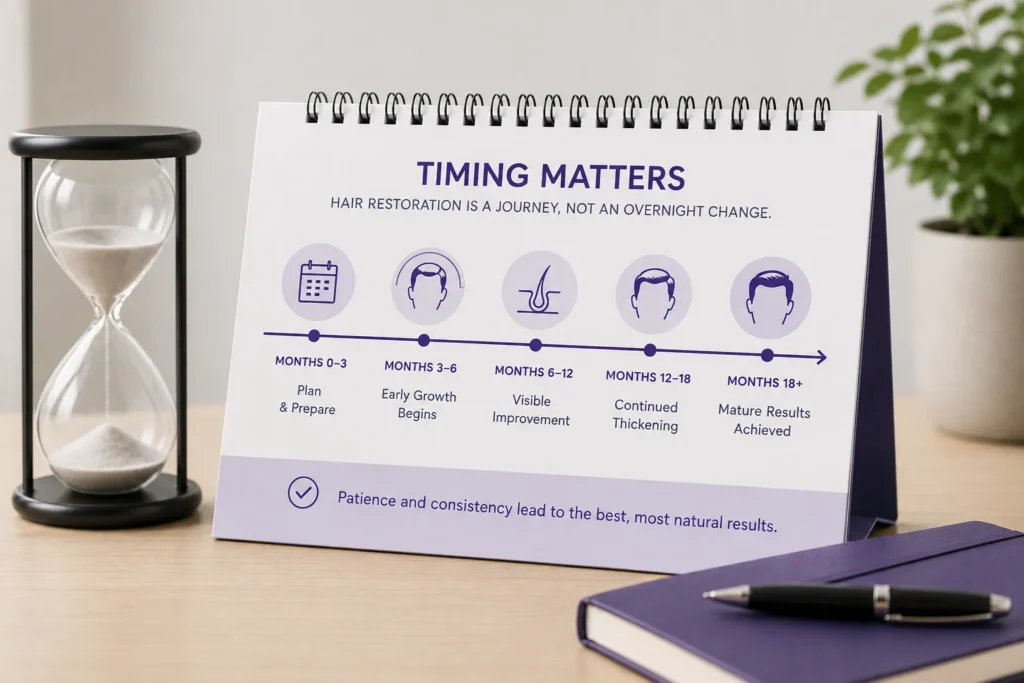
Setting realistic expectations for post-hair transplant surgery recovery is important. The timeline is longer than many patients anticipate.
Within 2 to 4 weeks after surgery, newly transplanted hairs will shed. This is called shock loss; it is normal and not a sign the procedure failed. New growth begins around months 3 to 4. By 6 months, approximately 50 to 60% of the final result is visible. Full results take 12 months to develop.
Understanding that results are incomplete at 4 to 6 months reduces unnecessary concern. Planning surgery before a major life event gives results adequate time to mature.
Why Comprehensive Hair Loss Planning Matters
A successful hair transplant involves more than moving hair from one area to another. The best results come from developing a long-term strategy that accounts for future hair loss, donor hair preservation, medical maintenance, facial balance, and natural hairline design.
While some clinics focus solely on the procedure itself, comprehensive planning helps maximize both the appearance and longevity of your hair restoration results.
Book a Hair Transplant Consultation in Philadelphia Today
Knowing when to get a hair transplant is just as important as choosing the right surgeon. The ideal timing depends on several factors, including hair loss stability, donor hair availability, overall health, future hair loss risk, and your long-term restoration goals.
Dr. Adrian Lo evaluates not only your current level of hair loss, but also where your pattern is likely to progress in the years ahead. This forward-looking approach helps patients achieve results that remain natural-looking as they age while preserving donor resources for the future, if additional treatment is needed.
During your consultation, Dr. Lo will perform a comprehensive evaluation including donor analysis, hair loss staging, scalp assessment, and candidacy screening. We’ll discuss a personalized treatment plan so you can make a confident, informed decision. Whether you’re ready for surgery now or would benefit from medical therapy first, you’ll receive clear recommendations tailored to your unique situation.
If you’re experiencing thinning hair, a receding hairline, crown balding, or progressive hair loss, the best next step is a professional evaluation.
Schedule your hair transplant consultation with Dr. Adrian Lo today to learn whether you’re a candidate and discover the treatment options most appropriate for your stage of hair loss.