

Medically Reviewed By: Dr. Adrian Lo, M.D., FACS, FRCS(C)
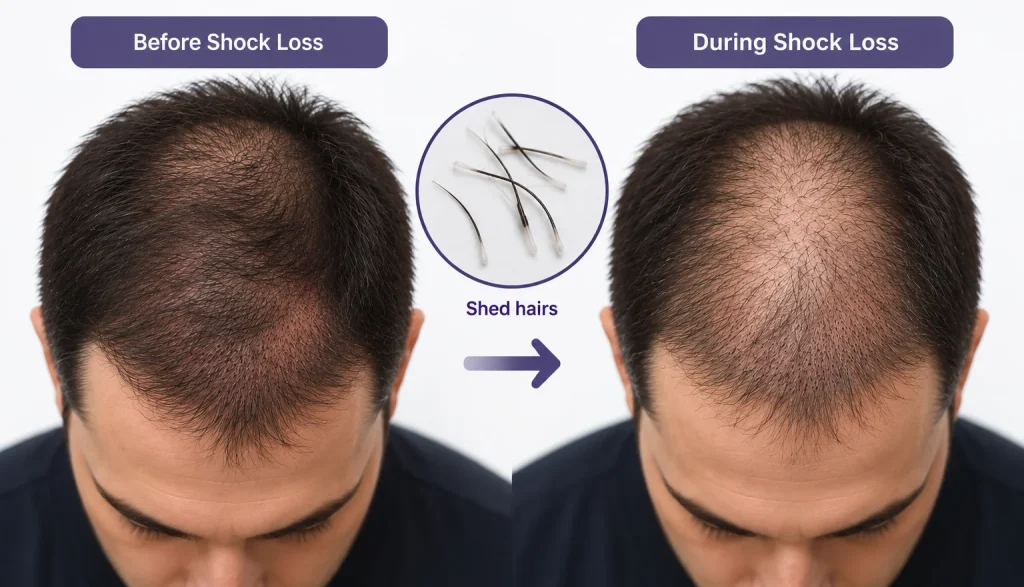
Shock loss after a hair transplant is the temporary shedding of transplanted or existing hair caused by the stress of hair restoration surgery. Although it can be alarming, it is a normal part of the hair transplant recovery and does not mean the procedure has failed. The follicles remain alive beneath the scalp, and new hair growth typically begins within three to six months.
For patients considering hair restoration in Philadelphia, understanding shock loss helps set realistic expectations and reduces unnecessary anxiety.
Key Takeaways
- Shock loss is temporary shedding, not a sign the transplant failed. The follicle stays alive under the scalp.
- Nearly everyone experiences shedding of the transplanted hair within weeks 2 to 4.
- Shedding of your own existing hair around the treated area, or at the donor site, is different and less common.
- New growth usually appears by months 3 to 6, with final results at 12 to 18 months. Judging results earlier is premature.
- Shock loss and graft failure can look similar, but graft failure is confirmed only when growth does not occur after 12 months.
- Shock loss cannot be completely prevented because it is a normal physiological response to surgery. Minoxidil and finasteride may help with density and speed regrowth. Proper aftercare supports healing, but neither eliminates shedding.
- Contact a plastic surgeon if shedding comes with worsening pain, redness, swelling, discharge, fever, or no regrowth by six months.
What Is Hair Transplant Shock Loss?
Shock loss is temporary hair shedding that happens after a transplant procedure. The hair follicle remains alive but temporarily shuts down and drops its hair shaft in response to the physical stress of a hair transplant.
Two different reasons explain the shedding process:
- Anagen effluvium (Shedding of the transplanted hair): Relocating a hair follicle creates temporary stress. In response, the follicle drops the hair it was growing. This is a normal reaction, and new hair growth typically starts within three to six months.
- Telogen effluvium (Shedding of your own existing hair): Swelling and changes in blood flow around the treated area can push nearby hair into a resting stage, causing shedding weeks or months later.
| Cause | Symptoms |
| The small cuts made to place new grafts | Sudden shedding |
| Moving hair or affecting tiny blood vessels nearby | Even, spread-out thinning of recipient or donor area |
| The swelling and healing process itself | Mild scalp tenderness |
| Hair that is already thinning from pattern baldness | Slight redness |
| Placing too many new grafts too close together, near existing native hair | Itching |
How Long Does Shock Loss Last?
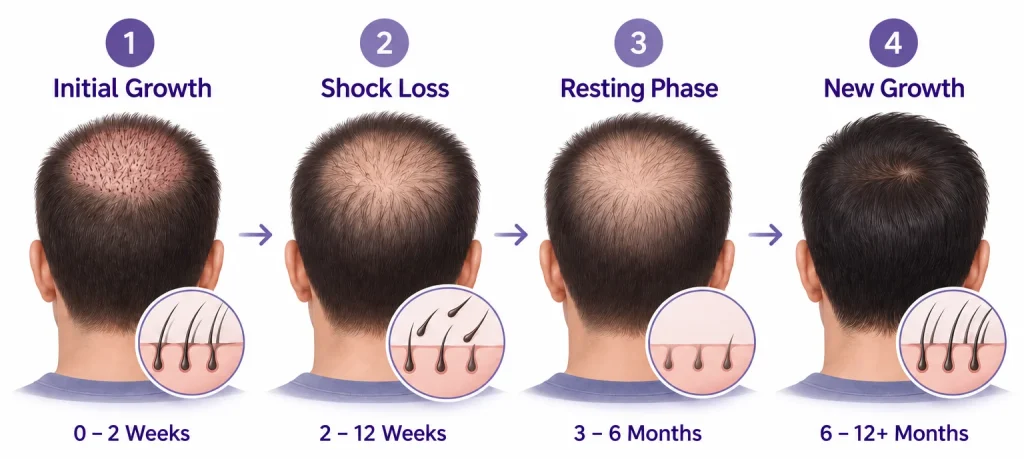
- Weeks 2 to 4: Transplanted hair shafts begin to shed. This is the most commonly reported start of shock loss.
- Months 2 to 4: Native hair surrounding the treated area may thin as it enters the resting phase.
- Months 3 to 6: The first fine, new hair growth typically becomes visible.
- Months 12 to 18: Final, mature results are ready to be assessed.
Recovery timelines vary based on the surgical technique, graft volume, and individual healing. Shedding of transplanted hair is expected. Shedding of surrounding native hair is common but varies in severity.
When to Contact Your Plastic Surgeon
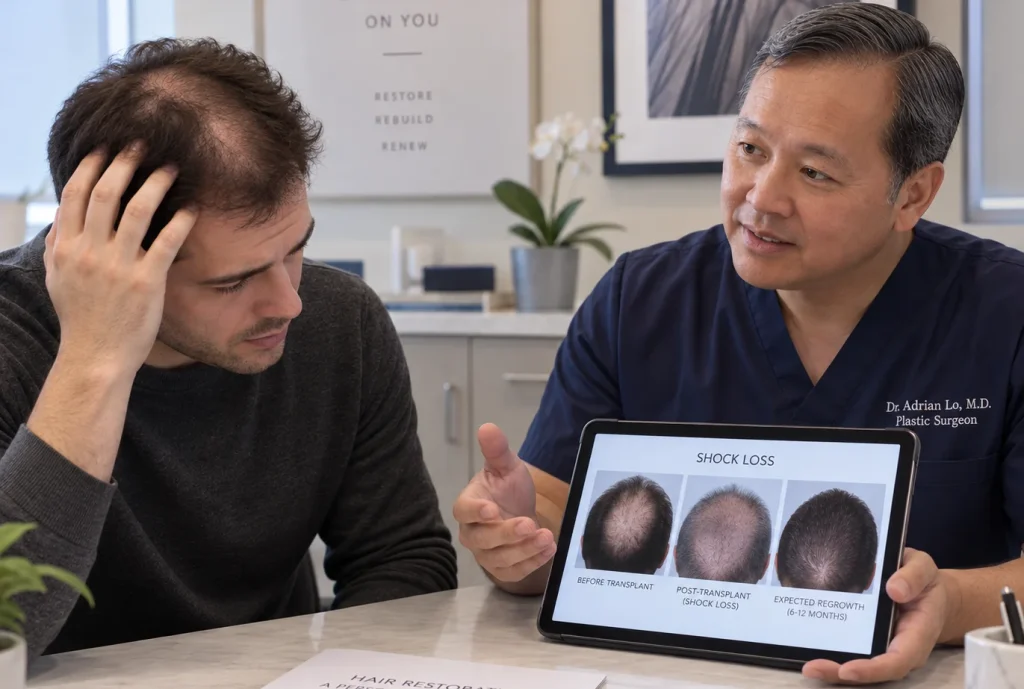
Shock loss on its own is not a medical emergency; however, contact the hair transplant team if you experience:
- Pain, redness, or swelling that worsens instead of gradually improving
- Pus, discharge, or crusting that does not resolve within the expected healing window
- No visible new growth by six months after the procedure
- Hair loss that spreads well beyond the treated recipient or donor areas
- Fever or other signs of infection
Can Shock Loss Be Reduced?
While shock loss cannot be completely prevented, these steps may support a smoother hair transplant recovery.
- Topical minoxidil and oral finasteride under a plastic surgeon’s guidance
- Follow washing and sleeping instructions exactly as given
- Gentle washing and avoiding friction on the treated area
- Avoid tight hats or scalp pressure
- Do not smoke
- Avoid excessive sun exposure to the transplanted hair
- Maintain adequate protein and good overall nutrition, prioritizing zinc, iron, and biotin.
- PRP therapy under a plastic surgeon’s guidance
The most important factor is choosing an experienced hair restoration specialist.
Why Surgical Technique Matters
While some shock loss is expected after nearly every hair transplant, surgical technique can influence its severity. Careful graft handling, thoughtful density planning, and preservation of surrounding hair help minimize unnecessary trauma.
Dr. Adrian Lo uses ARTAS robotic FUE technology to enhance precision during follicular unit extraction, minimizing unnecessary trauma to the scalp. As a double board-certified plastic surgeon serving Philadelphia and Cherry Hill, he provides comprehensive treatment planning and recovery guidance designed to support natural-looking results.
Concerned About Shock Loss After a Hair Transplant?
Temporary shedding is one of the most common reasons patients worry during recovery. If you are considering hair restoration, an evaluation by an experienced hair restoration surgeon can provide clarity and peace of mind.
Dr. Adrian Lo offers advanced hair restoration treatments for patients throughout Philadelphia, Cherry Hill, South Jersey, and the surrounding region using ARTAS robotic follicular unit extraction technology and individualized treatment planning.
Schedule your consultation today to learn whether hair transplantation is right for you.

FAQs
Is Hair Transplant Shock Loss the Same as Hair Transplant Failure?
No. Shock loss is temporary shedding while the follicle stays alive underneath. Graft failure occurs when the follicles do not survive, confirmed when an area shows no growth well past twelve months.
Will I Lose All of My Transplanted Hair?
Most patients experience shedding in the first month, with regrowth typically beginning within three to six months.
Can Shock Loss Affect Hair I Did Not Have Transplanted?
Yes. Native hair around the treated area, and occasionally the donor area, can also shed temporarily due to the swelling and blood-flow changes surgery causes.
How Long Until Shock Loss Stops and New Hair Starts Growing?
Shedding is most noticeable in the first one to three months. New growth usually appears by months three to six, and final results occur between 12 to 18 months.
Does Everyone Get Shock Loss After a Hair Transplant?
Nearly everyone sheds some transplanted hair, since that is a normal part of the procedure.