

Medically Reviewed By: Dr. Adrian Lo, M.D., FACS, FRCS(C)
TL; DR.
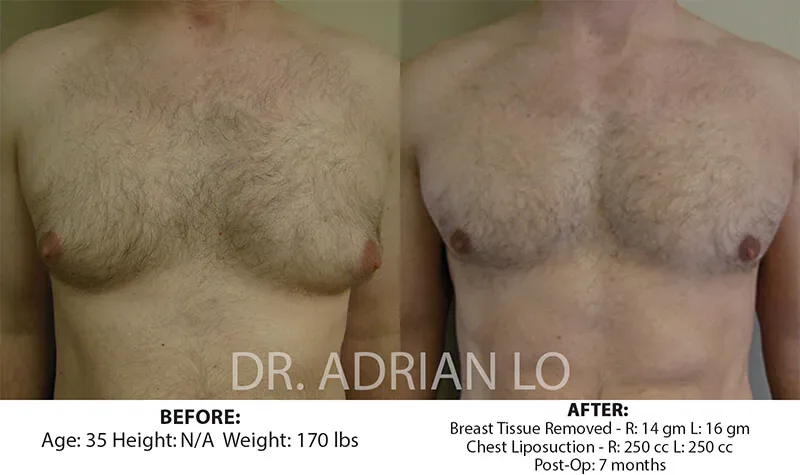
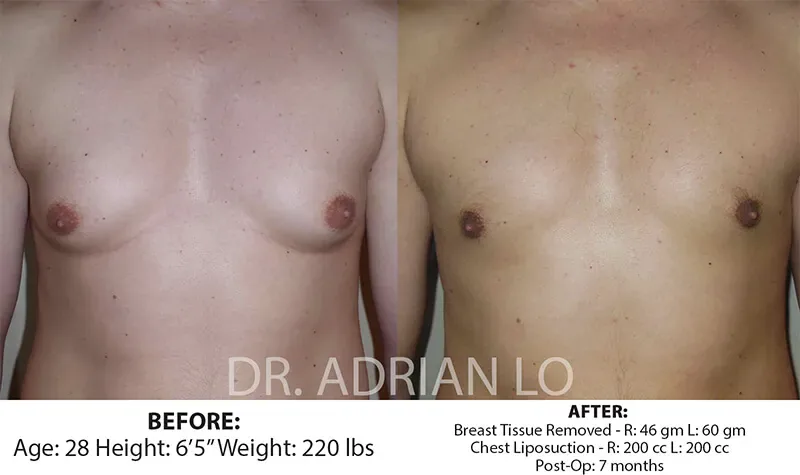
Does gyno surgery leave scars? Yes, minimal scars. Every gyno surgery requires an incision, so some scarring is unavoidable. However, most scars are small, strategically placed in natural chest contours, and continue fading over 12 to 18 months. Liposuction-only cases leave tiny entry points, and most scars become far less noticeable than the enlarged chest tissue they replaced. Cases that remove gland tissue add a curved incision along the lower edge of the areola.
From 2016, approximately 93% of Dr. Lo’s gynecomastia procedures were performed using liposuction-only incisions or discreet areola-border incisions.
Key Takeaways
- Every gynecomastia surgery requires small hidden incisions, but experienced plastic surgeons place them where they are least noticeable. Incision size and location depend on how much gland, fat, and skin need to be removed.
- The American Society of Plastic Surgeons (ASPS) notes that incision lines are permanent and continue to fade over time.
- Most gynecomastia surgery scars continue improving and maturing for 12 to 18 months.
- International guidelines name silicone sheets or gel as the first-line, non-invasive option to improve incision healing.
- Sun protection, avoiding nicotine, and following your compression instructions all support better healing.
Does Gyno Surgery Leave Scars? Incisions and Scar Visibility Explained
Yes, gynecomastia surgery does leave incision marks. Your plastic surgeon chooses the incision based on what needs to be removed. There are three common approaches:
- Liposuction only: When the excess chest tissue is mostly fat, the plastic surgeon creates small ¼ inch incisions, just large enough for the liposuction cannula, in discreet areas such as the armpit or side of the chest. These usually fade to faint dots.
- Gland removal: Plastic surgeons remove firm glandular tissue through an incision under the areola, where the color change helps hide the incision mark. If the areola also needs to be smaller, the incision goes all the way around it.
- A combination: Many men need both, so small liposuction incisions are paired with an areola incision.
Men with significant loose skin, often after major weight loss, may need longer incisions to remove that skin and create a flatter chest.
For decades, Dr. Lo has performed subcutaneous mastectomy for gland removal, liposuction, and nipple reduction for gynecomastia. Dr. Lo customizes gynecomastia surgery based on gland volume, fat distribution, skin elasticity, and each patient’s goals. His objective is a flatter, masculine chest with the least noticeable scars possible.
“Most men are surprised by how inconspicuous their scars become over time. My goal is to place incisions where they heal naturally within the contour and color transitions of the chest, while achieving a flatter, more masculine appearance.”
— Dr. Adrian Lo
What Healing From Gynecomastia Surgery Looks Like Over Time
Typical healing progresses as follows:
- First few weeks: The incision is pink or red, slightly swollen, and tender.
- Weeks 3 to 6: The line can look firmer and a little raised while the body builds new collagen.
- Months 3 to 6: Swelling settles. ASPS says final results of gynecomastia surgery may take 3 to 6 months.
- Months 12 to 18: Most gynecomastia surgery scars soften, flatten, and fade significantly. While no scar disappears completely, many become difficult to notice without close inspection.
Some men also feel firmness under the skin after surgery, which usually softens over time. Tell your plastic surgeon about any area that stays hard, grows, or feels painful.
See full gynecomastia recovery time in our guide.
What Affects How Visible Your Incisions Become
Healing varies from person to person. Scar visibility depends on surgical technique, skin elasticity, infection prevention, nutrition, smoking, genetics, and susceptibility to raised (hypertrophic) or keloid scars.
How to Minimize Visible Marks Before and After Surgery
| Before Surgery | After Surgery |
|---|---|
|
|
If an incision heals raised, steroid injections and laser treatments are options, with surgical scar revision as an option.
Talk to Dr. Lo About Your Gynecomastia Surgery
Dr. Adrian Lo is a board-certified plastic surgeon who has practiced since 1991 and has been featured by Men’s Health for his work on gynecomastia. He performs surgery at Pennsylvania Hospital’s Tuttleman Surgery Center, staffed by physician anesthesiologists. At your consultation, he will examine your chest, explain which incisions are appropriate for your situation, and review the expected scar placement and results.
Patients travel from the Pennsylvania Main Line, South Jersey, Delaware, and throughout the Mid-Atlantic region to his offices in Philadelphia and Marlton.
Concerned about gynecomastia scars? During your consultation, Dr. Lo can explain your incision options, expected scar placement, and typical healing outcomes. Schedule a consultation in Philadelphia or Marlton.

FAQs
Is Scarless Gyno Surgery Possible?
No. Every gynecomastia surgery requires at least one or two incisions, so some minimal scarring is unavoidable. “Scarless” is a marketing term for very small incisions placed where they are hard to see. Ask the plastic surgeon to show you healed scar photos from their own patients.
Will Firmness Under My Incisions Ever Go Away?
In most men, it softens as the tissue remodels over the first 12 to 18 months. If firmness worsens or becomes painful, contact your plastic surgeon.
Does Liposuction-Only Gynecomastia Surgery Leave Marks?
Yes, but they are very small, about ¼ inch. The entry points only need to fit the cannula, and they are placed in hard-to-see spots.
Can an Older Incision Line Be Improved?
Often, yes. Silicone products, steroid injections, and laser treatments can improve raised or discolored lines. Surgical scar revision is also an option.
When Will I See My Final Result?
Your chest contour is usually settled by 3 to 6 months. Incision lines keep fading through the 12 to 18 month mark.
Will My Gynecomastia Surgery Scars Be Visible Shirtless?
Most patients can confidently go shirtless after healing. While scars are permanent, they are usually small, strategically placed, and usually barely noticeable compared to the enlarged breast tissue they replaced.