If you are considering rhinoplasty Cherry Hill services, choosing the right surgeon is the most important decision you will make. Dr. Adrian Lo offers a combination of surgical credentialing, extensive surgical experience, and a highly personalized approach that has made him a trusted choice for patients in South Jersey.
Dr. Lo is a board-certified plastic surgeon who holds fellowship status with both the American College of Surgeons (FACS) and the Royal College of Physicians and Surgeons of Canada (FRCS(C)). With more than 30 years of experience, he has been recognized by Newsweek Magazine as one of America’s Best Plastic Surgeons for Rhinoplasty in multiple years since 2021, as well as recognized by Philadelphia Magazine “Top Doc” for multiple years.
Patients from Cherry Hill, Marlton, Mount Laurel, Voorhees, Medford, Moorestown, and the greater Philadelphia region choose Dr. Lo for his reputation for precision, artistry, and individualized rhinoplasty care, resulting in a nose that looks natural, proportionate, and true to their own features.
At his Marlton, NJ office, located just minutes from Cherry Hill, Dr. Lo sees patients for rhinoplasty. Dr. Lo uses a minimally invasive, closed technique when appropriate, keeping incisions hidden within the nostrils with no visible external marks or scars. This approach can correct cosmetic concerns such as a dorsal hump, bulbous tip, or nasal asymmetry, while also addressing functional issues like a deviated septum.
Schedule a consultation to discuss your aesthetic goals and develop a personalized rhinoplasty surgical plan designed to enhance facial balance and harmony.
Why Rhinoplasty Is More Than Appearance?
The nose sits at the center of the face, and because of its position, even subtle changes to its shape, size, or proportions can shift the entire balance of a person’s appearance. For many patients considering rhinoplasty in New Jersey, the decision is not purely cosmetic. It is about feeling at ease in their own skin, breathing comfortably, and no longer fixating on a feature that feels out of proportion with the rest of their face. When patients are unhappy with the shape or size of their nose, they often become overly focused on its features in photographs, social situations, and everyday interactions.
Rhinoplasty is one of the most versatile procedures in plastic surgery. Many patients describe rhinoplasty as a procedure that allows them to stop thinking about their nose altogether.
In addition to cosmetic enhancement, rhinoplasty can also:
- Improve nasal breathing
- Enhance sleep quality
- Increase exercise tolerance
- Restore facial symmetry after injury
- Improve self-confidence
- Create long-lasting improvements in facial balance
Demand for the procedure continues to grow nationally. According to 2022 ASPS statistics, close to 45,000 rhinoplasties were performed in the U.S. that year, making it the third most common plastic surgery procedure behind eyelid surgery and facelift. Most patients pursue rhinoplasty for a combination of cosmetic and functional reasons, rather than for one reason alone.
The goal is not to create a different face. The goal is to create a nose that looks naturally suited to your face.
What Is Rhinoplasty and What Can It Correct?
Rhinoplasty is a surgical procedure that reshapes or resizes the nose to improve its appearance, its function, or both. Often referred to as a nose job, it is one of the most requested facial procedures in the country. The nose plays a defining role in facial proportion, and even small refinements can dramatically improve overall facial balance by bringing the nose into better proportion with the eyes, cheeks, lips, and chin.
A rhinoplasty procedure can address a broad range of concerns, including:
- Dorsal humps or bumps along the nasal bridge
- A bulbous, drooping, or pinched nasal tip
- Wide or flared nostrils
- Nasal asymmetry from genetics, aging, or injury
- Breathing obstruction related to a deviated septum
- Post-trauma deformities
- Congenital concerns present from birth

Cosmetic vs. Functional Rhinoplasty
- Cosmetic rhinoplasty focuses on the visible external shape and proportion of the nose, addressing symmetry and profile.
- Functional rhinoplasty addresses internal structural issues, airway obstruction, and breathing difficulty, most commonly caused by a deviated septum.
Many patients benefit from a combined approach that improves both form and function during a single procedure. This reduces overall recovery time and can offer better value than staging two separate procedures.
Revision Rhinoplasty
For patients who have already undergone nose surgery and are unsatisfied with the results, revision rhinoplasty is also available. According to a clinical review published on NIH’s StatPearls, revision rates in rhinoplasty are generally reported to be up to 15% across all nose jobs, underscoring why selecting a skilled, experienced rhinoplasty plastic surgeon in South Jersey from the start is so important. Revision procedures are more complex and typically more costly, making the initial choice of plastic surgeon one of the most consequential decisions a patient will make.
Am I a Candidate for Rhinoplasty in Cherry Hill?
Good candidates for rhinoplasty are individuals whose facial growth is complete, who are in good general health, and who have a clear and realistic sense of what they would like to change. Facial development is typically complete around age 16 for females and between 17 and 18 for males. Undergoing nose surgery before growth is complete can lead to changes that alter the original result over time.
Additional candidacy factors a plastic surgeon will evaluate include:
- Non-smoker status, or a genuine willingness to stop smoking well before and after surgery
- No significant underlying health conditions that would increase surgical risk
- Realistic expectations about outcomes and recovery
- A personal motivation to improve appearance or function, not external pressure from others
What Happens During a Rhinoplasty Procedure?
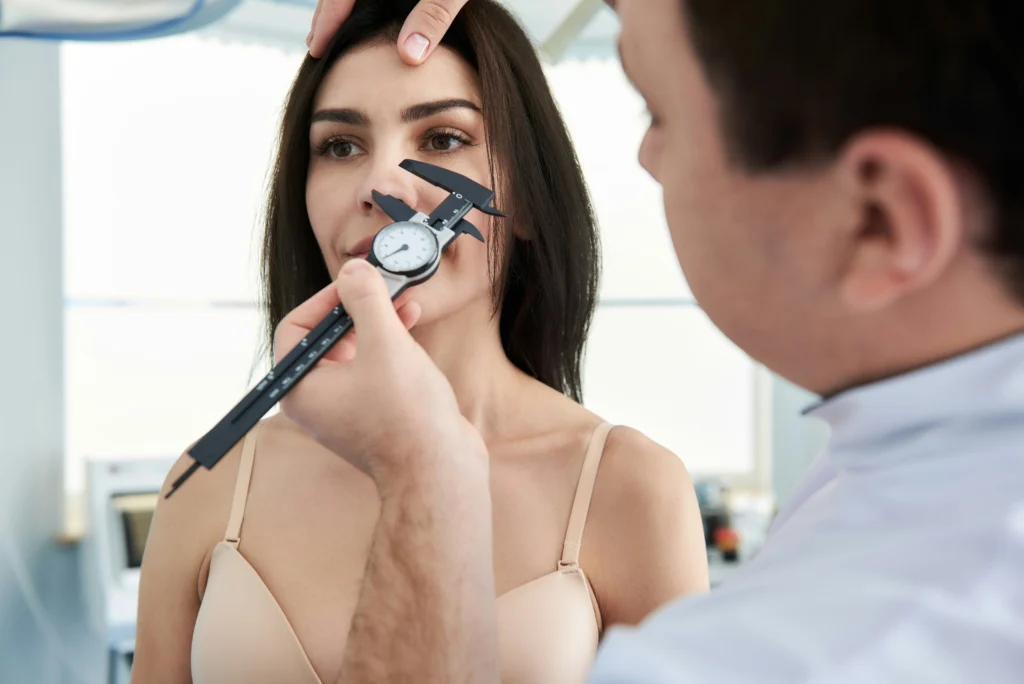
A rhinoplasty procedure begins with anesthesia, either general anesthesia or intravenous sedation combined with local anesthesia, depending on the surgical case complexity and the patient’s health profile. The plastic surgeon will recommend the preferred approach during the consultation.
Once the patient is comfortable, the plastic surgeon creates the surgical incision according to the chosen technique, either open or closed rhinoplasty, as detailed in the subsections below. Through these incisions, the plastic surgeon reshapes the underlying cartilage and bone to achieve the desired outcome.
This may involve:
- Removing or smoothing a dorsal hump
- Refining or rotating the nasal tip
- Narrowing the bridge or nostril width
- Correcting asymmetry
- Addressing internal structural issues affecting breathing
After reshaping is complete, the skin is re-draped over the new nasal framework, and the incisions are closed with fine sutures. A splint or cast is placed on the outside of the nose to protect the new structure during early healing.
Most rhinoplasty procedures take between 45 minutes and 3 hours depending on complexity. In most cases, the procedure is performed on an outpatient basis, meaning patients go home the same day. An adult companion is required to drive the patient home and remain with them for the first 24 hours post-surgery.
Open Rhinoplasty: What It Is and When It Is the Better Choice
Open rhinoplasty involves a small surgical incision placed across the columella, the narrow strip of tissue that separates the nostrils at the base of the nose. Through this approach, the plastic surgeon lifts the skin to gain full, direct visibility of the underlying nasal framework.
This technique is preferred for more complex reshaping work, extensive tip refinement, or revision rhinoplasty cases where precision and full access to the underlying structures are essential. The incision left by open rhinoplasty is small and positioned in a naturally shadowed area of the nose. For most patients, this mark fades substantially over the course of months and becomes nearly imperceptible with time.
Closed Rhinoplasty: What It Is and Why Some Patients Prefer It?
Closed rhinoplasty places all surgical incisions entirely inside the nostrils, leaving no visible external marks. Because the skin is not elevated as much from the nasal framework as in open rhinoplasty, this technique generally results in less postoperative swelling and a slightly shorter initial recovery period.
Closed rhinoplasty is well-suited for patients who require less extensive reshaping, such as refining the bridge or making modest adjustments to the tip, without the need for full structural access. Not every patient is a candidate for closed rhinoplasty. The plastic surgeon determines the most appropriate technique based on the patient’s anatomy, the complexity of the desired changes, and any prior nasal surgery.
Learn more about open vs closed rhinoplasty here!
Rhinoplasty Recovery: A Week-by-Week Timeline
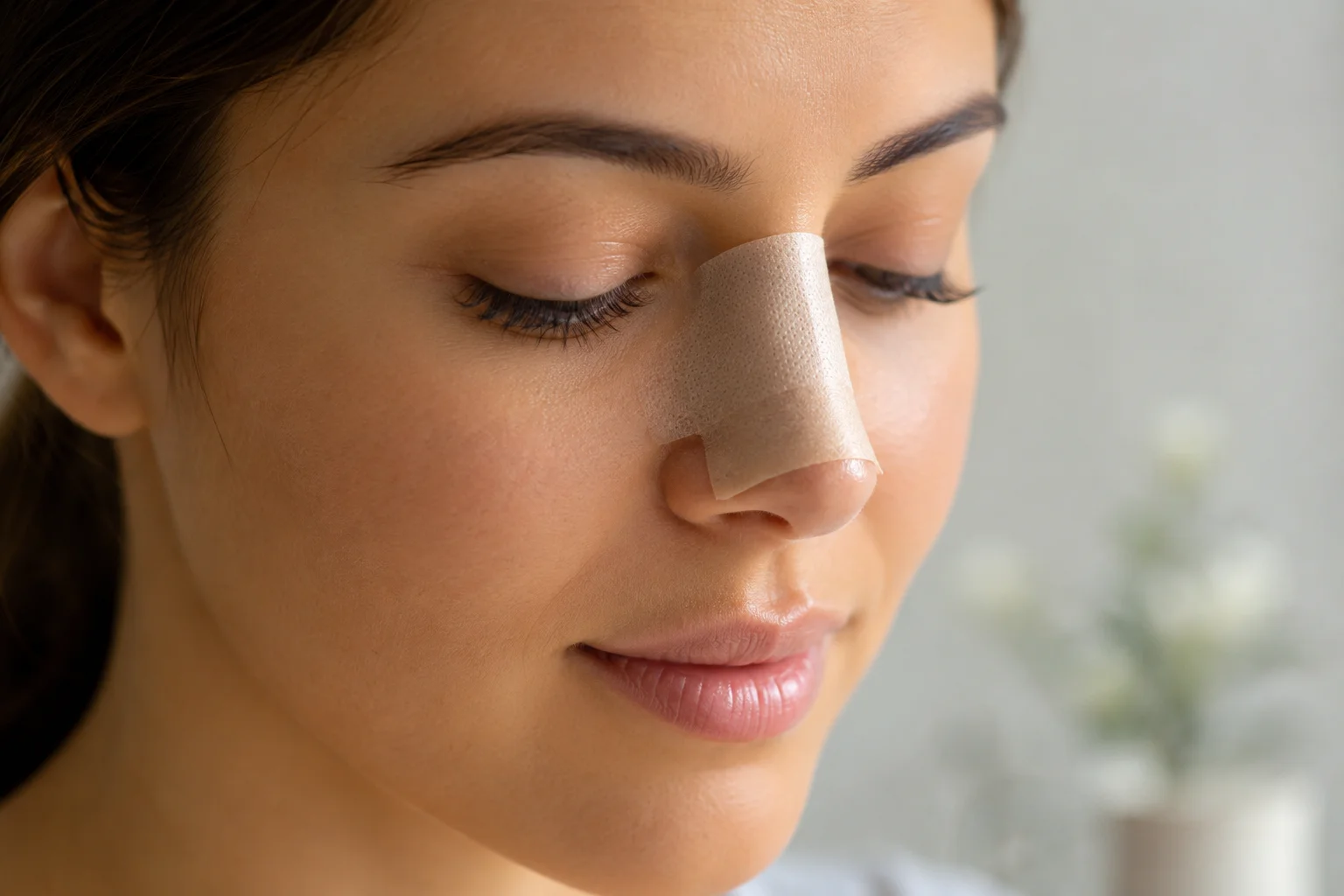
Recovery from rhinoplasty follows a predictable general course, though the timing varies from patient to patient. Understanding what to expect at each stage reduces anxiety and helps patients plan appropriately for time away from work and social activities.
Week 1: This is the most intensive phase of recovery. Swelling and bruising around the nose and eyes will peak within the first 48 to 72 hours. The splint or cast remains in place throughout the week, and patients are advised to rest with their heads elevated, avoid bending over, and refrain from blowing their noses or engaging in any other strenuous activity. Nasal congestion is common and expected.
Week 2: The splint is typically removed at the one-week mark. Bruising around the eyes begins to fade noticeably. Most patients feel comfortable enough to be seen in public, though residual swelling remains. Many patients return to desk work or light daily activities during this week.
Learn more about rhinoplasty swelling stages here!
Weeks 3 to 4: Swelling continues to resolve gradually. Light activity can typically resume, though high-impact exercise, contact sports, and anything that risks nasal impact should be avoided for several more weeks. The majority of visible bruising will have cleared.
Month 3: By this point, most patients see approximately 80% of their final result. The nose looks noticeably refined, and the changes are visible to others.
Month 12 and Beyond: The final refined rhinoplasty results become visible at the one-year mark. Residual swelling is fully resolved. The tip definition is most apparent in this area because it takes the longest to settle fully.
Occasionally, patients may experience a brief period of emotional uncertainty during the early weeks of healing, when swelling can temporarily distort the appearance of the nose. This is a normal part of the process. Staying in close communication with your plastic surgeon and following post-operative instructions carefully will support the smoothest recovery and best long-term outcome.
Additional recovery tips include sleeping with the head elevated on two pillows, avoiding glasses that rest on the bridge of the nose for six weeks, wearing sunscreen to protect healing skin, and attending all scheduled follow-up appointments.
Read our guide on rhinoplasty recovery time for more information!
What Are the Benefits of Rhinoplasty? More Than a New Look
Rhinoplasty offers a range of benefits that extend well beyond a cosmetic change. Patients who undergo nose surgery often report improvements across multiple areas of their daily lives.
Improved Facial Harmony and Proportion
When the nose is brought into better proportion with the forehead, chin, and cheeks, the entire face reads as more balanced. Patients frequently report that they look more like themselves, simply a more harmonious version.
Enhanced Breathing and Airway Function
For patients with a deviated septum or internal structural obstruction, rhinoplasty with a functional component can meaningfully improve airflow. Better breathing affects sleep quality, exercise capacity, and overall well-being.
Increased Self-Confidence
Many patients report spending years avoiding photographs, certain angles, or social situations because of how they felt about their nose. After recovery, a significant number report that this self-consciousness is simply gone, replaced by a quiet confidence that carries into many areas of life.
Long-Lasting Results
Rhinoplasty results are considered permanent for most patients. While the nose continues to age naturally along with the rest of the face, the structural changes made during surgery remain.
Correction of Injury or Congenital Concerns
For patients whose nose was altered by trauma or who were born with a structural concern, rhinoplasty offers restoration, returning the nose to a shape and function that feels right.
Feeling hesitant to acknowledge that appearance plays a part in your decision is entirely normal. Many patients have both cosmetic and functional motivations, and each is an equally valid reason to pursue personalized, high-quality care.
Setting Realistic Expectations: What Rhinoplasty Can and Cannot Do
Rhinoplasty can deliver meaningful, lasting improvements, but a clear understanding of its limits is essential before committing to the procedure. This is a conversation that trusted plastic surgeons performing rhinoplasty will have openly during the consultation.
Rhinoplasty cannot replicate another person’s nose. Every result is shaped by the patient’s underlying bone structure, cartilage, skin thickness, and healing biology. Bringing a photograph as a reference is useful for communicating preferences, but the goal is always harmony with your unique anatomy, not a copy of someone else’s features.
Results take time to appear fully. While major improvements are visible once the splint comes off, the final result is not complete until approximately the one-year mark. Patients who evaluate their outcome at four weeks, when residual swelling still distorts the shape, may feel concerned unnecessarily.
Some degree of asymmetry is natural. No face, and no nose, is perfectly symmetrical. After rhinoplasty, subtle variations may remain, reflecting the natural asymmetry that exists in all human faces. The goal is improvement, not anatomical perfection.
Revision rhinoplasty is occasionally necessary. While every plastic surgeon aims to achieve the desired result in a single procedure, healing is a biological process with individual variation. Open communication with your plastic surgeon throughout recovery helps catch any concerns early.
Digital imaging is a planning tool, not a guarantee. Computer simulations used during consultation show possibilities and help align expectations, but the final surgical result will always reflect the realities of your anatomy and healing process.
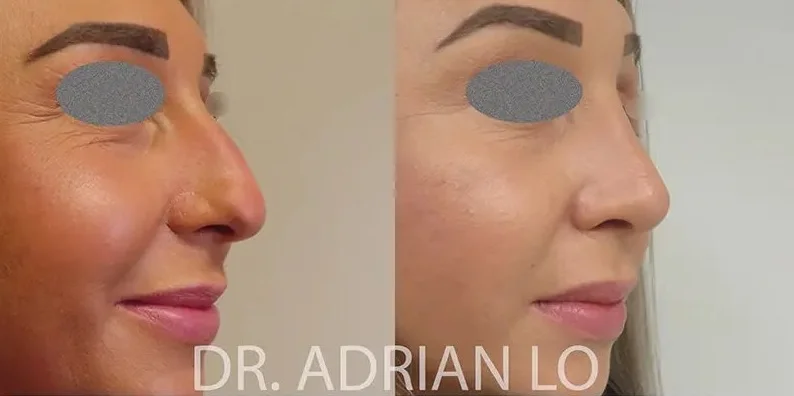
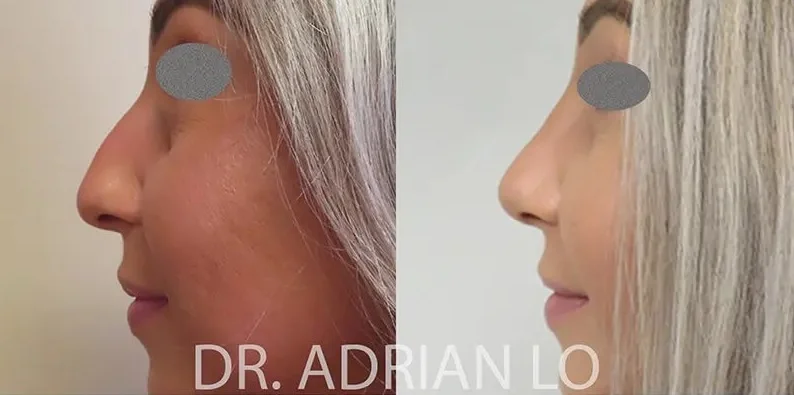
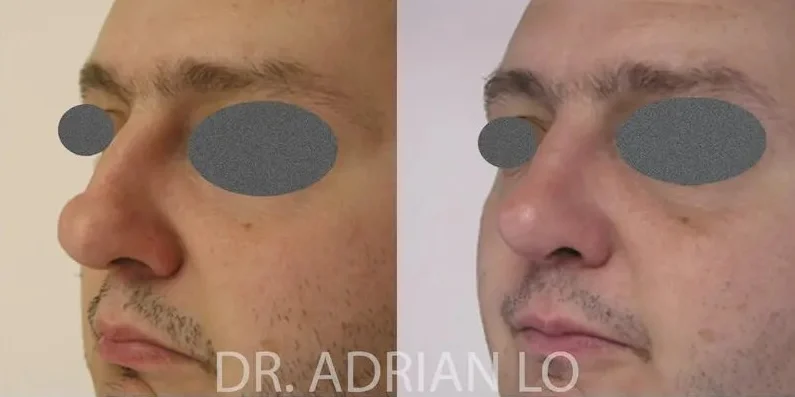
Before & After Rhinoplasty in South Jersey: Real Patient Results
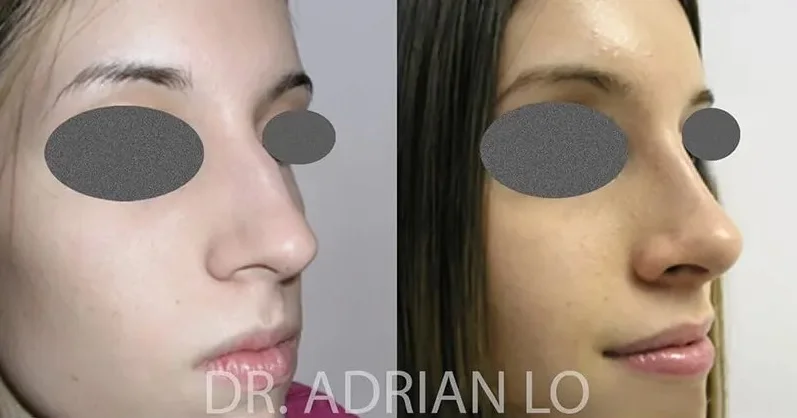
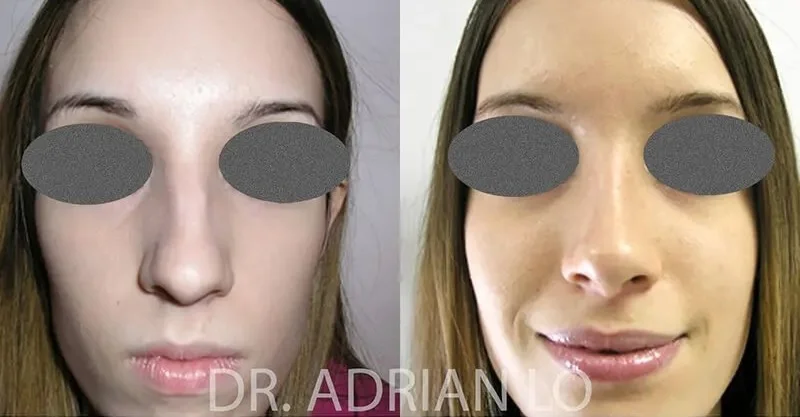
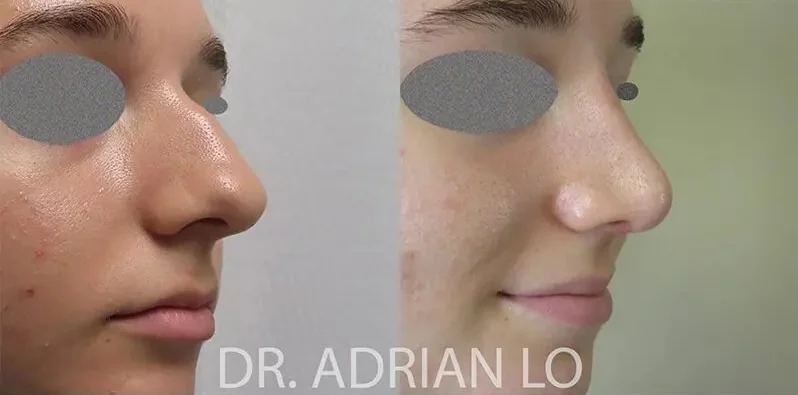
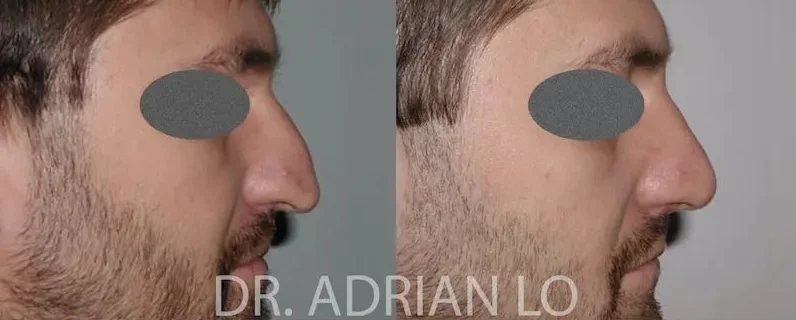
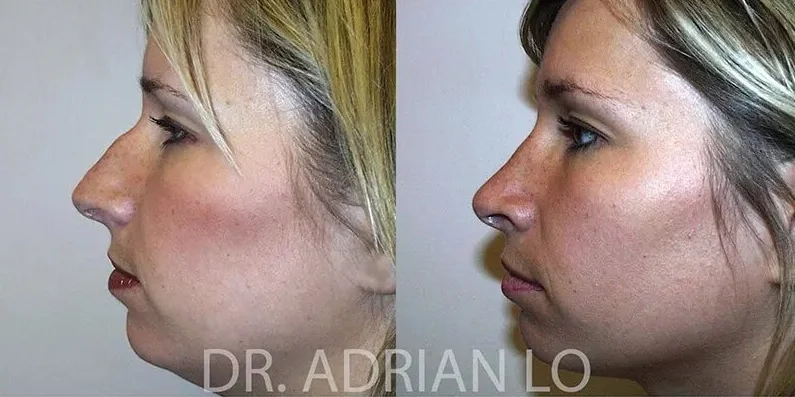
For patients weighing their options, here are some before-and-after rhinoplasty pictures. Results shown reflect real patients of Dr. Adrian Lo. Individual results may vary.
Why Choose Dr. Adrian Lo for Rhinoplasty Near Cherry Hill
Patients seeking rhinoplasty in South Jersey no longer need to travel to Philadelphia or New York to access world-class plastic surgery expertise. Dr. Adrian Lo’s rhinoplasty practice in Marlton, New Jersey, delivers board-certified surgical care with a level of personalization and attention that matches that of large metropolitan practices.
Here is what sets Dr. Adrian Lo apart for patients considering a nose job in the region:
Board Certification and Specialized Training
Every rhinoplasty procedure is performed personally by Dr. Adrian Lo, a board-certified plastic surgeon with more than 30 years of experience. Dr. Lo completed additional fellowship training in oral and maxillofacial surgery and craniomaxillofacial surgery, and he is a member of the American Society of Plastic Surgeons, The Aesthetic Society, and a Fellow of the American College of Surgeons (FACS).
A Closed Technique for Natural-Looking Results
Dr. Lo performs rhinoplasty using a closed, or internal, approach that avoids an external incision on the columella. This technique can reduce visible swelling during recovery and leaves no visible mark on the outside of the nose. Dr. Lo will discuss whether this approach fits your goals during your consultation and develop a surgical plan personalized to your individual anatomy.
Recognized Surgical Excellence
Dr. Adrian Lo has been recognized as one of Philadelphia’s top plastic surgeons, a distinction backed by peer evaluations and patient outcomes. He has been named to Newsweek’s list of America’s Best Plastic Surgeons in 2021, 2023, 2024, 2025, and 2026, with recognition spanning breast augmentation, eyelid surgery, facelift, liposuction, and rhinoplasty.
He has also been named a Philadelphia Magazine “Top Doc” in multiple years. Patients can feel confident that the expertise available here meets the standards of any major metropolitan center.
Personalized Surgical Planning
No two noses are the same, and no two rhinoplasty plans are identical. Each patient receives a personalized consultation that accounts for their anatomy, ethnic background, aesthetic goals, and functional concerns. Dr. Lo’s office also offers 3D Vectra imaging, allowing patients to visualize potential outcomes before moving forward with surgery. The result is a nose that looks right and harmonious for that individual’s face.
Surgical Safety You Can Trust
Procedures are performed at Pennsylvania Hospital Tuttleman Surgery Center with a physician anesthesiologist and two operating room nurses present for every case. This level of staffing reflects a commitment to patient safety throughout the surgical experience.
Convenient South Jersey Location
Patients from Cherry Hill, throughout South Jersey, and the greater Philadelphia region access the same level of rhinoplasty expertise without the added burden of city traffic, parking, or hospital-system scheduling.
Rhinoplasty Cost in Cherry Hill: What to Expect
Rhinoplasty prices in the South Jersey region typically range from $13,000 to $16,000+, based on regional averages. At Dr. Lo’s practice, rhinoplasty costs between $10,800 and $12,000+. However, the final cost varies based on the following factors:
- Complexity of the procedure, ranging from minor refinement to extensive reshaping
- Technique chosen, open vs. closed rhinoplasty
- Anesthesia fees
- Surgical facility fees
- Whether a functional correction such as a septoplasty component is included
- Whether the procedure is a primary rhinoplasty or a revision case
Patient financing options are available at Dr. Lo’s clinic for patients who prefer to spread the cost over time, making high-quality cosmetic surgery care accessible across New Jersey, Pennsylvania, and Delaware.
To receive a personalized cost estimate, schedule a consultation at our Marlton, New Jersey, office, just minutes from Cherry Hill. Our team is here to answer every question, walk you through your options, and help you move forward with confidence.
Call (215) 829-6900 Schedule Rhinoplasty Consultation
Contact Us
Contact UsLocations
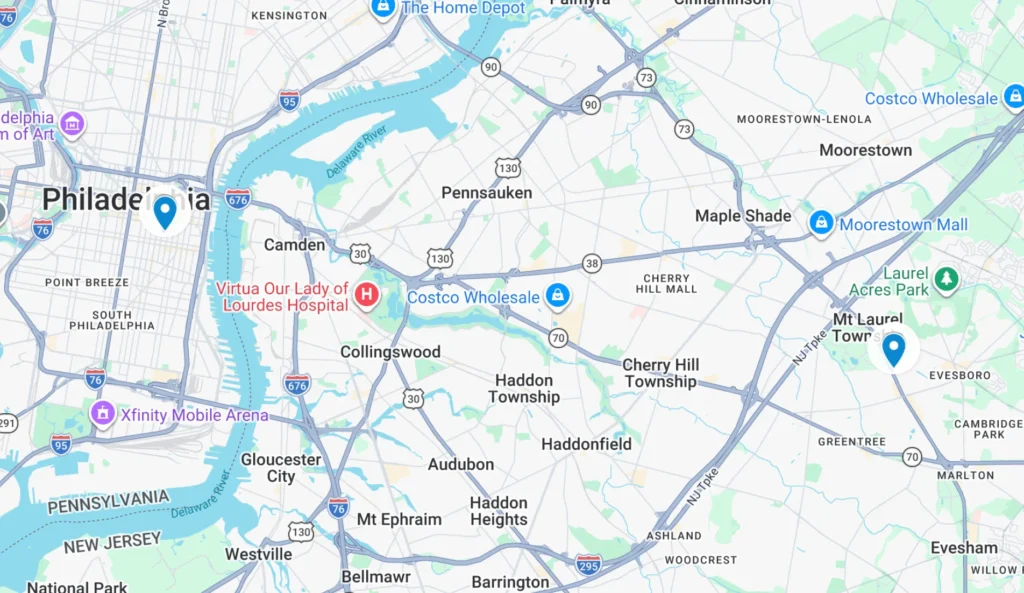
Philadelphia Plastic Surgery
301 South 8th Street, Suite 3H,
Philadelphia PA 19106
New Jersey Plastic Surgery
990 Route 73 North
Marlton, NJ 08053
Social Media