


Successful hair transplant results depend not only on surgical technique but also on proper post-operative care. Hair transplant post-operative care requires extreme gentleness to protect delicate, newly implanted grafts. The first two weeks are the most critical: avoid strenuous exercise, sleep with your head elevated, and never pick at the scabs. Following the core principles in this guide helps you to avoid mistakes and give your grafts the best chance of survival and achieve natural, lasting results.
If you are still weighing the decision, our guide on whether hair transplant surgery is worth it may help.
What to Expect After a Hair Transplant
The days immediately following hair transplantation bring a predictable set of symptoms. It is normal to experience:
- Mild redness and tenderness at both the donor and recipient areas
- Swelling around the forehead and scalp
- Small scabs form around each transplanted graft within the first day or two
- Tightness or numb sensation across the scalp
These are all normal healing responses to the procedure and signal that your body is adapting to the transplanted hair follicles.
How Recovery Differs Between FUE and FUT Techniques
FUE and FUT hair transplant methods produce different types of surgical incisions at the donor site, and that distinction shapes the recovery experience.
- With FUE (Follicular Unit Extraction), individual follicular units are extracted through small circular punches, leaving no linear incision, minimal downtime, and allowing the donor area to heal relatively quickly, typically within 7 to 10 days.
- FUT (Follicular Unit Transplantation) involves removing a strip of scalp tissue, resulting in a linear incision that requires sutures and a longer donor-site healing window of 2 to 3 weeks.
- Both techniques require the same diligent graft protection at the recipient site. The key difference lies in how the donor area is managed and when physical activity can safely resume.
- Many patients also opt for robotic-assisted hair transplant techniques, a state-of-the-art technique for hair restoration that increases the accuracy and precision of hair transplants.
Regardless of method, graft care at the recipient area is identical and critically important.
The First 14 Days: Critical Hair Transplant Post-Operative Care
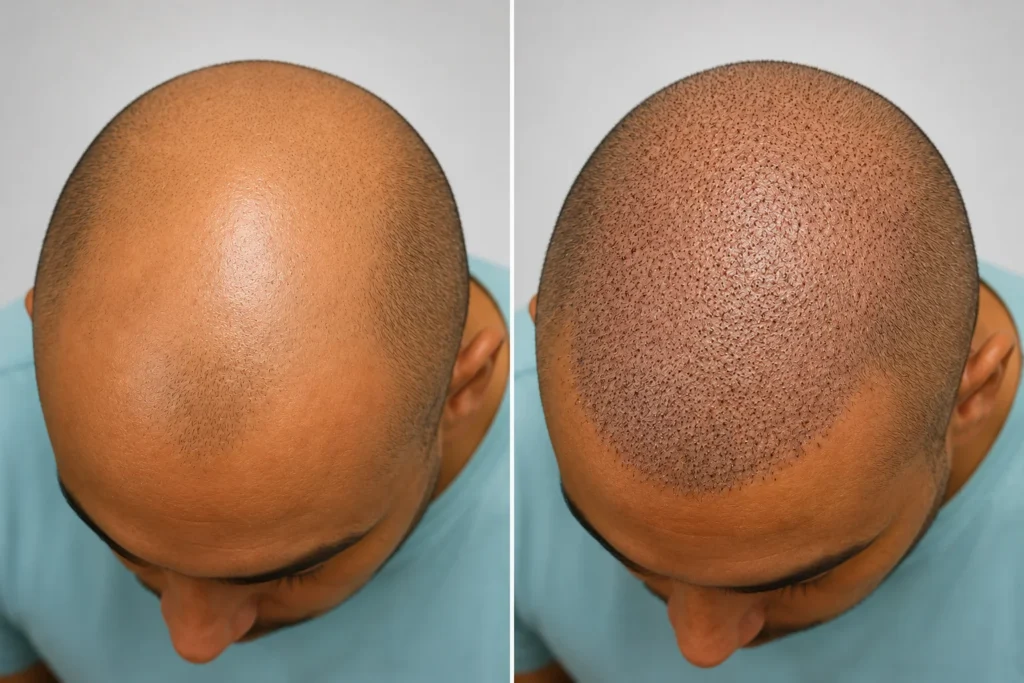
The first two weeks are the most important phase of recovery. Grafts are still fragile and must be carefully protected. During this period, the transplanted grafts are not yet fully anchored and are vulnerable to displacement from friction, pressure, and direct water impact.
Here are the most urgent priorities in the first 72 hours:
Essential Do’s
- Sleep with your head elevated at approximately 45 degrees to reduce swelling of the recipient and donor areas.
- Take all prescribed medications, typically antibiotics and anti-inflammatory agents, as directed.
- Stay hydrated and follow a nutrient-rich diet.
- If swelling develops around the forehead, gently applying an ice pack to the forehead (never directly on the scalp or grafts) can help.
- Use only surgeon-approved products.
Essential Don’ts
- Avoid touching, rubbing, or scratching the grafts. Even incidental contact with a pillow or clothing can dislodge grafts before they have had any opportunity to anchor.
- Do not engage in any strenuous physical activity or exercise, which raises blood pressure and increases bleeding risk at the surgical sites.
- Avoid alcohol and smoking completely, as both constrict blood vessels and reduce oxygen supply to healing tissue.
- Avoid direct sun exposure.
Following detailed hair transplant aftercare instructions over the next 14 days is of the utmost importance. These steps maximize graft survival and healing quality, directly affecting your final results. It is the foundation upon which your results are built.
When and How to Start Washing Your Scalp Safely
Gentle washing typically begins around day 4, and the technique matters as much as the timing. The cup-pouring method is the standard approach during this phase.
- Mix a small amount of baby shampoo into a cup of lukewarm water
- Gently pour the solution over the scalp without applying pressure
- Avoid direct shower streams at the transplanted area
- After rinsing, pat the scalp dry with a soft, clean towel. Never rub. No rubbing or vigorous movement.
Proper washing helps remove debris while protecting newly implanted grafts.
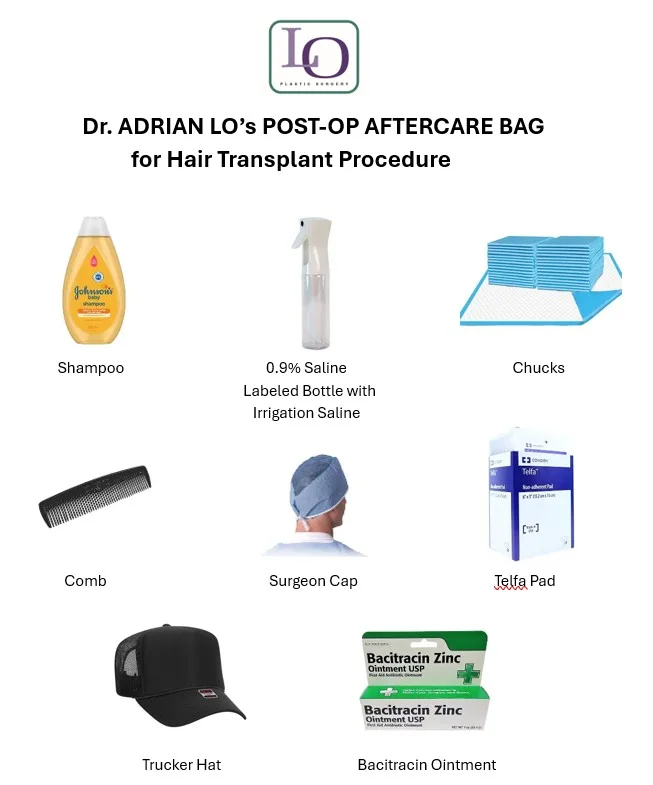
All of Dr. Adrian Lo’s hair transplant patients receive our post-op aftercare bag, stocked with the essentials to protect grafts and promote healing in the days following their procedure.
How to Handle Scabs, Shedding, and Changes in the Second Week
By days 5 through 7, small crusts and scabs will have formed over each graft site. This is a normal, natural stage of healing and must be left undisturbed. Picking at scabs is one of the most damaging mistakes patients make during this phase, as it can pull grafts out before they have anchored. If your surgeon has recommended a light moisturizer or saline spray, apply it with the gentlest possible touch.
As you enter the second week, scabs will begin to loosen and naturally shed on their own. Some patients notice scabs coming away during rinsing, which is normal, provided no force was applied.
By day 14, most scabs have naturally shed. The scalp should be largely free of crusting, and the grafts will have achieved sufficient anchoring to allow a gradual return to a normal, though still gentle, washing routine.
Weeks 3-4: Shock Loss and Recovery
By weeks three and four, surface healing is largely complete, and grafts are more secure. The most common surprise at this stage is what patients see in the mirror.
Important things to know:
- Washing can gradually transition toward a more normal routine after week two, though harsh shampoos and very hot water should still be avoided.
- Light activity may return gradually, though several activities remain off-limits through at least week four; see the full list in the avoidance section below.
- Scalp massage should also be avoided for the first four weeks. Once grafts are sufficiently anchored, gentle circular movements using clean fingertips may be introduced, but only with your surgeon’s explicit clearance. No pressure or friction should be applied to the recipient area.
- Direct sun exposure to the scalp should be avoided, and if you are outdoors, a loose hat that does not press against the recipient area is advisable.
- Shock loss (temporary shedding of transplanted hairs) typically peaks during this window. See the dedicated section below for a full explanation of why this happens and when new growth begins.
Understanding Shock Loss: Why Is Hair Falling Out After a Transplant Normal and When Will New Growth Begin?
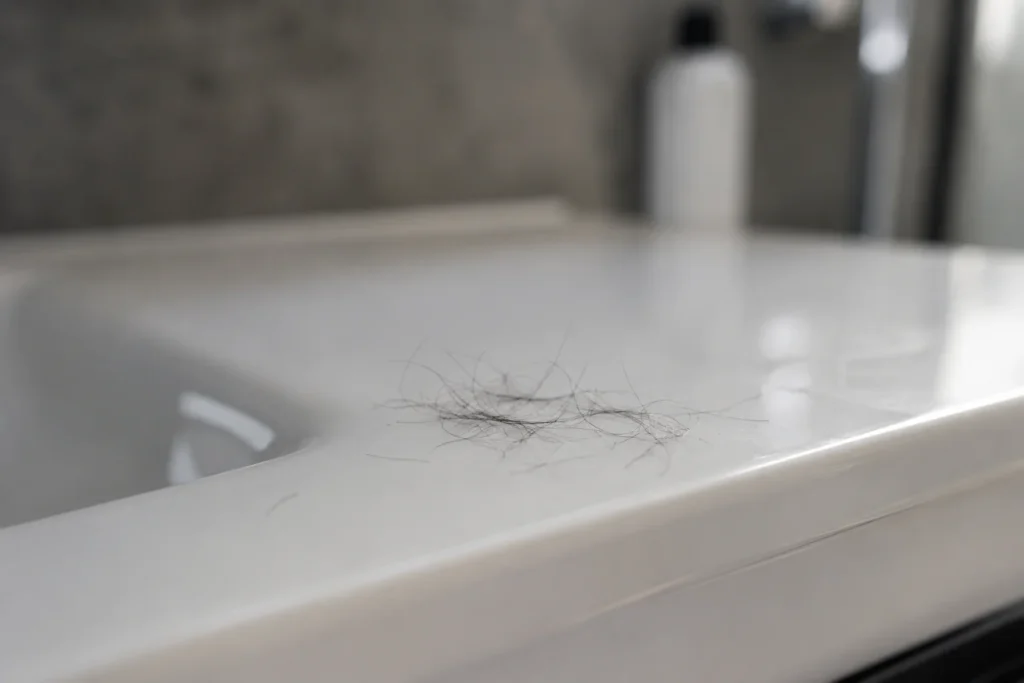
The hair follicle cycles through three phases:
- An active growth phase (anagen)
- A short transitional phase where it detaches from its blood supply (catagen)
- A resting phase where the hair shaft is shed before a new cycle begins (telogen).
Patients who were managing well emotionally may feel alarmed when they see newly transplanted hairs falling out. This is a normal, expected part of the hair growth cycle, called “shock loss,” and it is not a sign of failure.
Transplanted follicles experience a disruption to their growth cycle as a result of being harvested and relocated. In response, the follicles enter a resting phase called telogen, during which the hair shaft is released and shed. This is not damage, it is the follicle resetting before initiating a new anagen (active growth) phase in its new location.
Most patients begin to see fine new hairs emerging between months three and four. Full-density assessment is not reliable until months 12 to 18.
What to Avoid After Your Hair Transplant
Certain activities, substances, and products pose a direct risk to graft survival and scalp healing. Knowing what to avoid and for how long helps patients make informed decisions throughout recovery.
Physical activity and exercise should be paused entirely for the first two weeks. Light walking is acceptable after day 2 or 3, but gym sessions and cardio that elevate heart rate should wait until weeks two to four. Contact sports should be avoided for at least 4 to 6 weeks.
Sun and heat exposure are harmful to healing grafts. Direct sun exposure without protection should be avoided for at least four weeks. Saunas, steam rooms, and hot tubs introduce heat and bacteria that can interfere with healing and increase the risk of infection. Avoid these for four to six weeks.
Alcohol and smoking both impair the body’s ability to heal. Alcohol increases bleeding risk and interferes with medications. Smoking constricts blood vessels, reducing the delivery of oxygen and nutrients that new grafts depend on for survival. Both should be avoided for at least one to two weeks post-surgery.
Swimming in pools, oceans, or other open bodies of water poses a significant risk of infection to a healing scalp. Most surgeons advise waiting four to six weeks.
Hair products, including dyes, chemical treatments, and strong styling products, should not be used for at least four to six weeks. When products are reintroduced, start with gentle, sulfate-free formulations.
Scratching or picking at the scalp should be avoided entirely for the first three to four weeks. If itching is uncomfortable, speak to your surgeon about safe antihistamine options.
| Activity | When It Is Safe to Resume |
| Light walking | Day 2 to 3 |
| Desk work | Days 3 to 5 |
| Moderate exercise | Weeks 2 to 3 |
| Swimming | Weeks 4 to 6 |
| Saunas and steam rooms | Weeks 4 to 6 |
| Hair dye and chemical treatments | Week 6 or later |
| Contact sports | Weeks 4 to 6 |
Following these restrictions reduces infection risk, graft loss, and delayed healing.
How Long Does Hair Transplant Recovery Take? A Realistic Timeline

Understanding this timeline prevents discouragement during slower phases of recovery and helps patients recognize each milestone as progress.
Day 1 to 14: Grafts are in their most vulnerable state. Swelling, redness, and scabbing are present. The primary goal is to protect grafts from all physical disruption.
Weeks 2 to 4: Surface healing is largely complete. Shock loss begins. Patients may resume light activities and a gentler washing routine.
Months 1 to 3: Transplanted hairs continue to shed. These months represent the dormant phase, with minimal visible change. The scalp may look similar to or slightly thinner than before the procedure. This is the most psychologically challenging phase.
Months 3 to 4: New hair shafts begin to emerge. Growth is fine and soft at first, with texture and thickness increasing over time.
Months 6 to 9: Visible improvement becomes apparent. Density and coverage increase noticeably, and many patients feel comfortable with their appearance for the first time since surgery.
Months 9 to 12: Results continue to mature. Hair becomes thicker, matures, and becomes more consistent in texture, looking and feeling more natural.
Months 12 to 18: Final results visible. Full density and the natural appearance of transplanted hair can be evaluated. Results vary by individual, age, hair characteristics, and technique used.
Hair transplant recipients who understand the full timeline are less likely to make premature judgments or take actions that could compromise graft survival. Monthly progress photos taken under consistent lighting are among the most practical tools for tracking gradual change.
If you are still deciding on timing, our guide on when to get a hair transplant covers the key factors to consider before booking a procedure.
Red Flags Post Hair Transplant: When to Contact Your Surgeon
Most hair transplant recoveries proceed without significant complications, but knowing the difference between normal post-operative symptoms and warning signs that require attention is an important part of responsible post-operative care.
Normal symptoms include mild swelling around the forehead during days one through three, redness at the recipient and donor sites, itching as the scalp heals, scabbing over graft sites, and temporary shock loss. These resolve on their own with proper care.
Warning signs that warrant prompt contact with your surgeon include the following:
- Increasing redness, warmth, or swelling beyond day three to five may indicate infection, particularly if accompanied by fever or discharge from the scalp.
- Worsening swelling that does not follow the expected pattern of improvement in the first week should also be reported.
- Pus or unusual fluid from either site should always be reported.
- Folliculitis, presenting as small red bumps or pustules across the scalp, requires assessment and often treatment with antibiotics.
- Persistent bleeding that does not subside with gentle pressure warrants urgent attention.
- An allergic reaction to prescribed medications, identifiable by widespread rash, hives, or difficulty breathing, requires immediate medical care.
- From a longer-term perspective, an absence of any new growth by month six is worth discussing with your surgeon, as it may indicate suboptimal graft survival.
The guiding principle is straightforward: contact your clinic whenever something feels wrong or does not match the recovery pattern you were given. Complications from hair transplants are uncommon but manageable when addressed promptly.
Nutrition, Lifestyle, and Medications That Support Graft Survival

Hair transplant aftercare and support extend well beyond what you apply to your scalp. What you eat, how you live, and the medications you take all influence how well your grafts survive and how efficiently your scalp heals.
| Factor | Why It Matters | What To Do |
| Protein | Supports keratin production, the building block of hair | Prioritize eggs, lean meats, and legumes |
| Biotin | Supports hair and nail strength | Include biotin-rich foods such as eggs and nuts; supplement only if a deficiency is confirmed |
| Iron & Zinc | Regulate hair growth cycles; deficiencies can slow recovery | Eat leafy vegetables and iron-rich foods |
| Omega-3 Fatty Acids | Supports scalp health and reduces inflammation | Include fatty fish, flaxseed, or walnuts |
| Hydration | Keeps scalp tissue supple and delivers nutrients to healing follicles | Drink adequate water consistently, with electrolytes |
| Smoking | Nicotine constricts blood vessels, reducing oxygen to grafts and increasing the risk of poor graft survival | Avoid completely 1-2 weeks before procedure and 2 weeks during recovery |
| Blood Thinners | Aspirin, ibuprofen, fish oil, and certain herbal supplements can interfere with healing | Avoid unless specifically approved by your surgeon |
What Medications Are Typically Prescribed and Why
- Following a hair transplant, your surgeon will typically prescribe a short course of antibiotics to prevent infection.
- Anti-inflammatory medications help manage swelling during the first several days.
- Antihistamines may be recommended to address itching without requiring the patient to scratch the scalp.
- Some surgeons may also prescribe finasteride or minoxidil to patients with ongoing androgenic hair loss, as these medications help preserve non-transplanted hairs and support long-term density.
The decision to prescribe these medications is individualized, and patients should follow their surgeon’s specific guidance rather than self-medicate.
Returning to Work, Exercise, and Daily Life After a Hair Transplant
Hair transplant recovery does not require extended time away from all aspects of life, but a return to normal activities follows a structured progression. Knowing when each activity is safe helps patients plan ahead and avoid setbacks.
Desk work and sedentary employment can typically be resumed within three to five days, provided the environment does not expose the scalp to dust, chemicals, or physical contact. Remote work from the first or second day is ideal for most patients.
Physical or manual labor involving bending, lifting, or working in outdoor conditions should be deferred for two to four weeks, depending on the nature of the work and your surgeon’s guidance.
Air travel is cleared by most surgeons within 5 to 7 days after surgery. Patients should keep the scalp protected and wear a loose, clean hat if needed. Changes in cabin pressure do not pose a functional concern for graft survival.
Wearing hats or helmets requires care. Loose hats made from soft fabric can be worn from around day five, but tight-fitting caps or anything that creates friction against the recipient area should be avoided for at least three weeks.
Hair care appointments, including cuts, coloring, and chemical treatments, should wait until the scalp is fully healed. Most surgeons advise a minimum of four weeks for a haircut and six weeks or longer for any chemical service.
Following a gradual return schedule helps protect healing grafts and avoid setbacks.
Commit to Your Recovery, Protect Your Results
Hair transplant post-op care requires consistent attention, realistic expectations, and a willingness to follow your surgeon’s personalized guidance.
The patients who achieve the best long-term results are those who invest in their recovery with the same care they brought to the decision to have the procedure. With the right support and aftercare information, results can be natural, permanent, and highly satisfying.
Ready to take the next step in your hair restoration journey? Explore our hair restoration services or schedule a consultation to discuss your candidacy, what your recovery will look like, and how we support you every step of the way, before, during, and after, from day 1 to full growth, to help you achieve the best possible results.