


How Long Does Breast Reduction Recovery Take?
When it comes to breast reduction recovery time, most patients return to light daily activities within 2 weeks after breast reduction surgery, return to work within 1 to 3 weeks depending on job demands, with full physical activity resuming after 4 to 6 weeks. While you will start feeling better relatively quickly, complete healing and final breast shape aesthetic results and incision maturation typically occur over 6 to 12 months.
Understanding what to expect at each stage of the breast reduction recovery timeline can help you prepare both physically and emotionally for surgery, set realistic expectations for every stage of healing, and navigate the healing process confidently.
ASPS-quoted plastic surgeons describe breast reduction as one of the most consistently high-satisfaction procedures in plastic surgery because it delivers both significant physical relief and cosmetic improvement. Many patients report dramatic reductions in neck pain, shoulder grooving, upper back discomfort, skin irritation and exercise limitations, along with improved confidence and body proportions. The combination of relief and cosmetic improvement is worth keeping in mind as you move through recovery, since the most intense days happen early while the full benefits continue to unfold over the following months.
At Dr. Adrian Lo Plastic Surgery in Philadelphia, patients receive comprehensive guidance before, during, and after surgery to ensure a safe recovery and beautiful long-term results.
The First 24 Hours After Breast Reduction Surgery
The first 24 hours after breast reduction surgery play an important role in setting the stage for a smooth recovery journey. Immediately following surgery, patients wake up in a recovery room feeling groggy and, in some cases, mildly nauseated from anesthesia. This is completely normal and typically resolves within a few hours.
Pain at this stage is real but manageable, generally falling in the 4-5 out of 10 range, controlled with mild pain relief medication. Those medications, along with antibiotics, are an important part of the post-operative regimen and should be taken as directed.
Patients must have a trusted adult available to drive them home and stay with them for the first 24 to 48 hours. This is highly recommended. Grogginess, decreased general mobility, and the effects of anesthesia may make independent functioning difficult during this period.
At about 1-2 weeks after breast reduction surgery, patients can return to daily activities and light movement while continuing to avoid strenuous activity.
Breast Reduction Recovery Time: Week-by-Week Guide
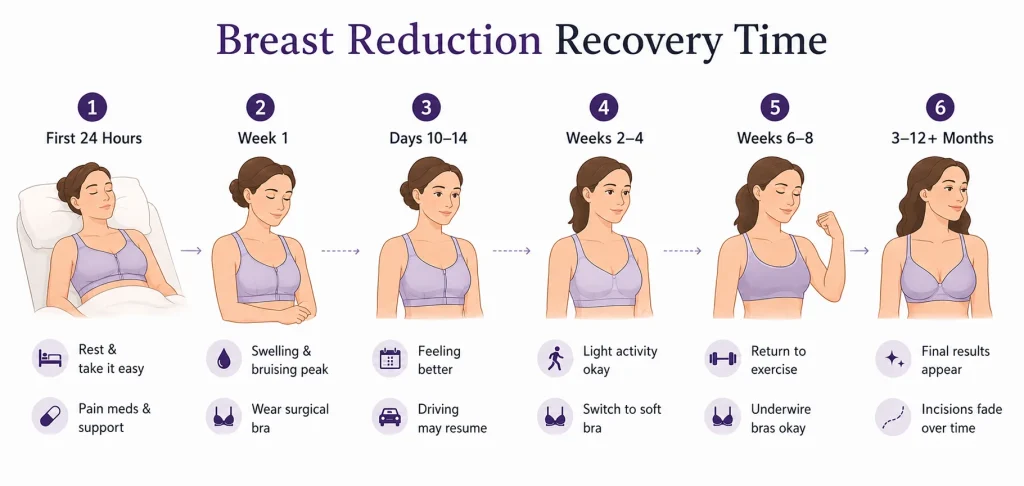
While every patient heals at a slightly different pace, most breast reduction surgery recovery time follows a predictable day-by-day timeline. Below is what most patients can expect across the major phases of healing after breast reduction surgery.
Week One: The Most Intense Phase of Healing
Days 1 through 7 represent the most challenging phase of breast reduction recovery. During this period, patients commonly experience:
- Swelling and bruising at their peak, and fatigue may be a factor.
- Mild to moderate discomfort with tightness across the chest.
- Walking is encouraged as early mobilization and ambulation are necessary for healing and to prevent blood clots in the legs.
- Rest and elevation are important. Sleeping with the upper body elevated, using a recliner or propped up on pillows, can help reduce fluid accumulation and swelling in the surgical area and improve comfort.
- Limited arm mobility to protect the surgical incisions.
- Drains may be present. Patients with drain tubes will need to empty and monitor drain output, typically until drains are removed at the first post-operative appointment, which usually takes place around days 3 to 5.
- Showering is generally not permitted until drains are out and the plastic surgeon has cleared it; sponge bathing is the alternative in the interim.
Patients may also notice:
- Itching
- Tingling
- Intermittent sharp sensations
- Temporary numbness
These symptoms are usually normal signs of nerve healing.
Incision care in week one focuses on keeping incision sites clean and dry. Emotional ups and downs are also common during this phase and are a normal response to anesthesia, discomfort, and the body’s stress response.

Days 10 to 14: Starting to Feel More Like Yourself
By the end of the second week, most patients report a noticeable improvement in how they feel and begin to ease back into a normal daily routine.
Common improvements include:
- Reduced swelling
- Fading bruising
- Increased mobility
- Noticeable decrease in discomfort
- Increased energy
- Less dependence on pain medication
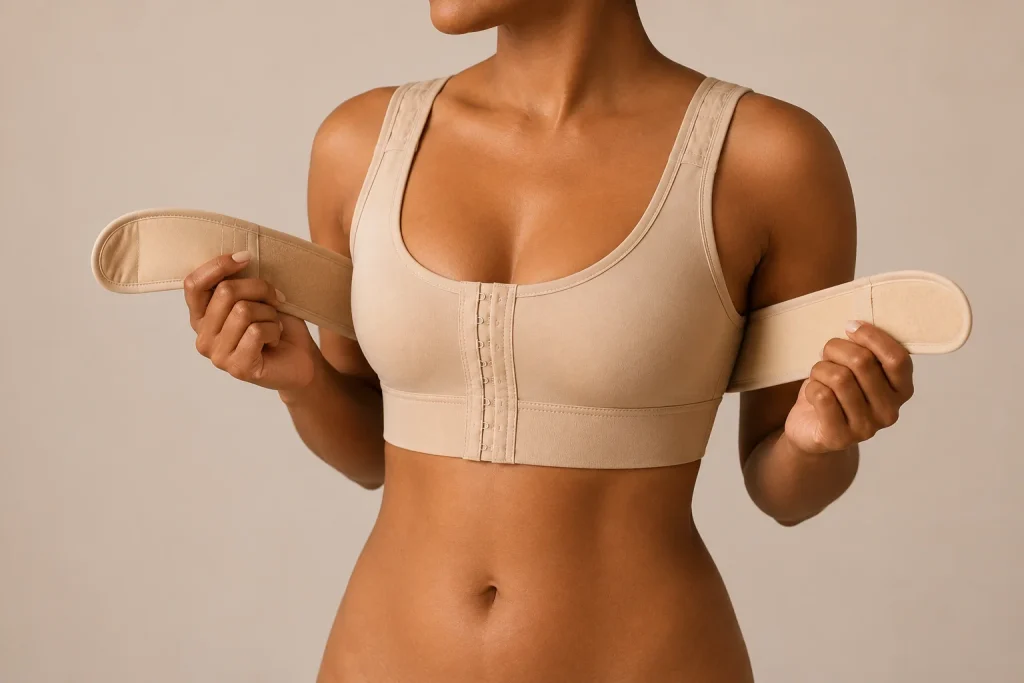
The surgical bra remains on throughout this phase. Light household activities, such as preparing simple meals or moving around the home, become feasible for most patients. Those who work from home or hold sedentary desk jobs may begin returning to work, though extended sitting and screen time should still be approached gradually. Drains, if present, are typically removed by this point.
Lifting anything over 10 pounds is still not permitted. Patients should refrain from driving until they are no longer taking prescription pain medication and have regained the mobility and alertness needed to drive safely. Once that medication is no longer needed and the plastic surgeon has given clearance, driving can typically resume around days 7 to 10 for most patients.
For many patients, this stage represents an exciting transition from recovery mode back toward normal life.
Weeks 2 to 4: Returning to Work and Daily Routines
The majority of breast reduction patients feel substantially more comfortable between weeks 2 and 4. Many patients return to sedentary or desk-based work between weeks 1 and 2. Those in more physically active roles, including jobs involving standing for long periods, lifting, or repetitive arm movement, typically wait until weeks 2 through 4 for a safe return.
During this stage:
- Most bruising resolves
- Swelling continues to improve
- Return to many normal routines
- Walking and light activity encouraged
Light walking is encouraged during this phase as a low-impact way to support circulation and overall recovery. Upper body strain of any kind, including reaching overhead or carrying heavy bags, should still be avoided. The surgical bra is replaced with a soft, supportive non-underwire bra as directed by the plastic surgeon.
Swelling often fluctuates during this phase, especially at the end of active days. This is normal and does not indicate a problem. Patients should remember that their breasts are still healing and avoid evaluating their final results at this stage. Although the results may already be impressive, final breast shape, softness and positioning will continue to evolve over the next few months.
Weeks 4 to 6 and Beyond: Resuming Full Activity
By the 4- to 6-week mark, most patients receive approval from their plastic surgeon to resume exercise gradually.
Activities are usually reintroduced in phases:
- Low-impact activities such as walking and light cycling
- Light cardio
- Lower-body workouts progressing to more demanding workouts
- Upper-body exercises and any activity that strains the chest muscles should be reintroduced gradually and only with approval from the plastic surgeon.
- High impact exercise
This is also the point when many patients begin fully appreciating the benefits of surgery, including:
- Reduced neck pain
- Less shoulder strain
- Improved posture
- Better clothing fit
- Increased confidence
- Easier physical activity
Most patients return to unrestricted daily activities at this stage, and intimacy can typically resume. Underwire bras may be worn once the plastic surgeon confirms that the incisions have fully healed.
Breast shape continues improving and surgical incisions continue to fade over the following months, with full incision maturation taking 12 to 18 months.
Months 3 to 6: Enjoying the Final Results
By months 3 to 6, most of the healing process is complete, and patients can begin appreciating the full benefits of their breast reduction surgery.
- Final breast shape and contour become more apparent
- Most residual swelling has resolved
- Incisions continue to fade and mature
- Improved comfort and mobility in daily activities
- Increased confidence and satisfaction with results
During this stage, the breasts settle into their more natural position and appearance, allowing patients to experience the physical and emotional benefits of their procedure fully.
Months 6 to18 and Beyond: Long-term Healing and Scar Maturation
Although most recovery is complete by six months, subtle healing continues throughout the first year after surgery.
- Scars gradually soften, flatten, and fade
- Breast tissues continue to settle naturally
- Sensation may continue to improve
- Long-term results become fully established
- Patients can enjoy their new shape with few recovery-related restrictions
By the one-year mark, most patients have achieved their final results and can confidently enjoy the lasting improvements in comfort, proportion, and quality of life that breast reduction surgery provides.

Learn more about when you will know your final breast size here.
What Factors Affect Breast Recovery Time?
Recovery from breast reduction does not follow a single universal timeline. Several factors influence healing speed and overall recovery. Understanding these factors helps set realistic expectations.
Surgical Factors: The amount of tissue removed matters; more extensive procedures typically require longer recovery periods. The surgical technique and the extent of reshaping also have an impact on the breast reduction recovery time.
Patient Factors: Age and overall health play a meaningful role. Younger patients with no underlying health conditions generally heal more quickly. Body mass index can affect healing, as higher BMI is associated with a modestly slower recovery and a slightly elevated risk of complications. Proper nutrition is always important to support optimal healing.
Lifestyle Factors: Smoking is among the most significant factors. Nicotine impairs blood flow and tissue healing at a cellular level, and most board-certified plastic surgeons require patients to stop smoking at least 2 to 4 weeks before surgery and throughout recovery. Patients who do not stop smoking face a meaningfully higher risk of healing complications. Among all risk factors, smoking remains one of the most significant predictors of delayed healing and complications because it reduces blood flow to recovering tissues. Patients should also avoid marijuana and THC products.
A strong support system at home accelerates recovery by allowing adequate rest during the early phase. Following post-operative instructions carefully, including attending follow-up appointments, taking medications as directed, and avoiding prohibited activities, are controllable factors in how smoothly recovery goes.
If you are curious about what causes larger breast size in the first place, understanding the underlying factors can help set expectations for your own procedure and recovery.
How to Support Your Recovery: Practical Tips That Actually Help
Before surgery, set up a recovery station. Have a comfortable chair or bed area with extra pillows for elevation, easy-to-reach entertainment, medications, water, and loose-fitting clothing that opens at the front. Having this ready before you return home makes recovery easier.
Nutrition matters. Protein supports tissue repair; incorporating lean meats, eggs, legumes, and dairy into meals during recovery is worthwhile. An anti-inflammatory approach, including foods rich in omega-3 fatty acids, fruits and vegetables, can help the body manage swelling. Keeping salt intake low and staying consistently hydrated also help reduce swelling.
Sleep positioning is important. Sleeping on your back with the torso elevated protects the surgical incisions and reduces overnight swelling. Stomach sleeping must be avoided for at least the first 8 weeks.
Attend follow-up appointments. These visits help to monitor healing, remove drains or sutures, and catch any concerns before they become problems. Skipping them is one of the most common recovery mistakes.
Avoid the urge to search symptoms obsessively online. Normal healing sensations, such as itching, tightness and occasional sharp feelings near incisions, can look alarming when searched without context. Your surgical team is always the right resource for questions.
Emotional recovery deserves attention too. Post-surgery blues are common and do not indicate regret. If low mood persists beyond the first two weeks, reach out to your care team for support.
Breast Reduction Recovery Warning Signs
Recovery after breast reduction surgery is smooth for the vast majority of patients. Complications are uncommon, but knowing the difference between normal healing and a warning sign protects your health.
Contact your plastic surgeon promptly if you experience any of the following:
- Fever above 101 degrees Fahrenheit
- Increasing redness, warmth, or swelling around the incisions
- Unusual discharge or drainage with a foul odor
- One breast that appears noticeably more swollen than the other
- Shortness of breath or chest pain, which can indicate a blood clot and warrants immediate emergency attention; Leg or calf pain should also be brought to your plastic surgeon’s attention.
- Separation or opening of incision wounds
- Extreme pain that prescribed medications do not adequately address
- Numbness that spreads or worsens rather than resolving
None of these symptoms should be dismissed if they are present. Prompt evaluation helps address concerns before they become more serious. A call to your plastic surgeon’s office is always appropriate when something does not feel right. Most patients complete breast reduction recovery without encountering any of these issues, but having this list in mind removes uncertainty and helps you act quickly if needed.
Beyond Recovery: Benefits of Breast Reduction

Recovery time for breast reduction is an investment, and the return on that investment is substantial and lasting. Once fully healed, patients consistently report relief from chronic neck, back, and shoulder pain, improved posture, clothes fitting better, greater comfort during physical activity, and a more proportionate, aesthetically pleasing figure.
Surgical incisions continue to fade throughout the first year, with full incision maturation reached around 12 to 18 months post-surgery. The final breast shape settles and becomes visible around the 3- to 6-month mark for most patients.
You can view real patient outcomes in our before-and-after breast reduction photo gallery. Individual results may vary.
If you are also weighing how much breast reduction surgery costs as part of your decision, this guide breaks down the factors that go into pricing.
Your Path to a Smooth, Confident Breast Reduction Recovery
Breast reduction recovery is a staged process with a clear and manageable path from the first difficult days to full, lasting results. Understanding what to expect at each phase, what you can do to support healing, and when to seek guidance from your plastic surgeon puts you in the best possible position for a smooth recovery.
Schedule a Breast Reduction Consultation in Philadelphia
Breast reduction recovery is temporary. The relief, confidence, and improved quality of life can last for decades.
If large, heavy breasts are affecting your comfort, posture, exercise ability, or self-confidence, breast reduction surgery may be life-changing.
Ready to learn more about breast reduction surgery and what your recovery might look like? Schedule a consultation with Dr. Adrian Lo, a double-board-certified plastic surgeon with more than 30 years of surgical experience performing advanced breast reduction techniques and other procedures at Pennsylvania Hospital.
Dr. Lo has been recognized as one of Newsweek’s America’s Best Plastic Surgeons in 2021, 2023, 2024, 2025, and 2026, and he performs the No Vertical Scar technique to help minimize visible incisions. Dr. Lo and his team recognize the importance of personalized care and will walk you through every step of the process, from preparation to healing, so you feel informed and confident before you ever enter the operating room.
Ready to learn if breast reduction is right for you?
FAQs about Breast Reduction
Here are frequently asked questions about breast reduction surgery.
What Is the Recovery Time for a Breast Reduction?
Most patients return to light daily activities within 1 to 2 weeks, with full physical activity resuming around the 3- to 4-week mark. Complete healing, including final aesthetic results and incision maturation, takes 6 to 12 months.
How Painful Is Recovery From a Breast Reduction?
Pain is most noticeable during the first week, generally falling in the 4 to 5 out of 10 range, controlled with mild pain relief medications. Discomfort steadily improves after the first 5 to 10 days, and most patients describe the later stages of recovery as manageable rather than painful.
Do You Lose Belly Fat After Breast Reduction?
No. Breast reduction removes excess breast tissue and skin to reduce breast size and weight; it does not remove fat from the abdomen or other areas of the body. Patients interested in reducing abdominal fat may want to ask their plastic surgeon about procedures such as a tummy tuck or liposuction during a consultation.
How Long Should I Stay Home After Breast Reduction?
Most patients plan to be home from work for at least 1 to 2 weeks, with those in physically demanding jobs often waiting 2 to 3 weeks before returning. A trusted adult should also be available to help during the first 24 to 48 hours after surgery, as assistance will be greatly appreciated with routine daily activities while you are recovering.
What Happens if I Lose 20 Pounds After Breast Reduction?
Significant weight loss after breast reduction can change breast size and shape, since breast tissue is partly made up of fat that responds to changes in body weight. Patients considering major weight changes in the near future may want to discuss timing with their plastic surgeon before scheduling surgery so results are not affected sooner than expected.