
Medically Reviewed By: Dr. Adrian Lo, M.D., FACS, FRCS(C)
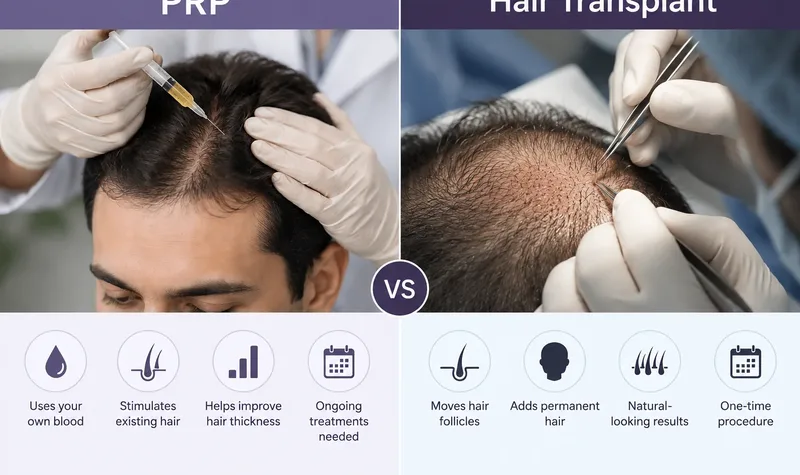
If you are deciding between PRP vs. hair transplant, the best option depends on whether your hair follicles are still active.
Platelet-rich plasma (PRP) uses a concentrated dose of a patient’s own platelets to support thinning hair follicles. In contrast, a hair transplant restores hair by surgically moving permanent, DHT-resistant follicles into areas of visible balding.
PRP may reduce shedding and improve hair density by stimulating existing follicles, but it cannot regrow hair in completely bald areas.
For patients with a receding hairline, thinning crown, or established bald spots, a hair transplant provides the best long-term solution for restoring permanent hair growth.
Many patients achieve the best outcome by combining PRP with hair transplant surgery.
| Factor | PRP | Hair Transplant |
|---|---|---|
| What It Treats | Thinning hair with active follicles | Balding areas and receding hairlines |
| Permanence | Temporary; needs maintenance sessions | Permanent once grafts take root |
| Sessions | 3 to 4 initial sessions, plus maintenance | One surgical session (staged for larger areas) |
| Downtime | None to minimal | A few days for most activity; full recovery in about two weeks |
| Best Candidate | Early thinning with existing follicles | Visible balding or thinning beyond what PRP can support |
| Results Timeline | Gradual over 3 to 6 months | Shedding at 2 to 4 weeks; growth at 3 to 4 months; full results near 12 months |
Key Takeaways
- PRP supports active follicles, while a hair transplant restores hair in areas where follicles no longer produce growth.
- PRP cannot regrow hair in fully bald areas.
- Hair transplants use DHT-resistant donor follicles that typically provide long-term results once grafts take root.
- Research shows PRP improves hair density and reduces shedding, though effects on hair thickness are less consistent.
- Graft survival in hair transplants depends heavily on technique and the surgeon’s skill.
- PRP is often combined with hair transplantation to support graft survival and overall hair density.
- The right approach depends on the stage of hair loss and should be determined by a plastic surgeon during a personal consultation.
What Is PRP for Hair Loss?
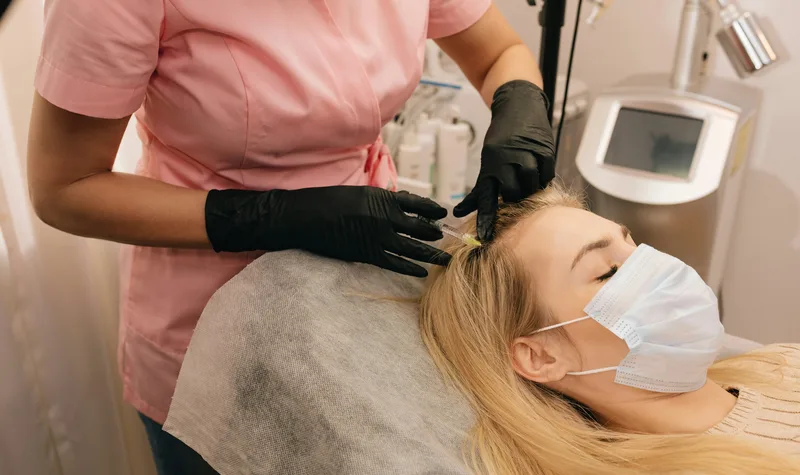
Platelet-rich plasma therapy starts with a small blood draw. A centrifuge separates the platelet-rich portion of the blood, concentrating growth factors that support tissue repair, and injects it into areas of thinning hair to stimulate active follicles.
- PRP does not create new hair follicles or reverse baldness. PRP works best for early to moderate androgenetic alopecia where follicles remain active.
- Most protocols call for an initial series of three to four sessions spaced four to six weeks apart, followed by periodic maintenance treatments to sustain results.
- PRP is nonsurgical, requires no incisions, and involves minimal downtime, but the improvement is generally modest and can fade if treatment stops.
What Research Says
A 2025 systematic review and meta-analysis of 43 randomized controlled trials, covering 1,877 participants, found that PRP significantly increased hair density and reduced shedding in patients with androgenetic alopecia. However, improvements in hair thickness are less consistent.
Additional studies on female pattern hair loss, covering 628 participants across 21 randomized trials, reported improvements in both hair density and thickness. The American Academy of Dermatology also reports moderate evidence supporting PRP for androgenetic alopecia.
What Is a Hair Transplant?
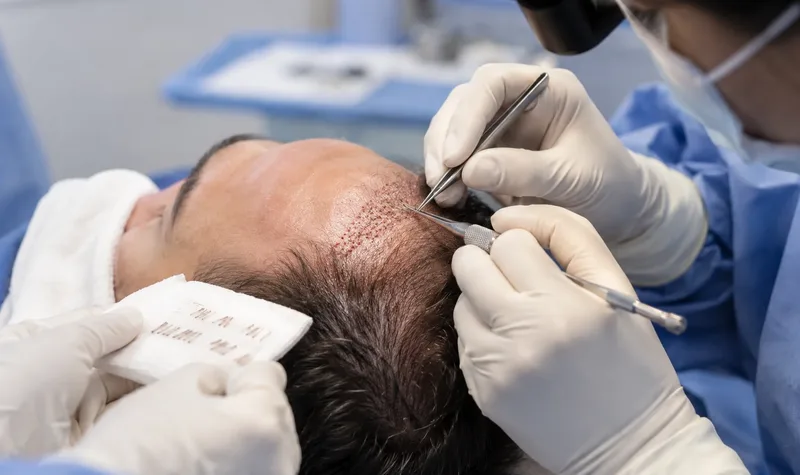
A hair transplant permanently restores hair by relocating healthy DHT-resistant follicles from a permanent donor area, typically the back and sides of the scalp, to areas affected by male or female pattern hair loss.
Follicular unit extraction (FUE) is the most common modern technique. Individual follicular units are removed one at a time and placed into the recipient area, leaving no linear surgical incision.
- Performed under local anesthesia on an outpatient basis.
- Most patients return to light activity within a few days.
- Initial shedding (called ‘shock loss’) is expected before new growth begins around three to four months, with final results developing over approximately one year.
Because donor-zone follicles resist the hormone that drives pattern baldness, transplanted hair generally continues growing long term once it takes root, a concept known as donor dominance.
Modern FUE techniques can achieve excellent graft survival rates when follicles are handled properly, making surgeon technique and experience a key factor in long-term success. A 2024 study of 158 patients published in BMC Surgery found that more than 90% of transplanted follicles survived with modern FUE technique, with over 85% of patients reaching a follicle survival rate above 95% at twelve months.
PRP vs. Hair Transplant Cost: What Patients Actually Pay
Hair transplant surgery is generally billed as a single procedure, with U.S. pricing commonly ranging from $6,000 to $15,000+ depending on graft count and technique. PRP is approximately $400 to $2,000 per session, and typically requires an ongoing series rather than a one-time cost.
Although PRP has a lower upfront cost, ongoing maintenance treatments can make long-term expenses comparable to or greater than a hair transplant for some patients. Treatment cost depends on the degree of hair loss and the personalized treatment plan discussed during consultation.
Patients considering either option can also review financing options.
Can PRP and a Hair Transplant Be Used Together?
Yes. PRP may improve graft survival and support surrounding native hair when used alongside a hair transplant. Rather than replacing surgery, it often serves as a complementary treatment for selected patients.
A 2025 systematic review of three controlled studies involving 217 patients suggests PRP may improve hair density, follicle survival, and earlier visible growth when combined with transplantation.
Which Option Fits Your Stage of Hair Loss?
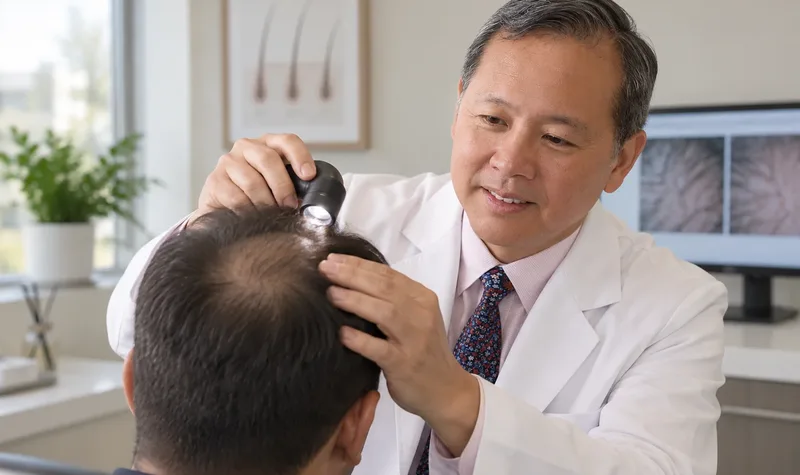
- Early thinning with a full hairline: PRP alone may slow further loss and support the existing follicles.
- Moderate thinning with early recession: PRP combined with a smaller hair transplant can address both at-risk areas and areas already bald.
- Visible balding or advanced male pattern hair loss: A hair transplant restores hair where follicles are no longer active. PRP can help support graft survival.
Treatment recommendations should be based on scalp evaluation, hair loss pattern, and donor hair availability.
Why Surgeon Experience Matters in Hair Transplant Success
Hair transplant success depends on more than graft count. Hairline design, graft handling, donor area management, and surgeon experience all influence how natural the final result appears.
Schedule a Hair Consultation to Learn More
The right treatment for hair loss depends on an individual scalp examination, hair loss pattern, and goals. Dr. Adrian Lo is a double board-certified plastic surgeon with more than 30 years of experience serving patients from Philadelphia, Bucks County, Montgomery County, Cherry Hill, South Jersey, and surrounding Pennsylvania and New Jersey communities.
Early evaluation can expand treatment options and improve long-term outcomes. Dr. Lo personally assesses hair loss patterns and recommends customized plans designed to achieve natural-looking, long-lasting results.
To find out which treatment is most likely to achieve your goals, schedule a consultation today for a personalized hair restoration plan.

Frequently Asked Questions
Does PRP Regrow Hair in Bald Spots?
No. PRP can strengthen thinning follicles but cannot regrow hair in areas where follicles are no longer active.
How Long Do Hair Transplant Results Last?
Transplanted follicles come from a donor zone resistant to pattern baldness, so results are generally permanent once grafts take root.
Is PRP Or A Hair Transplant More Uncomfortable?
PRP involves injections and is usually well tolerated with topical numbing. A hair transplant is done under local anesthesia, so there’s no pain during the procedure, though some soreness follows for a few days.
How Many PRP Sessions Are Needed Before Seeing Results?
Most patients need three to four initial sessions, four to six weeks apart, with visible changes over three to six months.
Can PRP Replace A Hair Transplant?
No. PRP can improve existing follicles, but cannot replace follicles that have stopped producing hair.
What Is Better For A Receding Hairline?
For a true receding hairline where follicles have been lost, a hair transplant generally provides superior, longer-lasting results than PRP alone.