

Hair loss is rarely sudden; it is often a slow process that unfolds over years. Many people live with thinning hair for years before they ask the big question: when to get a hair transplant? The answer isn’t universal. The ideal timing for hair transplant surgery depends on your age, how far your hair loss has progressed, donor hair, long-term expectations and whether the right conditions are in place for lasting results.
Choosing a transplant too early or too late can affect how natural and lasting your results appear and how satisfied you are with the outcome.
Understanding the hair loss timeline helps you make a strategic, informed decision, not an emotional one driven by anxiety or impatience.
Related: What is a Seroma?
Why Hair Loss Progression Matters Before a Hair Transplant

Before determining when to get a hair transplant, it is critical to understand what is happening with your hair loss right now. Hair transplant surgery works by redistributing or moving existing follicles from a stable donor area, typically the back or sides of the scalp to areas with thinning or baldness. If your hair loss is still actively progressing, future shedding or thinning can occur around the transplanted grafts, leading to an uneven or patchy appearance over time.
This is one reason experienced plastic surgeons prioritize a stabilized pattern before recommending surgery.
How Hair Loss Is Classified and Staged
To assess readiness for a hair transplant, standardized classification systems are used.
- The Norwood Scale is the most widely used tool for measuring male pattern baldness. It runs from Stage 1 (minimal recession) to Stage 7 (advanced hair loss across the top of the scalp).
- The Ludwig Scale assesses female hair loss patterns, performs a similar function, focusing on diffuse thinning rather than recession.
Your stage on these scales provides important insight into the timing, candidacy and surgical planning. A plastic surgeon will evaluate your stage before recommending the best time to proceed with a hair transplant.
Why Stabilizing Hair Loss First Leads to Better Results
One of the most important factors in hair transplant timing is whether your hair loss has slowed or stabilized.
Performing a transplant while hair loss is actively occurring means the native hair around the transplanted follicles may continue to fall out. That can leave gaps that require additional procedures later.
For this reason, plastic surgeons often recommend medical management such as minoxidil or finasteride before surgery to slow or pause progression. Allowing these treatments time to work helps preserve existing hair and protects your long-term result.
Hair Loss Progression and Transplant Timing: What Plastic Surgeons Look For
When evaluating hair loss progression and transplant timing, a plastic surgeon considers several factors:
- How long you have been losing hair
- Whether the loss is still accelerating or has plateaued
- Donor area density and stability
- Family history of hair loss
- Overall scalp health and medical history.
Someone who experienced hair loss at 22 years of age and has seen rapid progression over two years is a very different candidate than someone who noticed a gradual recession beginning at age 38. These distinctions guide both when to proceed and how to design the transplant.
What Age Has to Do With Hair Transplant Timing
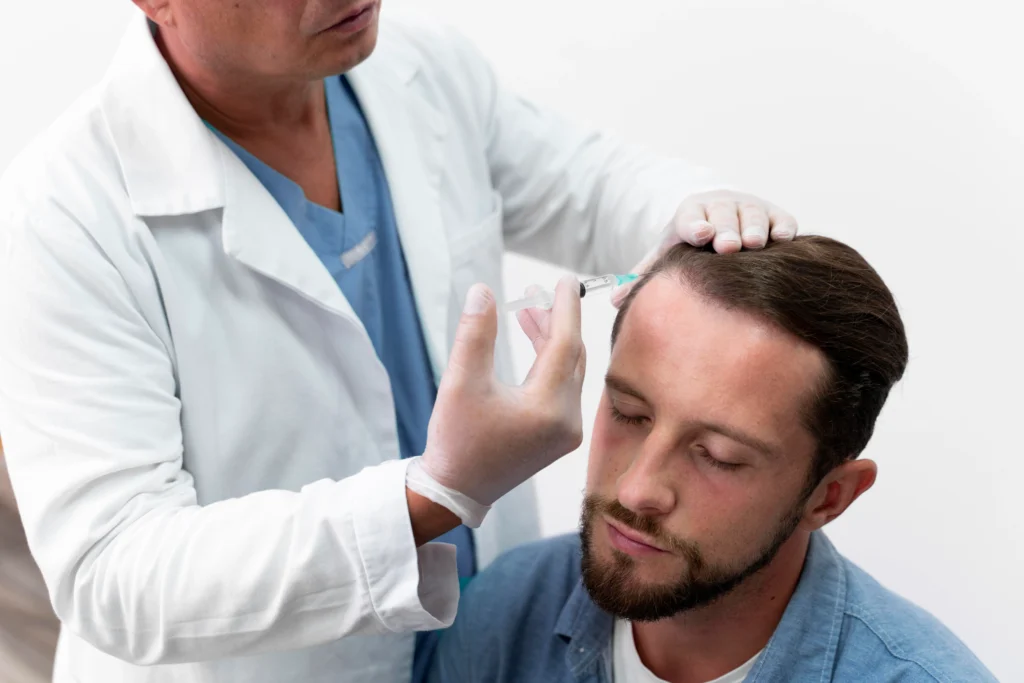
Age plays a significant role in when to get a hair transplant. However, there is no single ‘perfect’ age for a hair transplant, but the age-related patterns play an important role in predicting long-term outcomes.
Hair Transplant Timing by Age: Why Many Plastic Surgeons Recommend Waiting
Hair transplant timing by age is a topic many younger patients find surprising. Most plastic surgeons recommend waiting until the mid-to-late 30s for patients experiencing pattern hair loss.
By this stage:
- Hair loss patterns are more predictable
- Donor hair stability is easier to assess
- Long-term planning becomes more reliable
A transplant performed at age 22 may initially look natural, but future hair loss can leave transplanted hair surrounded by continued thinning, requiring more intervention.
That said, younger patients may still be candidates if hair loss is well understood and expectations are realistic.
Related: Are Hair Transplants in Turkey Safe? Truth Behind the Trend
Why Younger Patients Are Often Asked to Delay Hair Transplant Surgery
Younger patients are often understandably eager to take action and address hair loss quickly. But acting too soon carries a risk. A hair transplant hairline that looks natural and age-appropriate at 25 may not match facial aging or continued hair loss at 40.
Plastic surgeons may advise younger patients to spend 12–18 months on medical management, with regular reassessment before committing to surgery.
How Donor Hair Supply Changes Over Time
The donor area is not unlimited. The donor area is where transplanted follicles are harvested, typically the back of the head and sides of the scalp.
In younger patients, the follicles in this zone may still be vulnerable to miniaturization, the same process that causes pattern baldness. Waiting allows surgeons to confirm which follicles are truly permanent, enabling careful donor preservation and better planning for potential future procedures.
How to Know If You Are Ready for a Hair Transplant
Knowing when to get a hair transplant also means knowing whether you are personally ready, physically, and in terms of expectations. Candidacy involves several factors beyond age and hair loss stage.
Signs Your Hair Loss Has Stabilized
How to know if you are ready for a hair transplant often comes down to one key indicator: hair loss stability. A commonly used benchmark is 1–2 years of minimal change in hair density or pattern.
Keeping photo documentation over time can help both you and your plastic surgeon track whether progression has truly slowed.
Patients who are still losing noticeable amounts of hair monthly are generally not yet ready for a hair transplant. Stabilization does not mean stopping loss entirely, it means the rate has become slow, predictable and manageable.
What a Hair Transplant Consultation Reveals About Candidacy
A consultation with a plastic surgeon is the most reliable way to determine readiness.
During your consultation appointment, an assessment will be completed on:
- Scalp health
- Hairline position
- Donor supply
- Hair density and caliber
- Overall medical history
Blood work may be recommended to rule out underlying conditions such as thyroid issues or nutritional deficiencies that contribute to hair thinning.
The consultation is also an opportunity to discuss your goals. Realistic expectations are a large part of a successful outcome. A good plastic surgeon will explain exactly what a transplant can and cannot achieve for your specific situation. A successful transplant is built on clarity, education, and honesty.
Health Factors That Affect Hair Transplant TIming
Certain health conditions can affect both candidacy and timing.
Conditions that may delay surgery include:
- Uncontrolled diabetes
- Active scalp conditions (psoriasis, seborrheic dermatitis)
- Blood-thinning medications
Smoking is another factor. Nicotine reduces blood flow to the scalp and can compromise graft survival. Most plastic surgeons recommend stopping smoking for several weeks before and after surgery to optimize healing.
Being in good overall health gives your transplanted follicles the best chance of thriving.
When Is the Best Time of Year to Get a Hair Transplant
Beyond age and candidacy, many patients wonder about the best time to get a hair transplant. While hair transplants can be performed year-round, timing can influence recovery comfort.
Seasonal Trends in Hair Transplants and Why Fall and Winter Are Popular
Seasonal trends in hair transplants show a consistent preference for fall and winter procedures.
Cooler months offer several advantages:
- Less sun exposure during sensitive post-operative healing period
- Easier concealment with hats
- Reduced outdoor activity
- More flexibility for time off work
Many patients prefer the privacy and downtime that winter naturally provides.
Winter scheduling also aligns well with end-of-year downtime. Many patients find it easier to take time off work and social commitments during the holiday season, allowing for a lower-key recovery period.
How Sun Exposure Affects the Scalp During Recovery

Sun exposure is one of the more commonly overlooked concerns after a hair transplant. In the weeks following the procedure, the scalp is sensitive and grafts are still anchoring themselves. Direct UV exposure can cause irritation, slow healing, and affect pigmentation in the treated areas.
Wearing a loose, breathable hat outdoors and avoiding prolonged sun exposure for at least a month post-procedure is standard guidance.
Planning Around Your Lifestyle and Personal Schedule
Practical timing matters just as much as seasonal factors. Most hair transplant patients experience some redness, scabbing, and visible post-procedure signs for two to three weeks. Planning surgery around a demanding work schedule, an upcoming event, or a vacation can reduce stress and support smoother healing during recovery.
Giving yourself ample time, ideally two to four weeks of lighter commitments, makes recovery more comfortable and helps you focus on healing rather than hiding.
Discover Whether Now is the Right Time for Your Hair Transplant with Expert Guidance from Dr. Adrian Lo
Understanding when to get a hair transplant is not something you should navigate alone. Hair loss is deeply personal, and the right timing depends on factors unique to your hair loss pattern, donor supply and long term goals.
Our Philadelphia plastic surgery and Marlton NJ offices offer consultations that are personalized to your hair loss pattern, donor supply, and focused on long-term success.
If you’re considering a hair transplant and want clear guidance on whether now is the right time, schedule a consultation with Dr. Adrian Lo today.
To get started, schedule a consultation with Dr. Adrian Lo today. You can also visit Dr. Adrian Lo (Philadelphia) to find the location most convenient for you.