

Hair transplant surgery typically takes between 4 and 8 hours for most patients. However, how long hair transplant surgery takes depends on the total graft count, technique (FUE, FUT, or robotic ARTAS), and the experience of your surgical team. Smaller sessions of 1,000 to 1,500 grafts may take 4 to 5 hours while larger sessions of 3,000 or more grafts can extend to 8 to 9 hours or require staged sessions. Because the donor area contains a finite supply of follicles that do not regenerate once removed, accurate graft planning at the consultation stage directly affects both the procedure timeline and the long-term outcome.
At Dr. Lo’s advanced hair restoration practice, precision planning, experienced technicians, and robotic-assisted FUE technology help streamline procedure time while maximizing natural, long-lasting results.
Most patients should plan for a full day at the clinic. From early arrival and pre-procedure preparation through harvesting and implantation and post-procedure instructions, the visit typically spans 8 to 10-hours from check-in to departure, even if the surgical portion itself is shorter.
| Graft Count | Approximate Procedure Time | Typical Candidate |
| 500 – 1,500 grafts | 4 to 5 hours | Early hair loss, Norwood Stage 2–3 |
| 1,500 – 2,500 grafts | 5 to 7 hours | Moderate hair loss, Norwood Stage 3–4 |
| 2,500 – 3,500 grafts | 7 to 9 hours | Advanced hair loss, Norwood Stage 5–6 |
| 4,000+ grafts | May require 2 sessions | Extensive hair loss, Norwood Stage 6–7 |
Understanding the full timeline before scheduling a procedure allows patients to plan their calendar, set realistic expectations, and feel confident about the process ahead.
What Happens Before Hair Transplant Surgery Even Starts?
On the day of the hair transplant, the surgical work does not begin the moment a patient walks through the door. A meaningful portion of the morning is dedicated to preparation steps that set the foundation for everything that follows.
Why the Consultation Shapes the Entire Hair Transplant Timeline
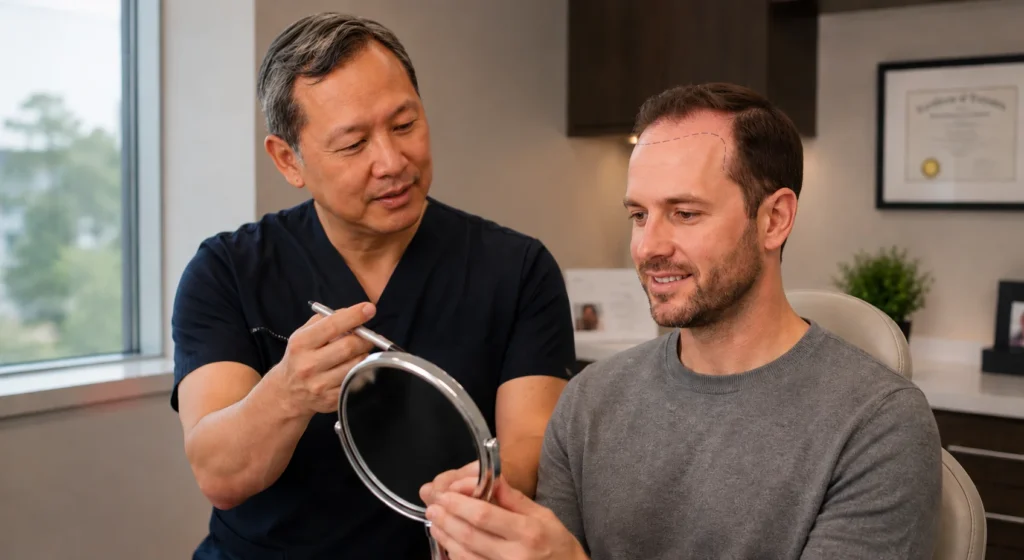
The consultation is where every consequential decision gets made. The plastic surgeon assesses the patient’s degree of hair loss using the Norwood Scale, evaluates donor density, and determines candidacy for the procedure. From this assessment, the team establishes the approximate graft count, which is the single most influential factor in determining how long the procedure will take. The consultation also determines whether FUE or FUT is the appropriate technique, which directly affects total session length.
If you are unsure whether now is the right time to move forward, our guide on when to get a hair transplant covers the key timing factors plastic surgeons evaluate before recommending surgery.
What Occurs Between Arrival and the First Graft Harvest?
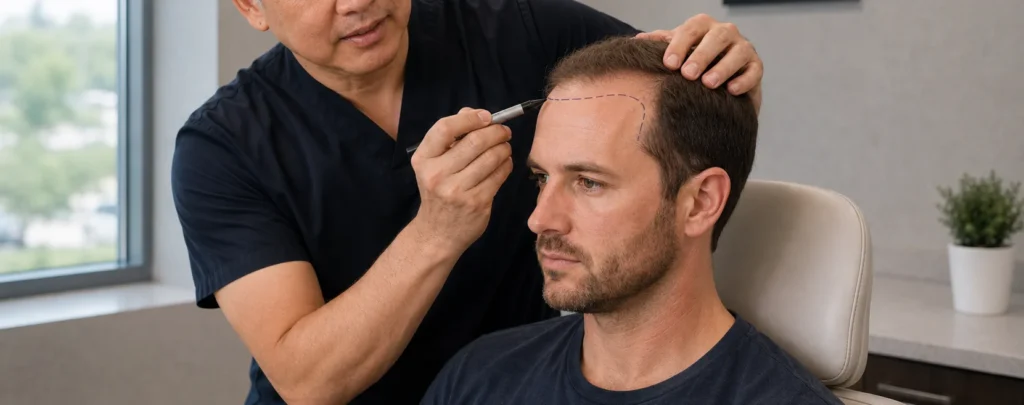
Patients typically arrive at the clinic 30 to 60 minutes before the procedure begins for pre-surgical preparation. During this time, the patient reviews and signs consent forms and pre-operative instructions are reviewed, standardized baseline photographs are taken and the plastic surgeon carefully designs and refines the hairline with patient input. The planned hairline is drawn directly on the scalp using a surgical marker. The hairline design is discussed with the patient and adjusted until both parties are satisfied with the aesthetic outcome.
Once the design is finalized, local anesthesia is administered in multiple small injections to both the donor and recipient areas of the scalp. This numbing process typically takes 15 to 30 minutes and is often described as the most uncomfortable part of the entire experience. By the end of this preparation phase, the patient is comfortable, numb, and ready for harvesting. This pre-surgical time is part of the total session commitment and should be factored into the day’s schedule.
How Long Does Hair Transplant Surgery Take?
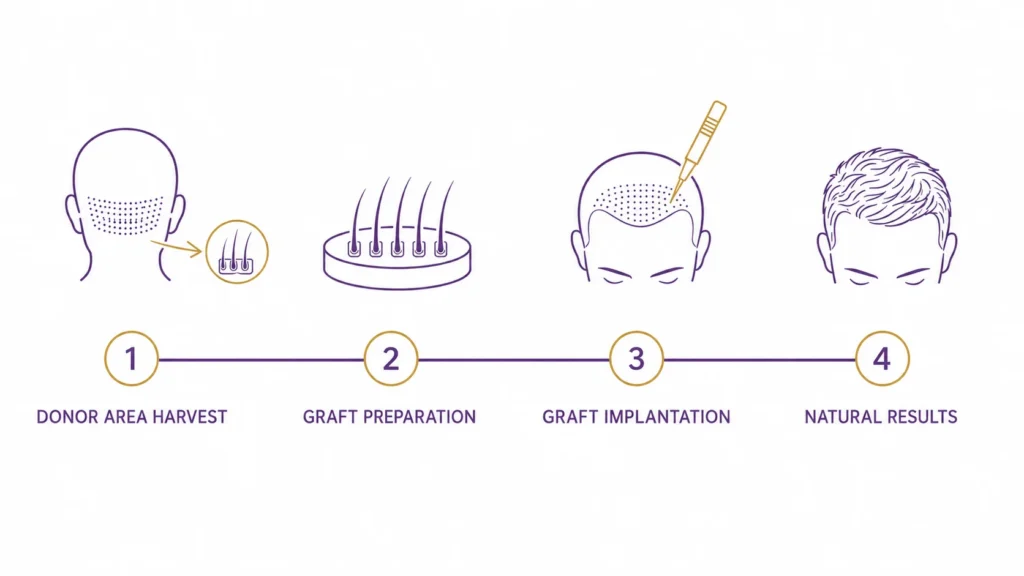
The hair transplant surgery itself takes the most time of any single phase, and it varies considerably based on technique and graft count. Surgery is performed in four sequential phases: donor harvesting, graft preparation, recipient site creation, and graft implantation. Each phase adds to the time spent in the chair.
Does the Technique Choice Affect How Many Hours the Procedure Takes?
Yes. The selected donor harvesting technique has a direct and measurable effect on the duration of the procedure.
- With Follicular Unit Extraction (FUE), a specialized punch tool precisely removes individual follicular units from the donor area. Because each graft is extracted one by one, the process offers exceptional accuracy but the harvesting phase requires more time, particularly for larger sessions.
- With Follicular Unit Transplantation (FUT), the plastic surgeon removes a linear strip of scalp from the donor area, a faster harvest but one that requires surgical skill to dissect the strip under magnification into individual grafts. This technique leaves a linear scar.
- With Robotic FUE using the ARTAS iX system, AI-guided technology identifies and extracts individual follicular units from the donor area improves speed, consistency and graft survival compared to manual FUE. Because the system automates the harvesting phase, procedure time is reduced compared to manual extraction, particularly for larger graft counts, without increasing the risk of follicle damage during extraction.
At Dr. Lo’s practice, robotic-assisted FUE reduces harvesting time while maintaining exceptional graft quality, especially beneficial for higher graft counts.
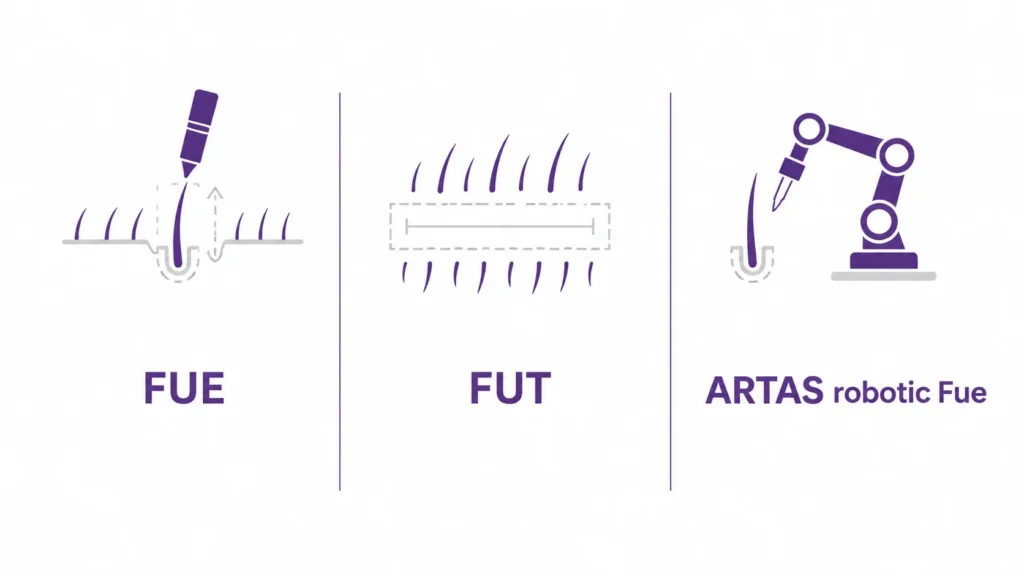
Despite these differences in harvesting speed, both techniques converge during the implantation phase. Grafts are placed into recipient sites one by one, regardless of how they were extracted, and implantation can be the longest portion of any session. Patients considering which technique is appropriate should discuss the specifics with their plastic surgeon, as the right choice depends on personal anatomy, scalp laxity and long-term planning.
How Graft Count Directly Impacts the Length of Surgery
The number of grafts required is another direct driver of procedure length. Here is a practical breakdown of how graft count relates to approximate procedure time:
- 500 to 1,500 grafts: approximately 4 to 5 hours
- 1,500 to 2,500 grafts: approximately 5 to 7 hours
- 2,500 to 3,500+ grafts: approximately 7 to 9 hours, or spread across two sessions
Team expertise also plays a meaningful role. A larger team of trained technicians working in parallel can accelerate the implantation phase, reducing the overall time even for high-graft-count sessions. A solo plastic surgeon performing every step independently will naturally require more time than a coordinated team working simultaneously on graft preparation and site creation.
What the Patient Experiences During the Procedure
Hair transplant surgery takes multiple hours, but patients are awake throughout and can rest comfortably. The procedure moves through four distinct phases.
- The donor area is harvested through individual punch extractions with FUE or strip removal with FUT.
- Technicians sort and prepare the grafts under magnification, checking each follicle integrity.
- The plastic surgeon creates the recipient sites in the thinning areas, following the pre-drawn hairline design.
- Using great care, technicians implant each graft into the recipient sites.
Throughout the day, patients watch television, listen to music, or rest. Scheduled breaks are built into the session for meals, hydration, and comfort. Most patients find the experience manageable once the initial anesthesia is in place.
Additional Factors That Affect How Long Your Hair Transplant Will Take
Hair transplant surgery takes between 4 and 8 hours for most patients, but the range exists because no two procedures are identical. The length of your hair transplant is influenced by multiple factors working together, making it difficult to accurately predict with a single, fixed time estimate.
Degree of hair loss: A patient in the early stages of hair loss at Norwood Scale Stage 2 or 3 may need 1,000 to 2,000 grafts, while a patient at Stage 6 may need 3,500 or more. The Norwood Scale stage is the starting point for estimating graft count, which is the primary driver of procedure length.
Hair characteristics: Hair thickness, curl pattern, and donor density all influence how quickly grafts can be extracted and prepared. Coarser, curlier hair can be more challenging to extract cleanly in FUE without transection of the follicle, potentially slowing the harvesting phase. Hair type diversity varies widely among candidates, and these differences matter significantly during the planning process.
Prior hair transplant history: Patients with a prior transplant may have scar tissue in both the donor and recipient areas. This scar tissue can complicate extraction during FUE and slow the overall pace of the procedure.
Scalp laxity: For FUT, the ease with which a strip can be excised and the donor area closed depends on scalp laxity. A tighter scalp may limit strip width, which affects the number of grafts available in a single session. According to the International Society of Hair Restoration Surgery, donor area density and scalp laxity are among the primary variables plastic surgeons assess when determining the number of grafts achievable in a single session and the overall procedure timeline.
Technique selected: FUE and FUT have different harvesting speeds. The technique also affects recovery duration and the appearance of the surgical incision site afterward.
Plastic Surgeon and Surgical Team Efficiency: A highly trained, multi-technician team working simultaneously significantly reduces procedure time without sacrificing quality.
- Faster graft preparation
- Streamlined implantation
- Improved graft survival rates
At Dr. Lo’s practice, robotic-assisted FUE using the ARTAS system reduces harvesting time compared to manual extraction, a meaningful difference for patients with higher graft counts. Most of Dr. Lo’s single-session procedures are completed within 6 hours.

Can a Hair Transplant Be Done in One Day?
Yes. Most procedures are completed in one day.
When Should Hair Transplant Be Done in Multiple Sessions, and Does That Change the Timeline?
Some patients require more than one hair transplant session and this is an important planning consideration that is rarely addressed in standard patient education. Hair transplant surgery takes multiple hours per session, and each additional session represents another full-day commitment spaced months apart.
Patients with advanced hair loss, typically those at Norwood Scale Stage 5, 6, or 7, often do not have enough donor supply to achieve their coverage goals in a single session. The donor area has a finite number of viable follicles, and extracting too many follicles in one sitting risks thinning it to the point of visible depletion. For these patients, staged sessions spaced 12 to 18 months apart allow the first set of results to mature fully allowing the plastic surgeon to accurately assess coverage and plan the next session.
Touch-up sessions are also common for patients who have had a successful primary transplant but want to improve density in specific zones or refine the hairline as additional natural hair loss continues over time. These secondary sessions are typically smaller, involving fewer grafts, and therefore take less time than the original procedure.
Some clinics offer two-day mega-sessions for patients requiring 4,000 or more grafts. In this format, donor harvesting and initial implantation are performed on day one, and the patient returns the following morning to complete the implantation phase. This approach protects graft viability by ensuring that follicles are not kept outside the body for excessive periods.
Patients who understand the full scope of their treatment plan, including the possibility of multiple sessions, are better positioned to make confident, well-informed choices about moving forward.
Not every patient at this stage is a good candidate for surgery. For a full breakdown of eligibility factors, see our guide on who is not a good candidate for a hair transplant.
How Long Does It Take To See Results After a Hair Transplant?
The procedure itself takes 4 to 8 hours, but the growth timeline extends well beyond surgery day.
- Week 2-6: Temporary shedding. Transplanted hairs shed in weeks three through six; this is normal and called ‘shock loss’
- Months 3-4: New growth begins
- Months 6-12: Noticeable density improvement
- 12-18 months: Full, mature natural-looking results
For a complete week-by-week breakdown, see our hair transplant post-operative recovery guide.
Why Patients Choose Dr. Lo for Hair Transplant Surgery
- Advanced ARTAS robotic FUE technology
- Highly experienced, coordinated surgical team
- Precision hairline design for natural aesthetics
- Efficient procedure times without compromising quality
- Personalized, long-term hair restoration planning
Result: Faster procedures, higher graft survival, and more natural outcomes compared to many traditional clinics.
Ready for a Personalized Timeline?
Get a timeline built around your specific situation. While most hair transplant procedures take 4 to 8 hours, your exact timeline depends on your goals, hair characteristics, graft count, technique, and the surgical team. Understanding that range before your procedure allows you to plan your day, set realistic expectations, and arrive prepared.
Schedule your consultation with Dr. Lo today to receive a personalized assessment:
- Customized graft estimate
- Procedure duration tailored to you
- Expert recommendation on FUE, FUT or robotic options
If you are still weighing whether the procedure is right for you, our guide on whether hair transplant surgery is worth it covers long-term outcomes, costs, and patient considerations in detail.
Frequently Asked Questions About Hair Transplant Surgery Duration
Here are frequently asked questions regarding hair restoration procedures.
How Long Does FUE Hair Transplant Surgery Take?
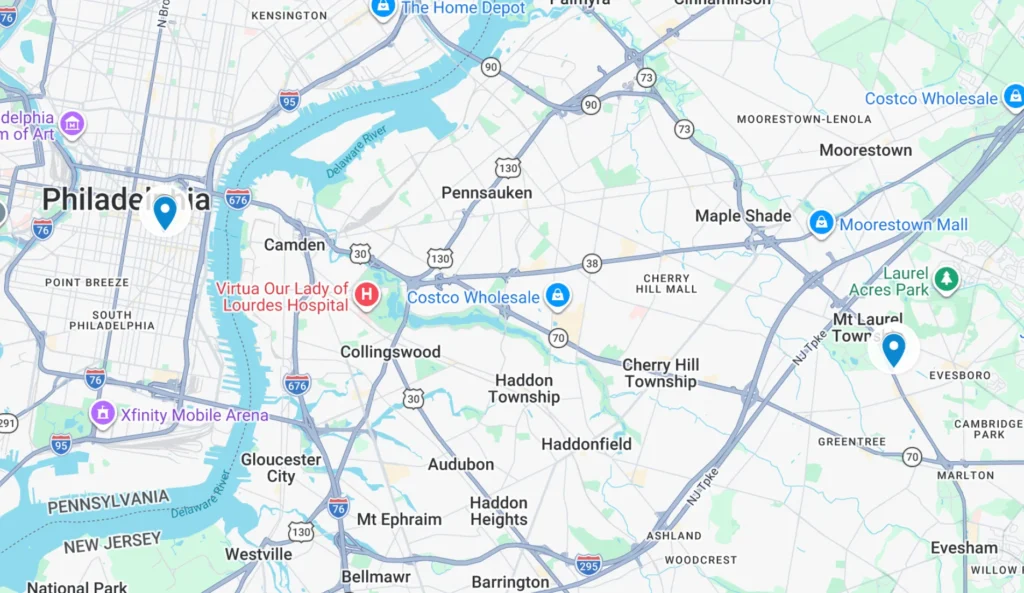
A follicular unit extraction procedure typically takes 6 to 9 hours, depending on the number of grafts being transplanted. Robotic-assisted FUE, such as the ARTAS system, reduces harvesting time compared to manual extraction. At Dr. Lo’s practice in Philadelphia, robotic FUE sessions are performed with the ARTAS iX system, which reduces harvesting time and helps maintain consistent high graft quality across longer sessions.
How Long Does FUT Hair Transplant Surgery Take?
A follicular unit transplantation procedure typically takes 4 to 8 hours. The strip harvesting phase is faster than FUE, though graft dissection under magnification adds time before implantation begins.
Can a Hair Transplant Be Completed in One Day?
Yes. Most patients with 1,000 to 3,500 grafts complete their procedure in a single session. Patients requiring 4,000 or more grafts may be scheduled across two sessions to protect graft viability.
How Long Will I Be at the Clinic on the Day of the Procedure?
Plan for 8 to 10 hours from arrival to discharge. This includes 30 to 60 minutes of pre-surgical preparation, the procedure itself, scheduled breaks, and post-procedure instructions before you leave.
Does the Number of Grafts Determine How Long Surgery Takes?
Yes. Graft count is the single biggest factor in procedure duration. A session of 500 to 1,500 grafts takes approximately 4 to 5 hours; 1,500 to 2,500 grafts takes 5 to 7 hours; and 2,500 to 3,500 or more grafts takes 7 to 9 hours.