

Medically Reviewed By: Dr. Adrian Lo, M.D., FACS, FRCS(C)
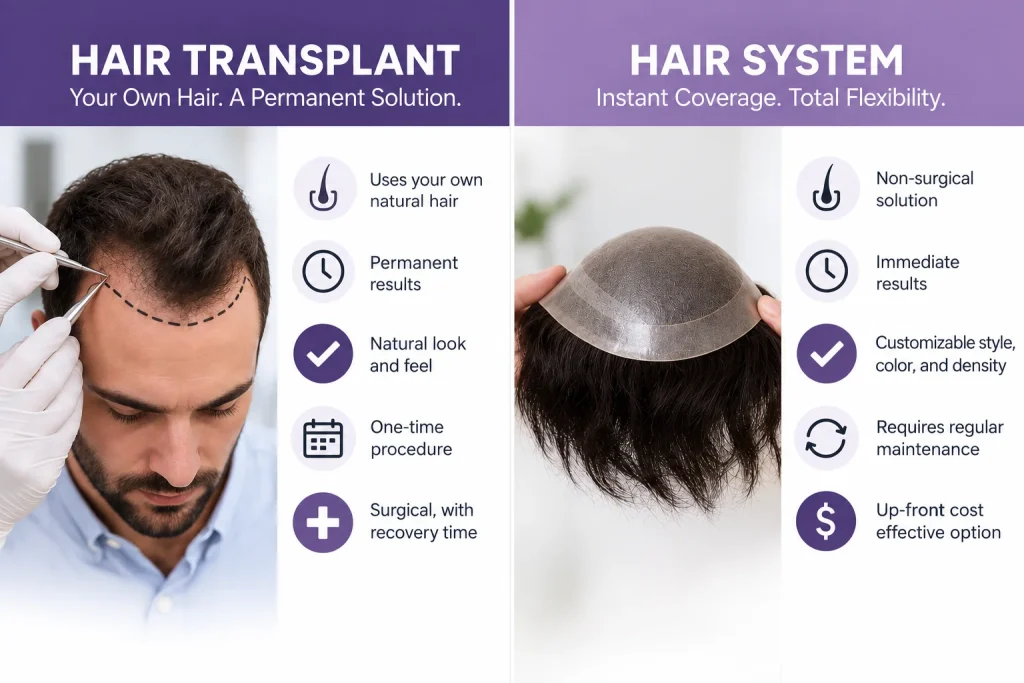
A hair transplant and a hair system are two very different approaches for hair loss. Hair transplantation is a surgical procedure that permanently restores hair by relocating a patient’s own hair follicles to thinning areas of the scalp. A hair system is a removable hairpiece attached to the scalp with adhesive or clips and provides immediate coverage but requires ongoing maintenance and replacement.
When deciding between hair transplant vs. hair system, the right choice depends on how much donor hair is available, how quickly you need results, and your maintenance preferences. For patients seeking long-term, natural-growing results, hair transplantation is often preferred when sufficient donor hair is available.
Hair Transplant vs Hair System: Quick Answer
A hair transplant is best for patients seeking a permanent hair restoration solution using their own natural hair follicles. A hair system is best for individuals who want immediate results, do not have adequate donor hair, or prefer to avoid surgery. Hair transplants take several months to grow but offer long-term results. Hair systems provide instant coverage that requires ongoing maintenance and replacement.
Key Takeaways
| Factor | Hair Transplant | Hair System |
| Permanence | Permanent once healed | Temporary; unit replaced over time |
| Results Timeline | 6 to 12 months for final density | Immediate, same-day appearance |
| Maintenance | Low after initial healing; normal hair care | Ongoing reattachment, cleaning, and replacement |
| Procedure Type | Surgical (local anesthesia) | Non-surgical, no anesthesia required |
| Candidacy | Requires sufficient healthy donor hair | Available regardless of donor supply |
| Cost Pattern | Higher one-time cost | Lower upfront cost, recurring costs over time |
| Risks | Infection, temporary swelling, and shedding-then-regrowth cycle | Skin and scalp irritation, allergic reactions, traction alopecia, trapped heat, sweat, and bacterial or fungal buildup |
What Is a Hair Transplant?
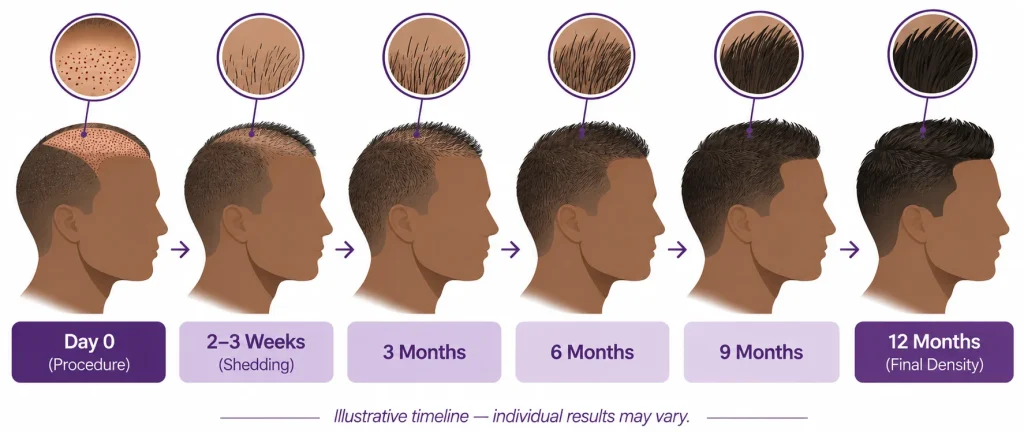
A hair transplant moves hair follicles from a donor area, typically the back or sides of the scalp where hair is genetically resistant to thinning, into the areas experiencing hair loss. Because the relocated follicles keep growing wherever they are placed, results are considered permanent once the transplanted hair has fully grown in.
Two hair transplant methods are available:
- FUE (Follicular Unit Extraction): individual follicles are removed one at a time, leaving small, dot-like incision lines in the donor area.
- FUT (Follicular Unit Transplantation): a strip of donor tissue is removed and divided into grafts under magnification, leaving a single linear incision line along the donor area.
International Society of Hair Restoration Surgery’s 2025 Practice Census report, ISHRS members performed an average of 15 hair restoration surgeries per month in 2024.
New hair growth follows a predictable timeline with hair transplants: transplanted hair sheds within a few weeks (a normal step known as shock loss), then regrows gradually over 6 to 12 months before reaching its final density.
At Philadelphia Plastic Surgery, Dr. Adrian Lo offers ARTAS robotic FUE, an advanced hair restoration system designed to support highly precise graft harvesting, reduce human variability, and help preserve donor-area density.
What Is a Hair System?
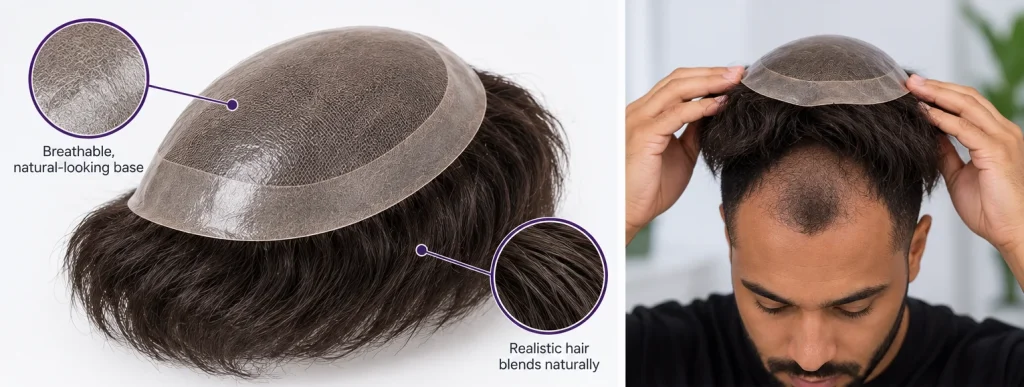
A hair system is a non-surgical hair prosthesis made from human or synthetic hair attached to a thin base that is bonded or clipped to the scalp. Unlike a transplant, a hair system does not use the patient’s own follicles; it sits on top of the existing scalp and hair and requires regular cleaning, reattachment, and replacement.
Because a hair system does not depend on donor hair availability, it can be an option for patients with advanced hair loss who are not candidates for a hair transplant and provides immediate cosmetic improvement.
Hair Transplant vs. Hair System: Key Differences
| Hair System (Non-Surgical) | Hair Transplant (Surgical) | |
| Features | Custom hairpiece made from human or synthetic hairAttached to the scalp with adhesive/tapeResults visible same dayHairline, density, color, and style can be changed over timeDoes not depend on donor hair | Relocates own hair follicles from a donor area to thinning or balding areasResults grow in graduallyPermanent Blends and behaves like natural hair |
| Drawbacks | Requires ongoing maintenance, including regular cleaning, reattachment, and periodic unit replacementRecurring cost for products and replacements Heavy sweating or swimming can loosen the bond | Surgical procedure with local anesthesiaA surgical incision line at the donor site (FUT)Healing periodFinal results visible in 6 to 12 monthsLimited by amount of healthy donor hair available |
| Best Use Case | Desires immediate, full lookHas more advanced hair loss without enough donor supply for a transplantPrefers to avoid a surgical procedure | Permanent solutionStable, well-defined pattern of hair lossEnough healthy donor hairLow long-term maintenance |
Cost: What the Data Shows
A hair transplant costs anywhere from $4,000 to $18,000+ in the United States, based upon graft count and technique, with per-graft pricing generally falling between $4 and $10.
A single hair system generally runs $200 to $400 when purchased online, with custom units typically costing $800 to $2,000+.
Hair systems generally cost less upfront but require ongoing maintenance and replacement. Hair transplants require a higher initial investment but may offer better long-term value because the results are permanent and maintenance is minimal.
Every patient’s graft count, technique, and total investment are different, which is why an in-person evaluation matters.
Safety and Recovery Considerations
Hair transplantation is a surgical procedure and carries typical surgical risks, including infection, temporary swelling, and a normal shedding-then-regrowth cycle. Recovery is typically outpatient, with most patients resuming light activity within a few days.
Hair systems avoid surgery, but are not risk-free. A systematic review published in Dermatitis identified wigs and wig adhesive among recognized causes of scalp irritation or allergic contact dermatitis. Patients with sensitive skin or a history of adhesive reactions should discuss these concerns with the provider responsible for the system.
Who Is a Candidate for a Hair Transplant?
- Has a stable, well-defined pattern of hair loss rather than diffuse thinning across the whole scalp
- Has enough healthy donor hair at the back or sides of the scalp
- Is in good general health
- Willing to wait several months for final results
Who Might Consider a Hair System Instead?
A hair system can be a reasonable option for someone who needs an immediate, full look, has more advanced hair loss without enough donor supply for a transplant, or would rather avoid a surgical procedure altogether.
Why Some Hair System Users Later Choose Hair Transplant Surgery
Some hair system users eventually pursue hair transplantation to avoid maintenance, replacement costs, and reliance on adhesives. For qualified candidates, hair transplantation provides permanent, natural-growing hair that can be washed, cut, and styled normally.
Why Patients Choose Dr. Adrian Lo for Hair Restoration
Dr. Adrian Lo, M.D., FACS, FRCS(C), is a double board-certified plastic surgeon with more than 30 years of experience serving patients throughout Philadelphia and South Jersey. Recognized by Newsweek as one of America’s Best Plastic Surgeons.
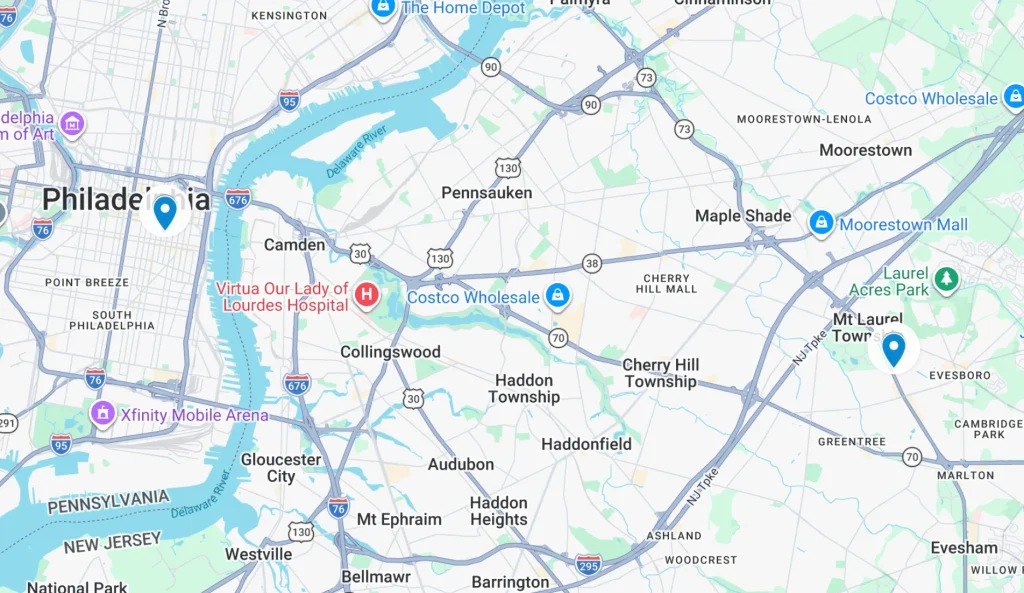
Patients travel from Philadelphia, Cherry Hill, South Jersey, the Main Line, and the Delaware Valley for hair restoration consultations with Dr. Lo. He evaluates hair loss patterns, donor hair quality, and long-term goals to determine whether surgical, non-surgical, or medical therapy is the most appropriate option.
Hair transplants and hair systems offer different advantages. During a consultation, Dr. Adrian Lo performs a detailed scalp and donor-area evaluation to determine whether a hair transplant, hair system, or another approach is most appropriate.
Schedule a consultation with Dr. Adrian Lo to develop your personalized hair restoration plan.
Frequently Asked Questions
Is a Hair Transplant Permanent?
Yes. Once the transplanted follicles heal and grow in, typically within 6 to 12 months, the results are considered permanent. Future hair loss generally affects the surrounding non-transplanted hair, not the transplanted grafts.
How Long Does a Hair System Last?
Hair systems require reattachment every few weeks and replacement every few months to a few years, depending on the quality of the piece and how you care for it.
Which Looks More Natural: a Hair Transplant or a Hair System?
A high-quality hair system can look realistic. A hair transplant uses your own hair and generally provides the most natural long-term result because you can wash, cut, and style it like native hair.
Can a Hair System Be Used While Healing From a Hair Transplant?
No. Fresh grafts and the surgical incision line need time to heal, and a hair system can add pressure or adhesive contact that dislodges grafts.
What Is the Recovery Time for a Hair Transplant?
Most patients return to light daily activity within a few days and resume more strenuous exercise within one to two weeks, once cleared by the plastic surgeon. Mild swelling and scabbing at the donor and recipient sites are normal in the first week or two.
How Much Does a Hair Transplant Cost Compared to a Hair System?
A hair transplant commonly costs $4,000 to $18,000+ as a single procedure, while a hair system has a lower starting cost but comes with recurring maintenance and replacement expenses over time.