

Medically Reviewed By: Dr. Adrian Lo, M.D., FACS, FRCS(C)
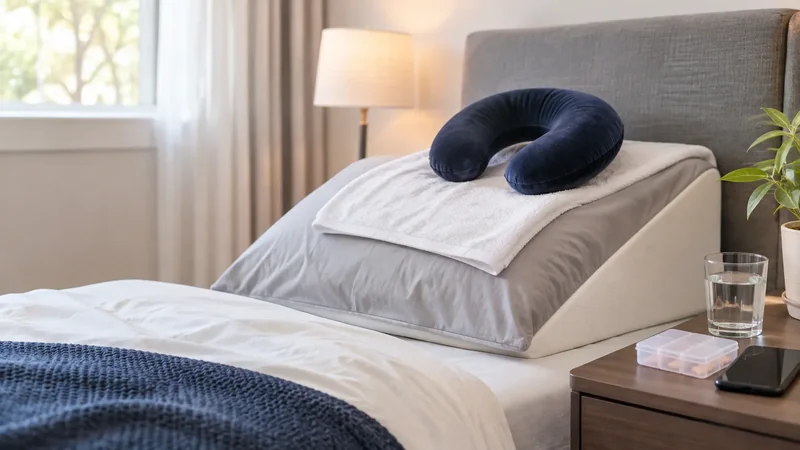
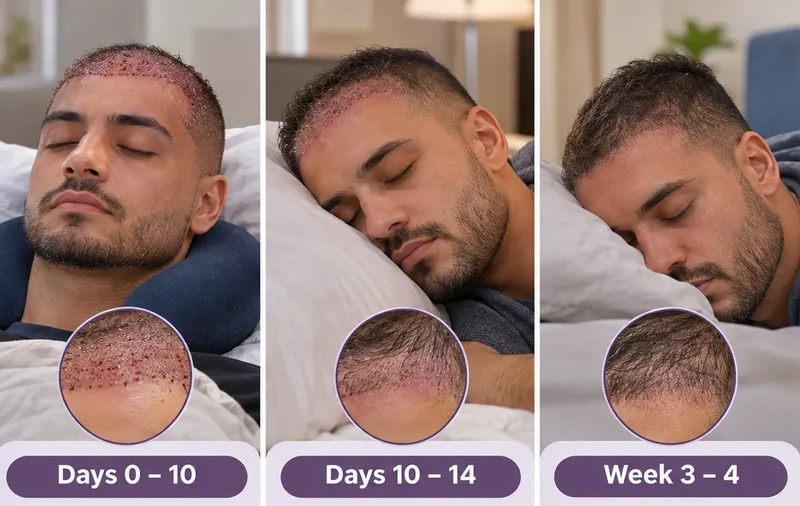
TL;DR: Sleep on your back with your head elevated approximately 30 to 45 degrees for the first 10 nights after a hair transplant. Use a travel neck pillow or wedge pillow to prevent pressure on the grafts. Research shows that hair transplant grafts are most vulnerable during the first days after surgery. During this period, protective crusts form and mature over the first 7 to 10 days and may be dislodged if disturbed too soon. Most patients can resume side sleeping around days 10-14 and stomach sleeping after 3-4 weeks, depending on their surgeon’s instructions.
Knowing how to sleep after a hair transplant is one of the most important steps in protecting your new grafts and achieving the best possible result. During the first 10 days, transplanted follicles are healing into the scalp, making sleeping position an important part of hair transplant aftercare. For the first nights, the goal is simple: avoid pressure or friction on the grafted area, and minimize fluid pooling in the forehead.
Dr. Adrian Lo is a double board-certified plastic surgeon with more than 30 years of surgical experience helping patients through every stage of hair transplant recovery.
Key Takeaways
- Sleep on your back with your head elevated for about the first 10 nights.
- A U-shaped travel neck pillow helps stop you from rolling onto your grafts.
- Grafts are most fragile in the first days, while crusts form over roughly the first 10 days.
- Elevation helps keep swelling away from your forehead and eyes.
- FUT patients need to avoid pressure on the donor incision line at the back of the head.
- Side sleeping usually returns around days 10 to 14, with your plastic surgeon’s approval.
- Change your pillowcase often and place a clean towel over it for the first few nights.
Why Your Sleeping Position Matters After Surgery
After a hair transplant, each follicular graft sits in a small recipient site created during surgery. In the first few days, these grafts can be disturbed by rubbing, pressure, or accidental trauma before they fully anchor into the scalp.
A 2022 review in Clinical Dermatology Review explains that transplanted grafts take about 3 days to connect to a new blood supply, and crusts form around them over the first 10 days. Until then, the grafts are not yet fully attached to the surrounding skin, so rubbing those crusts against a pillowcase can pull a graft out.
Serious problems after a hair transplant are uncommon. Minor recovery issues are far more common. A 2024 review of 43 studies in Aesthetic Plastic Surgery found forehead swelling in up to 50% of patients and crusting in up to 54.8% of patients, making them among the most common recovery issues after hair transplantation. Sleeping with your head elevated helps reduce swelling and protects healing grafts from friction. Fluid naturally settles with gravity. Lying flat can increase swelling around the forehead and eyes, while keeping your head elevated helps fluid drain away from the face.
How Should You Sleep After a Hair Transplant?
| Question | Quick Answer |
|---|---|
| Best sleeping position after hair transplant? | Back sleeping |
| Head elevation? | 30 to 45 degrees |
| Use a neck pillow? | Yes |
| Side sleeping? | Usually after 10-14 days |
| Stomach sleeping? | Usually after 3-4 weeks |
How to Sleep After a Hair Transplant in the First 7 to 10 Days
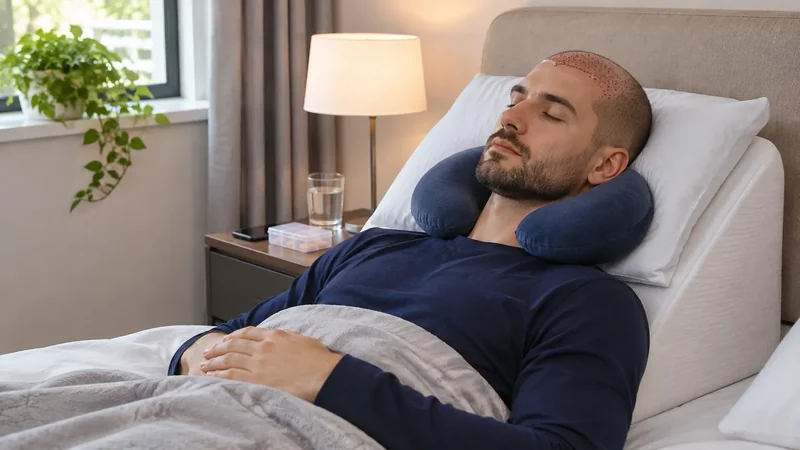
Back sleeping with your head raised is the standard position for the first 7 to 10 days. Post-operative instructions include sleeping at an angle of about 30 to 45 degrees. This keeps the recipient area off the pillow and helps limit swelling.
There are two easy ways to maintain the recommended sleeping position.
- Stack two or three firm pillows to form a slope, supporting your upper back as well as your head.
- Use a foam wedge pillow to maintain a 30-45 degree angle throughout the night.
A U-shaped travel neck pillow is useful in the first nights. It supports your neck and makes it difficult to turn your head onto the grafts while you sleep. If you are wondering how long to sleep with a neck pillow after a hair transplant, plan on about 7 to 10 nights, or as long as your hair transplant surgeon instructs.
How long to sleep upright after a hair transplant depends on your procedure, but most patients stay elevated for the first week and then lower the angle slightly in week two.
Dr. Lo generally recommends sleeping on your back with your head elevated approximately 30-45 degrees for the first 10 nights after a hair transplant. Most patients use a travel neck pillow during this period to minimize accidental turning and protect newly placed grafts. To make recovery easier and support optimal healing, Dr. Lo provides a post-operative kit with supplies and instructions for the critical early healing period. Before returning to side sleeping, patients should follow the specific timeline provided during follow-up visits.
Prepare your sleeping setup before surgery day, along with the rest of your pre-op checklist:
- Put a fresh pillowcase on each night for the first several nights.
- Lay a clean, dark towel over the pillowcase to catch any light drainage.
- Keep water, your medications, and your phone within reach so you do not have to twist or bend.
Recliner or Bed for the First Week?
Both can work. A recliner naturally keeps your head elevated. The downside is that some people find it hard to sleep well in a recliner. A bed with a wedge pillow is usually more comfortable; however, pillows can shift throughout the night. The best option is whichever helps you maintain the recommended sleeping position throughout the night.
Does Your Procedure Type Change How You Sleep?
Whether you undergo FUE, FUT, DHI, or crown restoration, sleeping with your head elevated remains one of the most important hair transplant recovery instructions. The difference is how the donor area must be protected during sleep.
Not sure which you are having? See how FUE and FUT differ.
| Procedure | Donor area | Sleeping tip |
|---|---|---|
| FUE | Many small extraction sites across the back and sides | A neck pillow lifts the back of your head off the mattress. |
| FUT | One linear surgical incision with stitches across the back of the head | Sleeping after FUT takes the most care, as lying back puts weight on the incision line. A slightly more upright angle is recommended to keep pressure off the incision. |
| DHI | Small extraction sites, similar to FUE | Same approach as FUE |
| Crown grafts | Grafts on the top and back of the head | Take extra care not to roll onto the transplanted area since the crown is easy to press into the pillow. |
Night-by-Night Guide to the First Two Weeks
Learn more about expected milestones in our Hair Transplant Recovery Timeline guide.
Nights 1 to 3
This period carries the highest risk of accidental graft displacement, which is why careful sleeping habits matter most. Stay on your back with your head raised, use your neck pillow or recliner, and do not touch your scalp. A little dried blood or fluid on the towel is normal.
Nights 4 to 7
Grafts are becoming more secure; scabs are still attached. Swelling in the forehead often shows up during these first days, so don’t lie flat. Keep sleeping on your back with your head elevated. Follow your surgeon’s instructions regarding washing your hair after a hair transplant.
Nights 8 to 10
By about day 9, grafts are no longer at risk of being pulled loose. Continue back sleeping with some head elevation, and you can begin using less height.
Nights 11 to 14
Many patients get the go-ahead to try side sleeping. If you are asking how many days to sleep straight after a hair transplant, plan on at least 10 nights on your back, and longer if you had a large number of grafts or an FUT incision.
When Can You Sleep on Your Side or Stomach?
Most patients can sleep on their side after a hair transplant around days 10-14, once grafts have firmly anchored and swelling has improved.
Start with part of the night on your side and use a soft, clean pillowcase. If you have grafts at the temples, check with your plastic surgeon, since those grafts rest directly on the pillow when you lie on your side.
Stomach sleeping comes last because it presses your hairline and face into the pillow for hours. Wait until your plastic surgeon clears you at a follow-up visit.
Every case is different. Your personal instructions always come before general timelines like these.
Sleeping With Sleep Apnea, Neck Pain, or Reflux
If you use CPAP therapy, discuss it with your plastic surgeon before surgery, as mask straps and headgear may rub healing grafts.
What If You Wake Up in the Wrong Position?
If you accidentally wake up on your side after a hair transplant, don’t panic. A single episode rarely damages grafts, especially after the first several days.
Check your pillowcase. A small amount of dried blood or a few scabs is normal. A shed hair with a tiny white bulb at the end is usually just the hair’s root sheath, not a lost graft.
Call the office if you notice:
- Bleeding that does not stop with gentle pressure
- Redness, pus, or a bad smell from the scalp
- A fever
- Swelling that closes your eyes or keeps getting worse
Sleep Habits That Support Healing
Sleep quantity matters during recovery too. According to the CDC, 30.5% of U.S. adults sleep less than 7 hours in 24 hours, and sleep medicine experts recommend at least 7 hours for adults. Aim for at least 7 hours of sleep each night to support recovery and overall healing.
- Keep your bedroom cool and dark.
- Do not wear a hat or cap to bed over the grafts.
- Do not scratch your scalp when you wake up, even if it itches.
- Ask Dr. Lo’s team before taking any sleep aid or drinking alcohol.
Hair Transplant Recovery Support in Philadelphia and Marlton, NJ
Dr. Adrian Lo is a double board-certified plastic surgeon with more than 30 years of experience. Patients in Philadelphia and Marlton receive detailed hair transplant aftercare instructions, including sleeping guidelines, hair washing instructions, activity restrictions, and follow-up care designed to support optimal healing and graft growth.
A successful hair transplant depends on both surgical technique and proper recovery. If you’re considering hair restoration in Philadelphia or Marlton, NJ, schedule a consultation with Dr. Lo to discuss your candidacy, treatment options, and recovery plan.

Frequently Asked Questions
What Is the Safest Way to Sleep After a Hair Transplant?
The safest way is to sleep on your back with your head raised and a neck pillow to keep the grafted area off the bedding. Stay in this position for about the first 10 nights, until the grafts are secure.
How Should I Sleep After a Hair Transplant to Reduce Swelling?
Keep your head above your heart for the first week. Lying flat allows fluid to settle into your forehead and eyelids, while elevation helps it drain. If swelling keeps getting worse, call the office.
How Long Until I Can Sleep Normally After a Hair Transplant?
Most patients return to their usual position somewhere between two and four weeks, starting with side sleeping and ending with stomach sleeping. Your plastic surgeon will confirm the timing at your follow-up visit.
Can I Sleep Flat After a Hair Transplant?
Most surgeons recommend avoiding completely flat sleeping during the first week because elevation helps reduce swelling and limits pressure on newly placed grafts.
What Happens If I Accidentally Touch My Grafts While Sleeping?
Brief accidental contact rarely causes permanent damage, but repeated rubbing or prolonged pressure can affect healing during the first several days. Follow your surgeon’s instructions and use a neck pillow to help prevent contact.
Do I Need a Special Pillow After a Hair Transplant?
While not mandatory, most patients find a wedge pillow and travel neck pillow make it easier to maintain the recommended sleeping position and avoid rolling onto the grafts.