

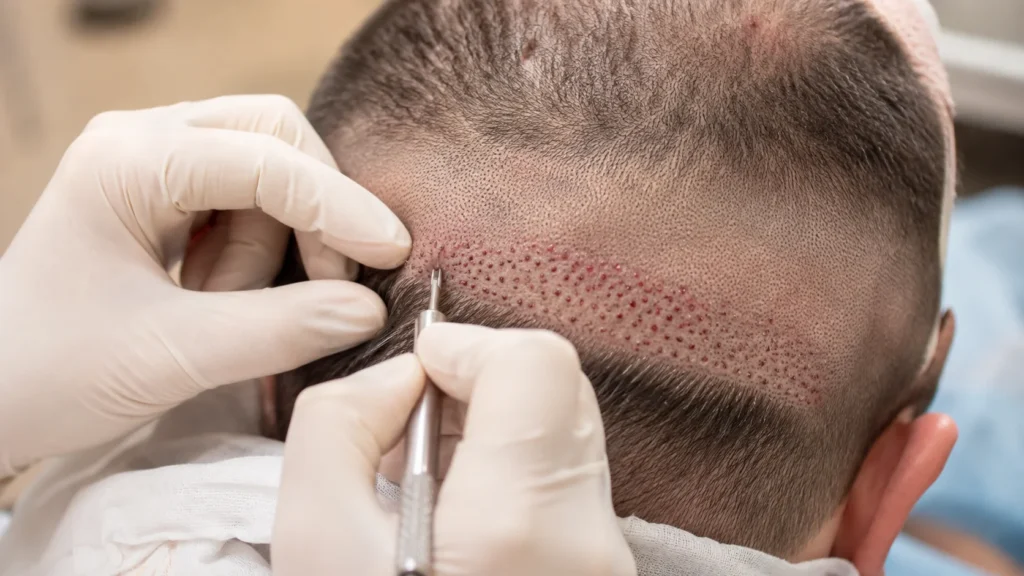
For most patients, the best hair transplant procedure today is FUE (Follicular Unit Extraction) because it allows natural harvesting of hair grafts with minimal visible scarring and faster recovery than traditional methods. FUT may be better for patients requiring a large number of hair grafts but leaves a linear incision or scar. DHI offers precise density control for hairline restoration at a higher cost. The ideal procedure depends on your hair loss pattern, donor hair quality, aesthetic goals, and long-term treatment plan.
A consultation with a qualified plastic surgeon can help determine the most effective approach for achieving natural, long-lasting results.
This content was reviewed by Dr. Adrian Lo, M.D., FACS, FRCS(C), a board-certified plastic surgeon with 30+ years of surgical experience.
Best Hair Transplant Methods: What Are Your Options?
Modern hair transplant procedures primarily rely on three techniques:
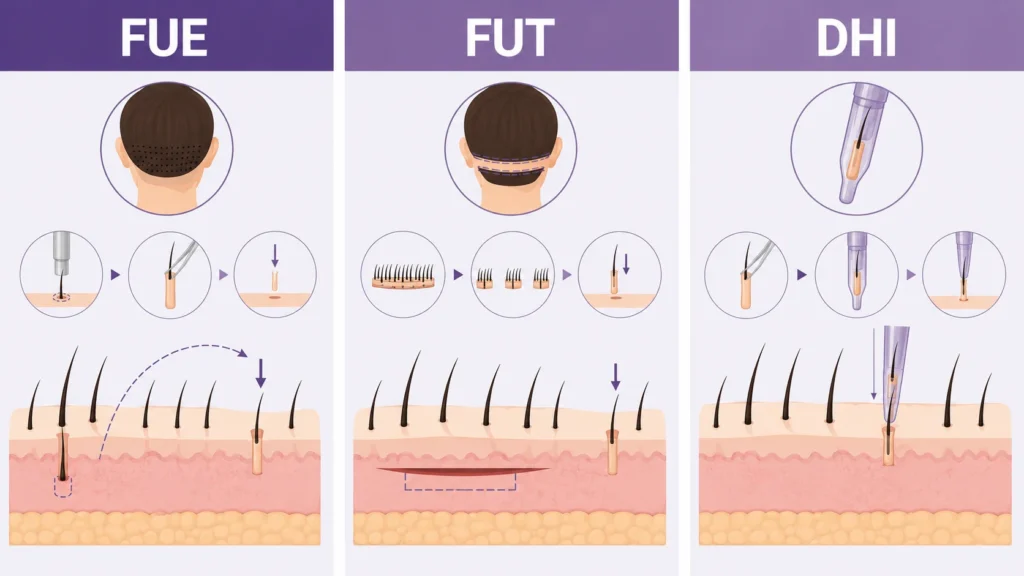
- FUE (Follicular Unit Extraction): Individual follicular units are extracted using a micro-punch tool or the AI-guided ARTAS robotic system, which can improve harvesting precision, graft consistency, and donor preservation before transplantation into thinning areas.
- FUT (Follicular Unit Transplantation): A strip of scalp is removed from the donor zone, follicular grafts are dissected and implanted to the recipient sites.
- DHI (Direct Hair Implantation): Uses a specialized implanter pen to place grafts directly without pre-made channel incisions for enhanced placement control.
What Is the Best Hair Transplant Procedure? FUE vs. FUT vs. DHI
The three primary hair transplant methods differ across harvesting technique, scarring, recovery, cost, and candidate profile.
| Criteria | FUE | FUT | DHI |
| Harvesting technique | Individual follicle extraction via micro-punch | Strip removal, grafts dissected from tissue | Individual extraction, direct implantation via pen |
| Scarring | Scattered dot marks, virtually undetectable | Linear incision, concealed under longer hair | Minimal dot marks |
| Recovery time | 3–5 days | 7–10 days | 3–5 days |
| Procedure duration | 6–8 hours | 4–6 hours | 6–8 hours |
| Cost range | $8,000–$15,000 (approx. 2,000 grafts) | $6,000–$11,000 | Highest of the three |
| Best candidate | Moderate loss, short hair preference | High graft count needed, cost-conscious | Hairline restoration, density focus |
| Natural results | High | High | High; placement angle control supports refined hairline definition |
According to the ISHRS 2025 Practice Census, FUE harvesting was used in 85.4% of male hair transplant procedures and 68.2% of female procedures among surveyed physicians, making it the leading technique today. While FUE is generally preferred for its minimal scarring and faster recovery, the best procedure ultimately depends on the patient’s anatomy, goals, and degree of hair loss.
Who Is a Good Candidate for a Hair Transplant?
Candidates need enough donor hair at the back or sides of the scalp to relocate.
Hair transplantation works best for patients with androgenetic alopecia, also known as male or female pattern hair loss, who have adequate donor hair and realistic expectations. Patients with diffuse thinning, active scalp disorders, or limited donor supply may be better candidates for alternative treatments.
Learn more about who is not a good candidate for hair transplantation in our guide.

Which Hair Transplant Method Is Best for You? The ‘It Depends’ Factors
FUE is often the best choice for patients with moderate hair loss who want minimal scarring and the flexibility to wear their hair short.
FUT is a good choice for Norwood stage 4- 6 patients who need a high number of grafts in a single session and a more cost-effective approach, typically 20–30% less than FUE.
DHI suits patients focused on hairline restoration or smaller treatment areas where precise graft placement is important.
The hybrid FUE plus DHI approach combines DHI for hairline refinement with FUE to maximize the density behind the hairline.
While procedure selection matters, the surgeon’s skill often has a greater impact on graft survival, natural hairline design, and long-term results.
Learn more about when to get a hair transplant in our guide.
What to Expect: Recovery, Results, and How Long They Last
Recovery timelines for FUE and DHI are similar. FUT requires more healing time due to the linear donor incision.
Week 1: Mild redness and scabbing at donor and recipient sites. Sleeping at a 45-degree angle is standard post-operative guidance to minimize swelling.
Weeks 2–4: Shock loss, or temporary shedding of transplanted hair, is normal and part of the follicular cycle, not a sign of failure.
Months 3 through 12: New growth becomes visible within 3- 4 months, with final results in 12 months.
Because transplanted follicles are typically DHT-resistant, results are generally permanent. However, native hair loss may continue in certain areas over time, and some patients choose additional treatments.
Possible Risks to Discuss With Your Plastic Surgeon
As with any surgical procedure, hair transplants carry some risk, including infection, folliculitis, and uneven growth. Contact your plastic surgeon promptly if you notice heavy bleeding, spreading redness, or an incision that reopens. Choosing a board-certified plastic surgeon with a strong track record lowers these risks considerably.
Why Surgeon Expertise Matters More Than the Technique
Many clinics focus on the procedure, but successful outcomes depend on surgical planning and execution.
With more than 30 years of surgical experience, Dr. Adrian Lo emphasizes natural hairline design, strategic graft placement, donor preservation, and long-term planning to achieve natural-looking results that age well.
Find Out Which Hair Transplant Procedure Is Best for You
FUE, FUT, and DHI are proven hair transplant methods, each with distinct advantages. Still, the best hair transplant procedure for you depends on your individualized anatomy, hair loss pattern, donor supply, and goals.
For patients considering FUE, advanced technologies such as the ARTAS robotic hair transplant system may provide enhanced harvesting precision and donor area preservation.
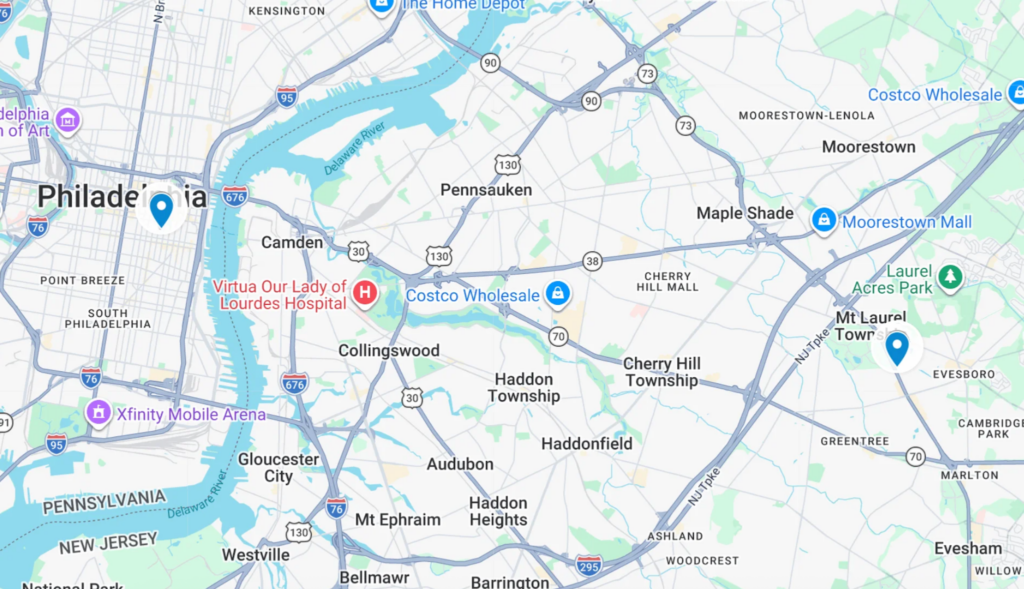
Dr. Adrian Lo provides individualized hair restoration consultations for patients throughout Philadelphia, Cherry Hill, South Jersey, and the surrounding communities.
Request a consultation today to learn which hair transplant procedure can deliver the most natural and lasting results for you.
Hair Transplant FAQs
Here are answers to frequently asked questions about hair transplants.
How Long Do Hair Transplant Results Last?
Transplanted follicles are permanent, though native hair loss may continue in untreated areas over time.
Is a Hair Transplant Painful?
Local anesthesia numbs the scalp during the procedure, so significant pain is uncommon.
How Many Sessions Are Needed?
Most patients need only one session, though some choose a second to increase density.