
If you’re worried there’s not enough donor hair for a hair transplant on your head, don’t assume you’re out of options. Many patients with limited donor hair can still achieve meaningful hair restoration through advanced FUE techniques, body hair, medical treatments, or non-surgical options depending on the degree of donor depletion and individual anatomy.
The best solution depends on your donor supply, hair loss pattern, and long-term goals. The right path for a hair transplant starts with a consultation with an experienced hair restoration surgeon who can identify options you may not realize are available.
Schedule a hair transplant consultation with Dr. Adrian Lo to explore your personalized treatment options.
Can You Get a Hair Transplant with Limited Donor Hair?
Many patients with limited donor hair can still achieve meaningful hair restoration through advanced FUE, body hair transplantation (BHT), medications, platelet-rich plasma (PRP), scalp micropigmentation (SMP), or modern hair systems.
Having limited donor hair does not automatically disqualify you from hair transplant surgery. Modern hair restoration techniques allow surgeons to maximize available grafts and develop strategic plans that prioritize the areas that create the greatest visual improvement.
Successful outcomes depend on donor hair density, hair quality, the extent of hair loss, and realistic goals.
The first step is to determine whether your donor supply can be used effectively.
Why Some Patients Are Told They Have Limited Donor Hair
The donor area on the back and sides of the scalp provides the follicles that are genetically resistant to hair loss and are used during hair transplant surgery.
Donor density, measured in grafts per square centimeter, is a key metric. Most candidates require 60 to 80 follicular units per square centimeter in the donor zone to support a meaningful transplant. Patients with fewer than 40 units per square centimeter generally have limited scalp donor hair.
The most frequent causes of insufficient donor follicles include:
- Advanced hair loss at Norwood scale stages 6 or 7
- Alopecia areata or other autoimmune-related hair loss
- Previous hair transplant procedures with excessive graft harvesting
- Scalp scarring from injury or previous surgery
- Naturally fine or sparse hair texture that yields fewer viable grafts per harvest
Learn more about who is not a good candidate for a hair transplant.
No universal amount of donor hair is required for a successful hair transplant. Whether you have “not enough donor hair” depends on the extent of hair loss, treatment area size, and desired density.
Even patients with limited donor reserves may achieve meaningful improvement when available grafts are strategically placed in high-visibility areas such as:
- Frontal hairline
- Mid-scalp
- Crown
A skilled surgeon focuses on creating the appearance of fullness rather than attempting unrealistic full-scalp coverage.
What to Do When There’s Not Enough Donor Hair for Transplant?
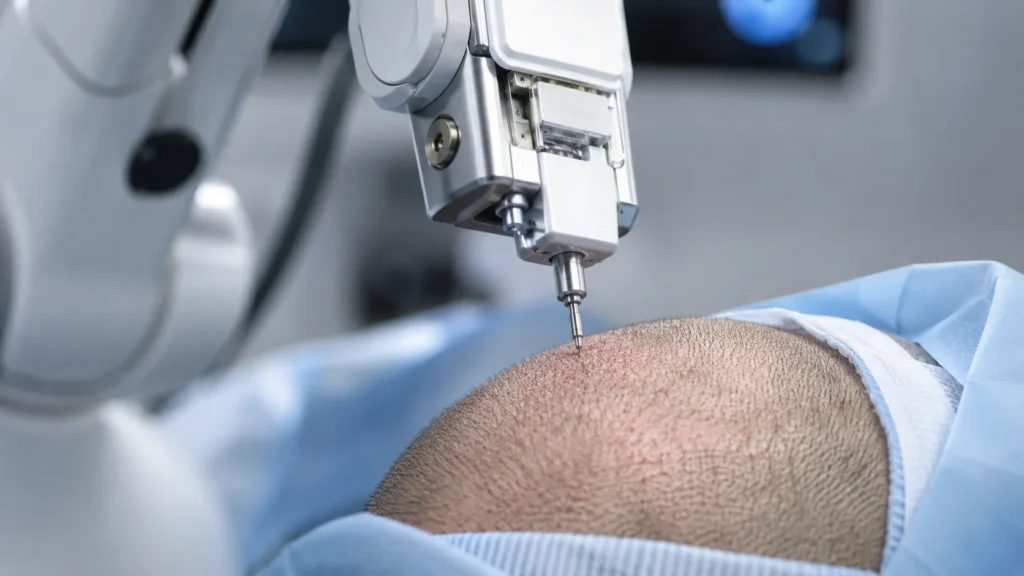
In many cases, a hair transplant with limited donor hair remains possible using advanced robotic Follicular Unit Extraction (FUE). FUE is generally preferred over traditional strip harvesting (FUT) because it allows more selective graft harvesting, maximizes yield, preserves donor tissue, and leaves no linear scar.
When donor supply is genuinely constrained, placement strategy becomes the key opportunity for improving appearance. Rather than attempting full scalp coverage, available grafts are focused on high-visual-impact zones such as the frontal hairline and crown, where density creates the strongest impression of fullness.
Dr. Lo prioritizes long-term donor preservation rather than maximizing graft numbers at the expense of future options.
What If I Have Insufficient Donor Follicles?
Body Hair Transplant as an Alternative Source
Body-to-scalp hair transplant (BHT) may provide a solution for patients with insufficient scalp donor hair. BHT uses the same FUE principles but harvests follicles from other parts of the body and transfers them to the scalp. This can be a viable option for carefully selected patients.
What Body Areas Can Be Used for Donor Hair?
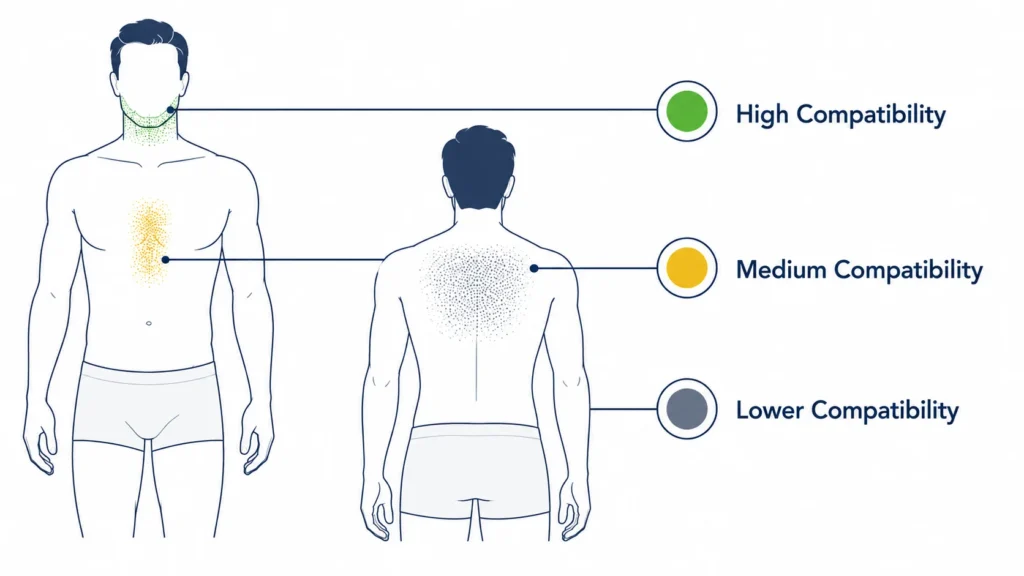
The beard and neckline area is considered the best alternative donor source because its characteristics most closely resemble scalp hair, and a single beard harvest can yield between 1,000 and 3,000+ grafts.
Chest hair may supplement scalp donor supply, although it is usually finer and the active growth phase is generally shorter than scalp hair. This may affect styling options.
Back and shoulder hair is used more selectively because of differences in texture, curl, and growth patterns.
Body hair generally works best as a supplement to scalp donor hair rather than a standalone solution. Not every patient qualifies for BHT; suitability depends on hair density, quality, and compatibility with the recipient area.
Non-Surgical Alternatives Worth Knowing
When a patient truly cannot proceed with any transplant due to an exhausted donor supply, effective hair restoration using non-surgical options still exists across both clinical and cosmetic categories.
These are not fallback options; they are strategic choices based on individual circumstances, aimed at improving appearance and confidence with the approach most appropriate for your anatomy and long-term needs.
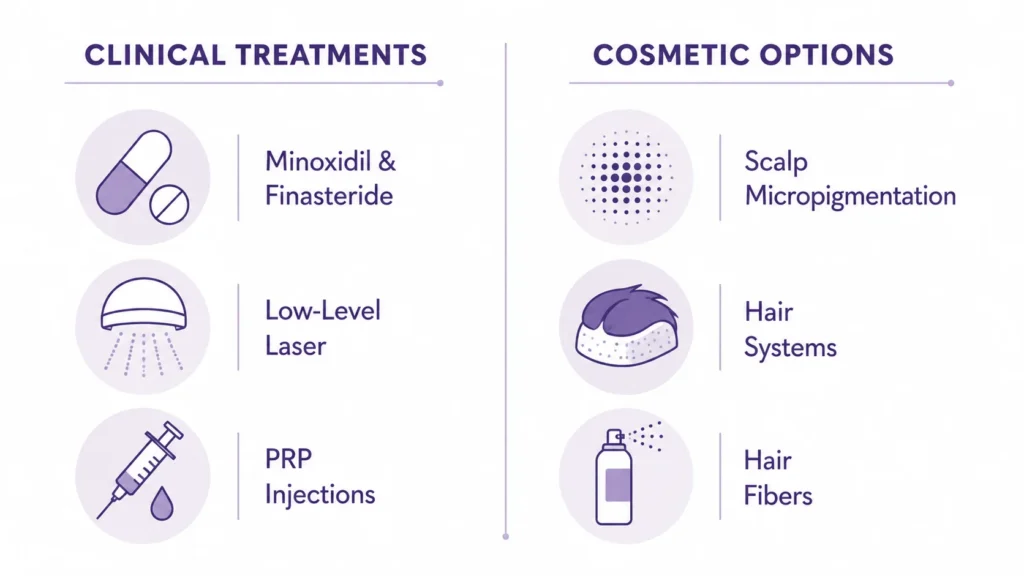
Clinical Treatments That Slow Loss and Improve Density
FDA-approved medications remain the most evidence-based non-surgical path. Minoxidil has demonstrated regrowth by stimulating dormant follicles and improving hair density. Finasteride has shown efficacy in slowing androgenetic hair loss, preserving existing hair.
Results from either medication typically become visible after 6 to 12 months. Many patients achieve the best outcomes by combining both treatments under physician supervision.
Platelet-rich plasma (PRP) injections, administered in-office, use growth factors from your own blood to support hair follicle function and improve hair quality and density.
Low-level laser therapy (LLLT) uses FDA-cleared laser devices, available for home use, to help stimulate cellular follicle activity and is generally used as an adjunct rather than a standalone treatment.
Non-Surgical Cosmetic Options
Scalp micropigmentation (SMP) can create the appearance of greater density and help camouflage thinning areas or transplant scars. It effectively creates the look of a closely shaved head. SMP typically lasts 3 to 5 years before requiring a touch-up.
Modern hair systems have advanced considerably and can provide natural-looking, high-quality contemporary hairpieces. This can be an excellent option for patients who are not transplant candidates.
Topical hair fibers and concealers are the most accessible and lowest-cost option. They don’t address the underlying condition but provide immediate cosmetic improvement for daily use and require no long-term commitment.
How to Choose the Right Hair Transplant Option for You
The best solution depends on donor supply, hair loss stability, and long-term goals.
Candidates with:
- Scalp donor hair and compatible body hair: a BHT supplement combined with remaining scalp grafts may be a viable path.
- Depleted scalp donor zone but hair loss has stabilized: a combination of medical treatment and a cosmetic solution such as SMP or a hair system often delivers the most satisfying long-term result.
- Active hair loss: stabilizing the condition with medication should come before any surgical or cosmetic commitment.
Long-Term Goals
Your desired hairstyle, maintenance preferences, and risk of future hair loss all influence treatment planning.
Many patients benefit from a combination approach, such as:
- FUE + PRP
- BHT + scalp donor grafts
- SMP + medical therapy
- Hair systems + future surgical planning
At a consultation, an accurate picture of donor density and hair loss pattern is the starting point for any of these decisions. No decision framework, including this one, can replace that individualized assessment.
Setting Realistic Expectations Before You Commit
Being told about insufficient donor follicles is frustrating, but the goal is improvement, not perfection. The best outcomes come from matching the right approach to the right candidate, not pursuing a solution the patient’s anatomy cannot support.
Before committing to any option, patients should ask their plastic surgeon:
- How many grafts can realistically be harvested?
- What coverage is realistic?
- Is my hair loss stable?
- Am I a candidate for body hair transplantation?
- What long-term maintenance is required?
- Is this hair transplant method worth it for me?
A trustworthy surgeon provides honest answers based on your anatomy, not unrealistic promises. Patients should be cautious of clinics promising full coverage without a detailed assessment of limited scalp donor hair. Overpromising is a red flag, and patients deserve honest, individualized guidance rather than blanket reassurances.
Why Patients Choose Dr. Adrian Lo for Hair Restoration
Unlike high-volume transplant clinics that focus primarily on graft numbers, Dr. Adrian Lo is a board-certified plastic surgeon with more than 30 years of surgical experience across Pennsylvania, New Jersey, and Delaware who emphasizes long-term donor preservation, realistic planning, and individualized treatment strategies.
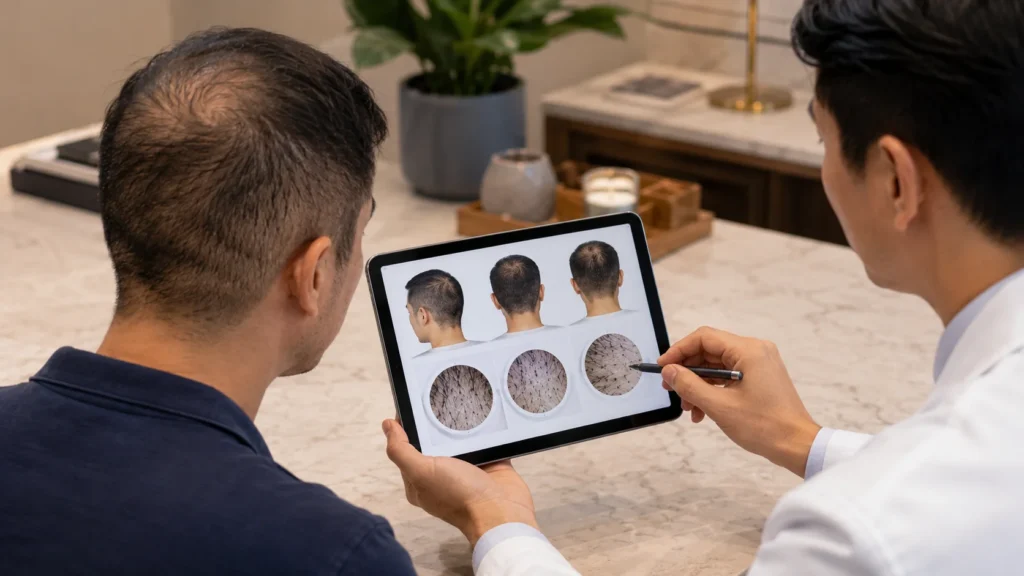
Using advanced 3D imaging and detailed donor analysis, Dr. Lo helps patients understand what their donor supply can realistically achieve before they make any treatment decision. This patient-centered approach helps avoid overharvesting and promotes realistic, sustainable results.
Schedule Your Hair Transplant Consultation Today
Being told you don’t have enough donor hair for a hair transplant is discouraging, but it rarely means you’re out of options.
Advanced FUE, body hair transplantation, medical therapies, SMP, and other treatments may still provide meaningful improvement. The key is an accurate assessment from an experienced hair restoration surgeon.
A plastic surgeon can assess your donor supply, evaluate hair loss trajectory, and develop a personalized restoration plan suited to individual anatomy and goals.
If you have been told you do not have enough donor hair for a transplant, schedule a consultation with Dr. Adrian Lo today to receive a comprehensive donor assessment and explore which hair restoration path is right for you for natural-looking, long-lasting results.