
Medically Reviewed By: Dr. Adrian Lo, M.D., FACS, FRCS(C)

Yes, most patients can wear a hat after a hair transplant, but timing matters. The scalp should remain uncovered for the first four days; loose hats may be permitted around day five, and fitted hats, beanies, and helmets usually require three to four weeks of healing.
Wearing a hat too soon can place pressure on healing grafts and affect recovery before the grafts have fully anchored. For this reason, hat timing is an important part of hair transplant recovery at Dr. Adrian Lo’s Philadelphia practice.
When Can You Wear a Hat After a Hair Transplant?
| Headwear | Typical Timeline |
|---|---|
| No hat | Days 1-4 |
| Loose bucket hat | Day 5+ |
| Loose baseball cap | Day 5+ |
| Fitted baseball cap | Week 3-4 |
| Beanie | Week 3-4 |
| Hard hat | Week 3-4 |
| Motorcycle helmet | Week 3-4 |
| Contact sport helmet | Week 4-6 |
Key Takeaways
- You can wear a hat after a hair transplant, but keep the scalp uncovered for the first four days.
- Graft-loss risk is highest in the first 48 to 72 hours, and grafts can be dislodged by pressure or friction until they anchor.
- Hat type matters as much as timing. Loose, soft hats can return around day 5, while tight beanies, fitted caps, and hard hats wait three to four weeks.
- FUE and FUT carry a similar graft vulnerability window, but FUT patients need extra care around the surgical incision at the back of the head.
- Always confirm your personal hat-wearing timeline with your plastic surgeon, since individual healing varies based on the number of grafts, your health, and the technique used.
How Soon Can You Wear a Hat After Hair Transplant Surgery?
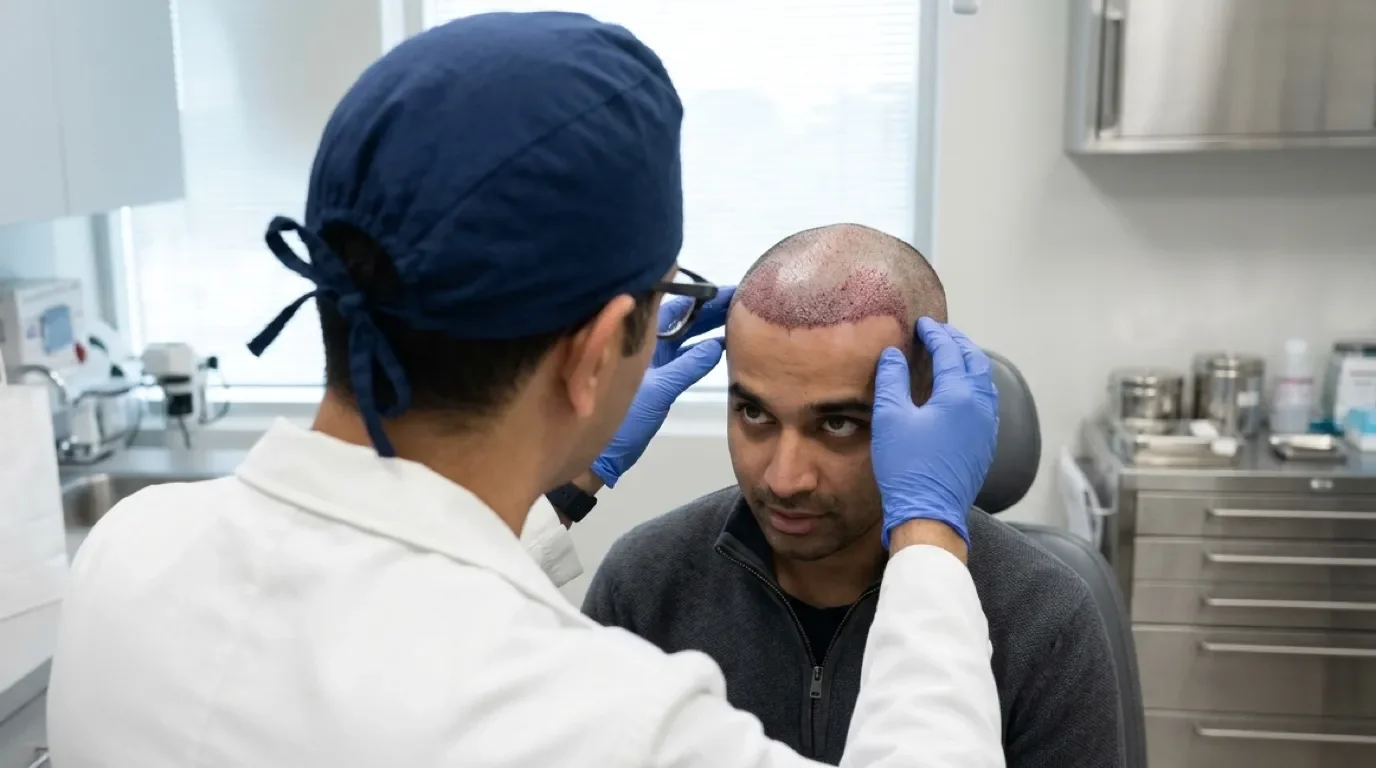
At Dr. Adrian Lo’s Philadelphia hair restoration practice, one of the most common questions after hair transplant surgery is when it is safe to wear a hat. The answer depends on healing progress and the type of headwear involved.
Hair transplant grafts need several days to anchor within the scalp before pressure or friction becomes safe. Each graft is a tiny follicular unit placed into a small incision in the scalp. Like a seedling settling into soil, newly transplanted grafts need time to anchor within the scalp before pressure or friction becomes safe.
In a study of 42 hair transplant patients indexed by the National Library of Medicine, pulling on a stuck scab removed the graft beneath it through day 5. By day 9, grafts were no longer at risk. For this reason, hats should remain loose and avoid contact with healing scabs.
Days 1 to 4: Keep Your Scalp Uncovered
The first two to three days after a hair transplant are the highest-risk period for graft loss. The grafts have not yet fully anchored within the scalp, so even light pressure, friction, or accidental movement from a hat can dislodge them and compromise the final result.
Days 5 to 14: A Loose, Soft Hat for Short Outings
Once approved by your plastic surgeon, you may wear a loose-fitting hat as long as it does not contact the recipient area. By days 5 to 7, small scabs cover each graft. Limit wear to necessary outings until most scabs shed, typically by day 14. Wash hat after every use, as attached scabs can catch on the fabric.
Weeks 3 to 4: When Fitted Caps Can Return
Fitted baseball caps, snug beanies, and most work-related protective headwear typically require at least three weeks of healing before you can wear them safely. The grafts are anchored well before then, but a tight band still creates steady friction against the healing recipient area. By week 3, surface healing is largely complete, and your plastic surgeon can confirm when you can resume regular hat use.
How FUT and FUE Change Where a Hat Can Rest
FUT removes a strip of donor tissue from the back of the head, which leaves a linear surgical incision that hat bands can press against and irritate. If you had FUT, watch where the band sits, even after the initial healing period. Otherwise, FUE and FUT carry a similar graft vulnerability window, so the hat timeline above applies to both techniques.
How to Protect Your Scalp Before a Hat Is Allowed
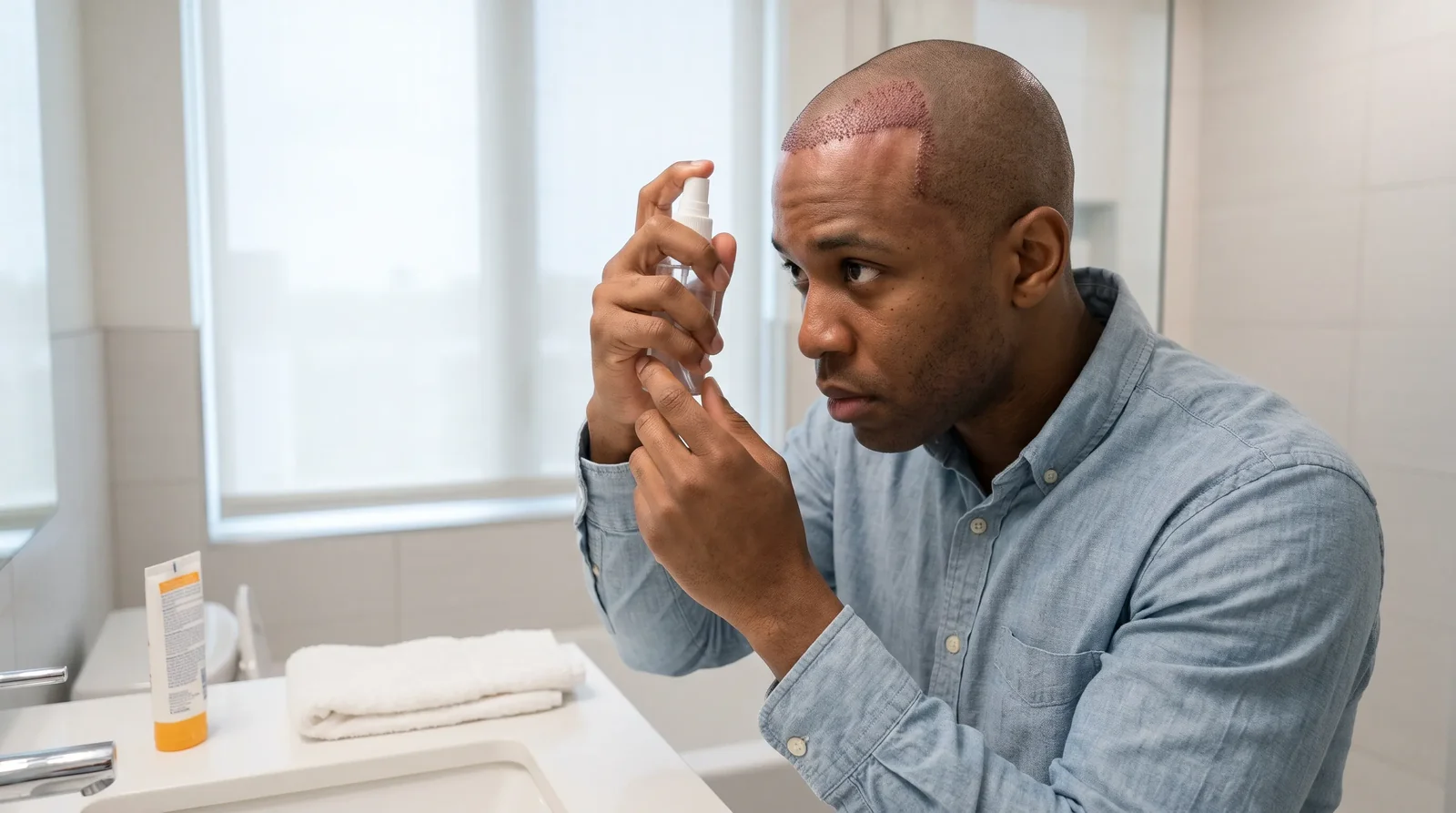
Sun and heat harm healing grafts, so avoid direct sun on the unprotected scalp for at least four weeks.
A few habits keep the scalp safe during that window:
- Shade: Stay indoors or in the shade when you go outside.
- Clothing: Wear button-up or zip-up tops so nothing pulls over your head and across the grafts.
- Products: Do not apply any product to the scalp, sunscreen included, until your plastic surgeon approves it
Best Hats to Wear After a Hair Transplant
The safest hats after a hair transplant are lightweight, loose, and breathable, and unlikely to place pressure or friction on healing grafts.
Baseball caps.Loosen the back strap fully so the cap sits over the scalp without the band pressing on the hairline or grafts.
Bucket hats and wide-brim sun hats.Often among the safest options because their soft construction and wide brim provide shade with minimal scalp contact.
Tight beanies and wool knit caps.Delay until at least week 3, as these styles create friction from multiple angles and trap heat and moisture. Knit fibers can also catch on scabs and lift them.
Cotton or linen hats.Preferred because they are breathable, allow air circulation, and reduce moisture buildup. Synthetic fabrics hold in more heat, which can interfere with healing.
The forehead offers a simple fit check. If a hat leaves a pressure mark when you take it off, it is too tight for a healing scalp.
When Can You Wear a Hard Hat After Hair Transplant Surgery?
Hard hats follow the same three-to-four-week wait as fitted caps because they place prolonged pressure on the scalp. If your job requires one, discuss your return date with your plastic surgeon before the procedure.
How to Put On and Take Off a Hat Without Disturbing Grafts

Putting on a hat safely:
- Wash your hands and use a clean, washed hat.
- Hold the hat by the brim or sides, not gripping the crown, since gripping it makes you press down from above.
- Lower it gently straight down without pressing on the scalp.
- Ensure the band or edge does not touch the hairline or the recipient area.
Taking off a hat safely:
- Grip the brim or sides, not the top of the crown.
- Lift the hat straight up using the brim or side. Avoid dragging the hat backward.
- Remove the hat slowly, especially if the hat feels like it is catching on a scab or dry skin.
- If the hat feels stuck, do not pull it off; dampen the area and remove it gently.
- Gently dampen the area with clean water and remove it carefully rather than pulling.
What Happens If You Wear a Hat Too Soon?
Wearing a hat too early can jeopardize healing grafts through pressure, friction, and moisture buildup.
- Pressure can dislodge healing grafts before they anchor.
- Friction can pull grafts or disrupt healing tissue.
- Heat and moisture may increase irritation and the risk of infection.
Seeing hairs inside a hat is not always a sign of graft loss. Transplanted hairs commonly shed between weeks 2 and 4, a normal phase called shock loss, while the follicles stay in place and regrow later.
If a hat accidentally drags across the scalp and you notice bleeding, a graft visibly out of place, or pain at the site, contact your plastic surgeon promptly. Do not rub the area or attempt to reposition anything yourself.
Most Common Mistake Patients Make
The most common mistake after a hair transplant is assuming a loose hat is automatically safe. Even a lightweight hat can dislodge grafts if it drags across scabs during removal. Wearing the correct hat incorrectly is often more problematic than briefly wearing the wrong hat. Patients should focus on both timing and technique when putting on and removing headwear during recovery.
How Dr. Lo Protects Grafts Through Recovery
Dr. Adrian Lo is a board-certified plastic surgeon with more than 30 years of experience. Hair transplant patients receive detailed aftercare instructions and a post-operative recovery kit with essentials for the first days of healing. Follow-up visits monitor healing and determine when hats and helmets can be worn safely.
Schedule a Consultation to Plan Your Recovery
Wearing a hat after a hair transplant is a question of when and which one, and the answer changes as the grafts anchor and the scalp heals. Start with soft, loose styles and handle every hat gently to keep the grafts safe while they settle.
Patients throughout Philadelphia, Cherry Hill, Marlton, and surrounding Pennsylvania and New Jersey communities can meet with Dr. Adrian Lo (Philadelphia) to plan surgery and recovery together. Schedule a consultation to get a personalized recovery plan, including when you can return to your usual hats.

FAQs
Can I Sleep in a Hat After a Hair Transplant?
Not during early healing. Sleeping in a hat increases friction against the grafts and traps heat and moisture against the scalp overnight.
When Can I Wear a Bike or Motorcycle Helmet After a Hair Transplant?
A bike or motorcycle helmet typically waits three to four weeks, like other fitted headwear, since its padding presses on the scalp. Contact sports that require a tight helmet should wait at least four to six weeks, so confirm the date at a follow-up visit.
Will Wearing a Hat Every Day Hurt My Hair After I Heal?
No. Once you are fully healed and cleared by your plastic surgeon, a hat that fits comfortably does not harm your results. Transplanted follicles come from the donor area and resist the hormone behind pattern hair loss.
Can I Wear a Hoodie After a Hair Transplant?
A pullover hoodie should generally be avoided during the first several days because it can drag across healing grafts. Zip-up hoodies are usually safer during early recovery.
Can Sun Damage Hair Transplant Grafts?
Yes. Excessive sun exposure can irritate healing skin, increase inflammation, and potentially affect early graft survival. Most surgeons recommend protecting the scalp from direct sun for at least four weeks.
Can Wearing a Hat Cause Hair Loss After a Hair Transplant?
No. Once healing is complete, wearing a properly fitting hat does not damage transplanted follicles or cause permanent hair loss.