

An ARTAS robotic hair transplant cost ranges from $7,000 to $18,000+, depending on the number of grafts required, the complexity of the treatment, and your surgeon’s expertise.
This guide breaks down every cost driver, compares ARTAS to alternative hair harvesting methods, and outlines what an itemized quote should include.
How Much Does an ARTAS Hair Transplant Cost?
The ARTAS robotic hair transplant in the United States generally ranges from $7,000 to $18,000+, with the price largely determined by graft count and plastic surgeon experience. On a per-graft basis, ARTAS typically costs $8 to $15 per graft, compared to $5 to $8 per graft for manual follicular unit excision (FUE) and $4 to $6 per graft for the traditional FUT strip method. At Philadelphia Plastic Surgery by Adrian Lo M.D., FACS, FRCS(C), a typical hair transplant procedure involves 800 to 2,500 or more grafts.
ARTAS is one of the most advanced and premium hair restoration options today. It uses AI-guided robotics rather than manual extraction, adding a layer of accuracy and consistency to the harvesting step that manual techniques cannot replicate.
What Is the ARTAS Robotic Hair Transplant System?
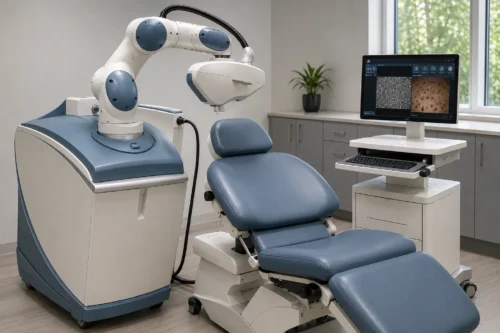
The ARTAS® robotic system is an FDA-cleared platform designed to automate the follicular unit extraction (FUE) harvesting process. FUE is a hair restoration technique in which individual follicular units are removed directly from the donor area rather than removing a strip of scalp tissue.
This system uses AI-driven imaging, 3D digital scalp mapping, robotic precision, and real-time tracking to identify and harvest individual follicular units. This technique delivers a level of consistency that can be difficult for manual extraction methods to maintain over the course of a long session.
Key ARTAS advantages include:
- AI-assisted follicle identification
- Robotic extraction precision
- No linear donor scar
- Faster harvesting efficiency
- Natural-looking graft selection
- Advanced digital hairline planning
A full ARTAS session typically lasts 4 to 8 hours, depending on the graft count.
The Factors That Determine Your ARTAS Hair Transplant Price
Graft count is the single largest driver of your total ARTAS hair transplant cost. The more hair loss you have, the more follicular units need to be harvested and transplanted, and the longer and more complex the procedure becomes.
Hair loss severity is often described using the Norwood Scale. Below is a general guide to how Norwood stages relate to graft needs and approximate cost:
| Norwood Stage | Hair Loss Level | Estimated Grafts Needed | Approximate ARTAS Cost |
| Stage II–III | Early thinning | 800–1,500 grafts | $8,000–$11,000 |
| Stage III–IV | Moderate loss | 1,500–2,000 grafts | $10,000–$14,000 |
| Stage IV–VI | Significant loss | 2,000–2,500+ grafts | $14,000–$18,000+ |
These figures are estimates, not a substitute for a professional consultation. Your plastic surgeon will evaluate your donor density, follicle caliber, and the specific coverage area needed before providing a reliable graft count and quote.
Why Plastic Surgeon Experience Affects the Per-Graft Rate
Plastic surgeons with ARTAS-specific training and a demonstrated track record in robotic hair restoration tend to charge premium rates, often $12 to $15 per graft, compared to $8 to $10 per graft at newer or less established practices. ARTAS certification requires dedicated hands-on training beyond general hair restoration education, and experienced plastic surgeons know how to calibrate the system’s settings for each patient’s follicle characteristics and scalp anatomy.
Experienced surgeons who specialize in hair restoration often command higher fees because they consistently deliver more natural and aesthetically pleasing results. Choosing a highly qualified surgeon frequently reduces the risk of poor graft placement, unnatural hairlines, overharvesting, and costly corrective procedures.
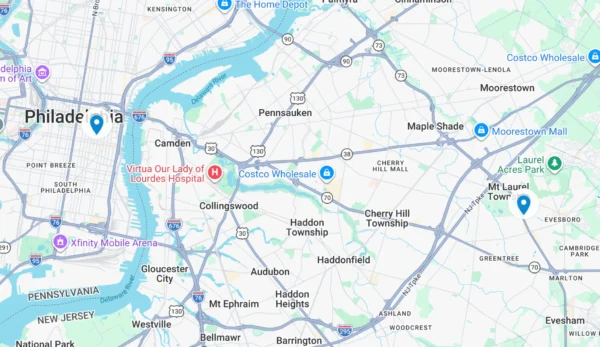
Dr. Adrian Lo is among the few surgeons in Philadelphia and New Jersey with specialized training offering advanced ARTAS robotic hair transplantation.
How Geographic Location Shifts Your Total Cost
Clinic location has a direct effect on pricing. Practices in major metropolitan areas incur higher operating expenses than practices in lower-cost markets, which are reflected in the procedure fee. Rural or lower-cost-of-living markets may offer pricing at the lower end of the national range for comparable graft counts, while major metropolitan practices often price at the higher end.
Any of these factors may increase your procedure time and cost, and a board-certified plastic surgeon will discuss them with you during your pre-procedure consultation.
What Is and Is Not Included in Most ARTAS Price Quotes
Most quoted ARTAS fees cover the plastic surgeon’s fee, robotic system usage, facility fees, and local anesthesia. What is frequently not included in an initial estimate: post-operative medications, platelet-rich plasma (PRP) add-on therapy, and travel or lodging costs for out-of-town patients. Ask any clinic you contact for an itemized quote that specifies what is covered.
If you’re still wondering if hair transplantation is worth it, read our guide.
ARTAS vs. NeoGraft vs. FUT Strip: A Cost Comparison
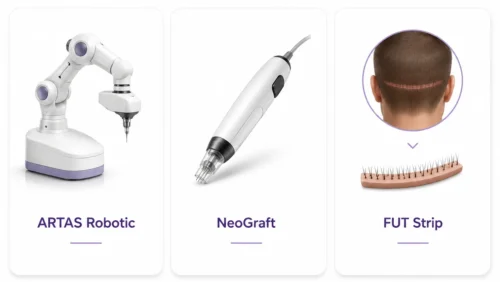
| Method | Cost Per Graft | Typical Total Cost | Incision Profile | Recovery Time |
| ARTAS Robotic | $8–$15 | $7,000–$18,000+ | No visible incision line | 5–7 days |
| NeoGraft (Handheld FUE) | $5–$8 | $6,000–$12,000 | No visible incision line | 5–7 days |
| FUT / Strip | $4–$6 | $4,000–$9,000 | Visible incision line at donor site | 10–14 days |
ARTAS sits at the top of the pricing range and offers a high degree of extraction consistency with a donor-area healing pattern that most patients find easy to conceal.
NeoGraft uses a handheld, manually operated pneumatic punch device and is compatible with a broad range of hair types, including textures that can be more difficult for the ARTAS imaging system to read.
FUT strip surgery is generally the most affordable method. It can yield high graft counts in a single session, but it leaves a visible incision line at the donor site, even with very short haircuts.
The best method is not universally the most expensive one. A patient with extensive coverage needs and a limited budget may achieve strong results with FUT. A patient prioritizing a less visible donor-area incision and advanced harvesting technology will often be a good fit for ARTAS.
Benefits of ARTAS That Help Justify the Cost
- Consistent graft selection. The AI imaging system grades each follicular unit before harvesting, which supports yield per session.
- Reduced fatigue-related variability. The robotic arm performs the same way throughout, removing manual fatigue as a variable in the harvesting step.
- No visible linear incision. ARTAS leaves small, circular micro-sites at the donor area rather than a single linear incision. These heal quickly and remain difficult to notice, even with a close-cropped hairstyle.
- Permanent results. Transplanted follicles are taken from areas of the scalp resistant to the hormone that drives pattern hair loss. Once established, they retain that resistance.
- AI-mapped hairline design. The software allows the plastic surgeon and patient to review hairline placement before a single graft is extracted, supporting natural-looking results suited to each patient’s facial proportions.

Hair Transplant Payment and Financing Options
The ARTAS robotic hair transplant is a cosmetic procedure, and patients should budget for it as a self-pay expense. For most patients, financing is the practical way to pay for the procedure upfront. Many practices, including Philadelphia Plastic Surgery by Adrian Lo, M.D., offer flexible patient financing options to spread the cost of your procedure into manageable monthly payments.
Who Is a Good Candidate for the ARTAS Hair Transplant?
A good candidate for hair restoration generally has stable hair loss for at least 6 months, sufficient donor hair, and realistic expectations about the timeline for results.
Candidates not good for hair transplantation include patients with insufficient donor hair density, active scalp conditions or infections, unstable or rapidly progressing hair loss, and unrealistic expectations about results.
Ready to Get Your Personalized ARTAS Cost Estimate?
The best way to determine your exact ARTAS hair transplant cost is through an in-person consultation and graft analysis.
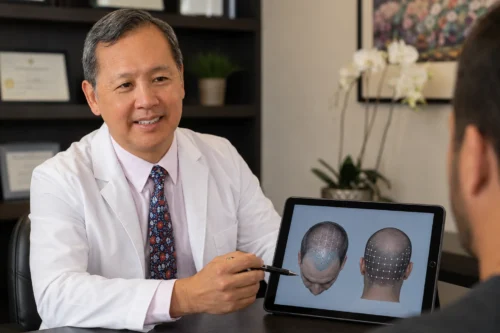
Dr. Adrian Lo is a board-certified plastic surgeon with specialized training in hair restoration. During your consultation, Dr. Lo will evaluate your degree of hair loss, donor density, long-term goals, and candidacy for robotic hair restoration before creating a personalized treatment plan.
If you’re considering an ARTAS hair transplant in Philadelphia or New Jersey, schedule a consultation today to receive a customized quote and find out whether robotic hair restoration is right for you.