

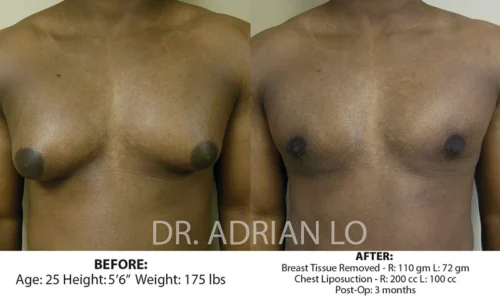
Is Liposuction or Gland Removal Better for Gynecomastia?
Neither is inherently better. Most men with gynecomastia have both excess fat and glandular breast tissue.
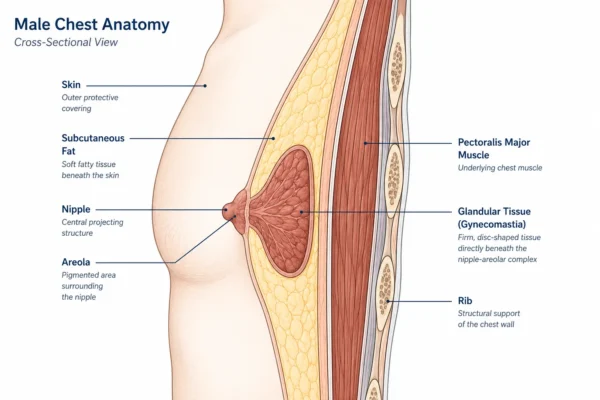
Liposuction for gynecomastia is a minimally invasive surgical procedure used to remove excess soft fatty tissue from the male chest. Still, it cannot break down the firm, dense disc of glandular tissue beneath the nipple. Gland removal, or excision, is the surgical technique used to extract and eliminate the glandular tissue.
Whether liposuction alone is enough or gland removal for gynecomastia is needed depends entirely on the type of tissue causing the breast enlargement or “man boobs”, making an evaluation by an experienced plastic surgeon essential to achieve a flatter, more masculine chest contour and avoid incomplete results.
What Is Gynecomastia?
Gynecomastia is the enlargement of breast tissue in men, typically caused by a hormonal imbalance. This results in glandular breast tissue growth, excess fat, or a combination of factors. This condition is surprisingly more common than most men realize; gynecomastia affects 30% to 65% of men during their lifetime in the United States and can cause chest fullness, nipple prominence, breast enlargement, and physical discomfort. For many men, gynecomastia causes self-consciousness, limiting clothing choices and activities.
Gynecomastia surgery, including male breast reduction surgery, ranks among the most popular plastic surgeries men seek for both aesthetic confidence and physical comfort. Plastic surgeons use two primary tools: liposuction and direct gland removal, which is also called subcutaneous mastectomy. Some cases require only one; most cases require both techniques.
Comparison: Gland Removal vs. Liposuction for Gynecomastia
| Factor | Liposuction | Gland Removal (Excision) |
| Tissue treated | Soft, fatty tissue | Dense, firm, glandular tissue |
| Best for | Pseudogynecomastia or mild true gynecomastia | True gynecomastia with a firm disc (gland tissue) beneath the nipple |
| How it works | A small cannula removes fat through a minimal incision | Direct surgical removal of the gland through a small incision along the lower areola border. |
| Skin elasticity needed | Good elasticity required for smooth contraction after fat removal | Good elasticity also required after breast gland removal |
| Incision size | Very small, minimal surgical incision marks | Small semi-circular incision along the areola border from 3 to 9 o’clock |
| Recovery time | Generally faster, three to five days for desk work | Slightly longer due to the additional incision, about 5-7 days |
| Risk profile | Lower risk overall | Marginally higher risk due to the additional incision |
| Limitation | Cannot remove firm glandular tissue | Does not address surrounding fatty tissue alone |
| Most Common Use | Combined with gland removal in true gynecomastia cases | Combined with liposuction to address both tissue types in one procedure |
Important: For most patients, a thorough examination by an experienced, board-certified plastic surgeon is required to determine which treatment will provide the best long-term outcome.
Can Gynecomastia Be Corrected With Just Liposuction?
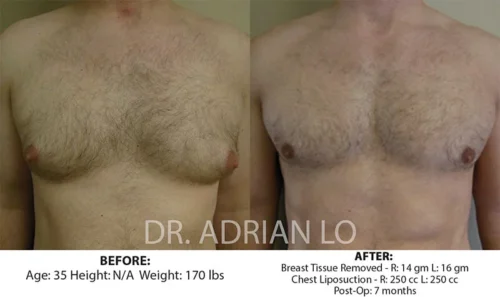
Liposuction-only gynecomastia surgery works best when chest enlargement is primarily caused by excess fatty tissue rather than dense glandular growth. This condition is often called pseudogynecomastia or mild true gynecomastia and responds well to chest liposuction because the tissue is soft, diffuse, and accessible through a small cannula.
A good candidate for liposuction-only gynecomastia surgery typically has:
- Soft fatty tissue
- Minimal glandular development
- No firm disc beneath the nipple
- No puffy nipples – this can only be corrected with gland removal
- Good skin elasticity
- Stable weight
The liposuction techniques used in these cases involve a small cannula inserted through a minimal incision to remove unwanted fat and sculpt a flatter chest contour. The minimal incision usually heals well, reducing the visibility of any surgical incision marks.
Advanced liposuction technologies such as Ultrasonic-assisted liposuction (UAL) or Power-assisted liposuction (PAL) improve fat removal efficiency while minimizing trauma to surrounding tissues.
Patients who qualify for liposuction-only cases generally experience:
- Shorter recovery times
- Less swelling
- Minimal scarring
- Excellent contour improvement
However, liposuction has one important limitation: it cannot remove dense glandular tissue.
Why Some Cases Need Gland Removal for Gynecomastia
Many patients seeking treatment for gynecomastia have more than fat alone. They also have a firm, fibrous gland located directly beneath the nipple and the surrounding area. Puffy nipples in men are often a sign of underlying gland tissue. This is known as true gynecomastia.
True gynecomastia cases involve glandular breast tissue. Unlike fat, which is soft and compressible, glandular tissue feels firm, rubbery, and disc-like beneath the nipple. It may be tender to touch. Because it is fibrous and dense, liposuction cannot remove it. Treating true gynecomastia with liposuction alone may leave persistent nipple puffiness or chest fullness. In these cases, gland excision is required. This residual protrusion is one of the most common reasons patients become dissatisfied after inadequate treatment elsewhere.
Why Combination Treatment Often Produces the Best Results
Many patients have both fat and glandular tissue. The optimal chest contouring surgery for this situation is combining liposuction with gland excision. This allows the surgeon to remove both tissue types, improve nipple projection, and create a flatter, more masculine chest contour in a single procedure. For this reason, combination treatment is often considered the gold standard for moderate to severe gynecomastia.
In more advanced cases involving significant weight loss or long-standing gynecomastia, the skin may not contract adequately after breast tissue removal. Skin removal techniques may be discussed if needed.

Risks, Recovery, and What to Expect After Gynecomastia Surgery
Risk
Gynecomastia or male breast reduction surgery is considered safe when performed by a qualified, board-certified plastic surgeon, but all surgery carries potential risks.
Common side effects include bruising, swelling, temporary numbness, mild discomfort, and fluid accumulation (seroma). Less common risks may include asymmetry, contour irregularities, changes in nipple sensation and scar-related concerns.
Recovery
Most patients return to desk work within three to five days and wear a compression vest for approximately four weeks. Heavy lifting and strenuous exercise are restricted for two weeks. Chest contour results continue to improve as swelling resolves, with final contour results around 6 months after surgery.
Why an Expert Consultation Matters

The Consultation Is Where Your Treatment Plan Actually Starts
Determining whether a patient needs liposuction, gland removal, or a combination approach requires an in-person examination. At your consultation appointment, the plastic surgeon will discuss your aesthetic goals and evaluate tissue composition, chest anatomy, and skin elasticity by pressing around the nipple-areola complex to differentiate fatty tissue from glandular tissue.
Medical history is reviewed, including any medications that may contribute to gynecomastia, such as certain blood pressure medications, antidepressants, or hormone-related treatments. Imaging may be ordered in select cases.
The liposuction-only versus combination decision is made at the consultation. Physical exam findings, combined with the patient’s aesthetic goals and overall health, shape a personalized treatment plan that cannot be determined in advance.
Why Patients Travel to Dr. Adrian Lo for Gynecomastia Surgery
Successful gynecomastia correction and male chest reduction surgery requires more than simply removing tissue. It requires surgical judgment, artistic contouring, and extensive experience treating the full spectrum of male chest concerns.
Experience counts. Dr. Adrian Lo has performed over 1000 gynecomastia surgeries and is known as an expert in this field. Dr. Lo has been interviewed about gynecomastia surgery in Men’s Health Magazine and in the Philadelphia Inquirer newspaper. Patients from Philadelphia, the Main Line, South Jersey, and surrounding Pennsylvania communities frequently seek gynecomastia surgery with Dr. Lo to achieve a flatter, more masculine chest contour.
Dr. Lo’s practice offers a judgment-free, personalized consultation. With 30+ years of experience, Dr. Lo is a board-certified plastic surgeon certified by both the American Board of Plastic Surgery and the Royal College of Physicians and Surgeons of Canada.
He has been named one of Newsweek’s America’s Best Plastic Surgeons in 2021, 2023, 2024, 2025, and 2026.
Schedule Your Gynecomastia Consultation Today
Gynecomastia surgery is among the more frequently performed male cosmetic procedures. Most gynecomastia patients have both excess fat and gland tissue that liposuction alone cannot fully treat, which is why an in-person consultation with an experienced plastic surgeon is the most reliable way to get a realistic treatment plan.
If you’re struggling with enlarged male breast tissue, the most important step is determining whether the issue is caused by fat, glandular tissue, or both.
Many men discover that liposuction alone cannot fully correct gynecomastia, while others can achieve excellent results without gland excision. The key is expert evaluation.
Ready to achieve a flatter, more masculine chest?
Find out whether you need chest liposuction, gland removal for gynecomastia, or a combination approach. Speak with a board-certified plastic surgeon today to get a treatment plan built around your anatomy and goals.

Gynecomastia FAQs
Here are answers to frequently asked questions about gynecomastia surgery.
What Is Gynecomastia Surgery?
Gynecomastia surgery, also called male breast reduction, is a procedure that removes excess fatty tissue, glandular tissue, or both from the male chest to create a flatter, more masculine contour. It is performed using liposuction, gland excision, or a combination of the two.
Is Liposuction Better Than Gland Removal For Gynecomastia?
Neither is universally better. Liposuction works only on soft fatty tissue, while gland removal is required for firm, glandular tissue behind the nipple. Many patients need both in one procedure. The right approach depends entirely on which tissue type is present.
Why Do People Get Gynecomastia Surgery?
Most patients seek gynecomastia surgery for physical discomfort or self-consciousness caused by enlarged chest tissue. Common motivations include avoiding certain clothing or activities, experiencing chest tenderness, and seeking a flatter, more proportionate chest contour.
How Common Is Gynecomastia Surgery?
Gynecomastia itself is common, affecting roughly 30 to 65% of adult men at some point in their lives. Not everyone with gynecomastia pursues surgery, but male chest reduction remains one of the more frequently performed male cosmetic procedures.
What Happens During Gynecomastia Surgery?
The plastic surgeon first assesses the chest during consultation to determine whether fatty tissue, glandular tissue, or both are present. During the procedure itself, liposuction removes fatty tissue through a small cannula. If glandular tissue is present, the plastic surgeon makes a small incision along the lower border of the areola to excise it directly. The procedure is typically performed under anesthesia and takes 1 to 2 hours, depending on the complexity.
What Are the Risks of Gynecomastia Surgery?
Common risks include bruising, swelling, temporary numbness, and fluid accumulation (seroma). Less common risks include contour irregularities, asymmetry, and changes in nipple sensation. Combination procedures carry marginally more risk than liposuction-only cases due to the additional incision near the areola.