

Medically Reviewed By: Dr. Adrian Lo, M.D., FACS, FRCS(C)
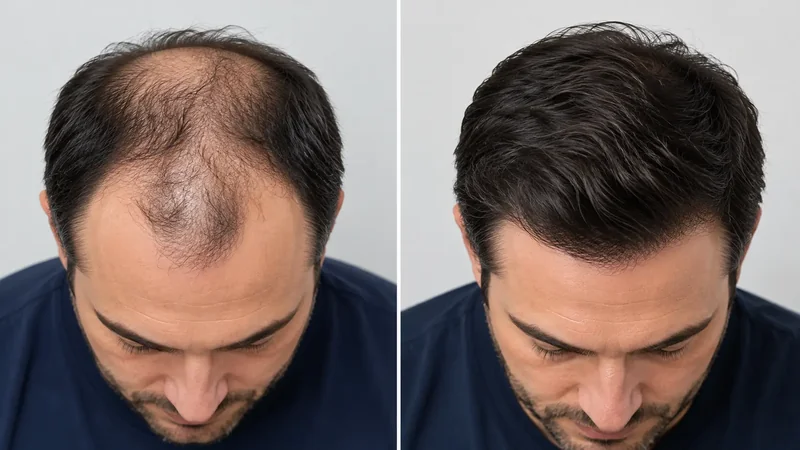
Wondering how many hair transplants can you get? Most people can safely undergo 1 to 3 hair transplant procedures in their lifetime. The true limitation is not the number of surgeries you can have, but how many healthy hair grafts your donor area can safely provide.
Many people achieve their goals with one procedure, while others benefit from a staged approach. In the ISHRS 2025 Practice Census, 67.3% of physicians reported that most patients needed, on average, one procedure to reach the desired result. The Journal of Cutaneous and Aesthetic Surgery estimates that an average donor area can safely give about 6,000 follicular units over a lifetime, from the back and sides of the scalp.
Donor capacity varies, ranging from roughly 4,000 to more than 8,000 grafts. In Dr. Lo’s Philadelphia practice, a single ARTAS robotic FUE session typically moves 800 to 2,500+ grafts, and he plans each session with your full lifetime supply in mind.
Key Takeaways
- Most people reach their goal in one or two hair transplants.
- The real limit is your donor supply. On average, a scalp can safely provide about 6,000 grafts over a lifetime, ranging from roughly 4,000 to more than 8,000 depending on donor density.
- A graft contains 1 to 4 hairs, averaging about 2.
- FUE thins the entire donor area a little with each session. FUT leaves the rest of the donor area at full density, so the technique leaves full-density areas for future FUE harvest.
- A second session is usually discussed about a year after the first, once the final result has grown in.
- Men in their 20s may be asked to start hair loss medication and wait on surgery until their hair loss stabilizes.
- A U.S. FUE or FUT hair transplant commonly costs $4,000 to $15,000. At Dr. Lo’s practice, an ARTAS robotic hair transplant ranges from $8,000 to $18,000 or more, depending on graft count.
How Many Hair Transplants Can You Get and Is There a Limit?
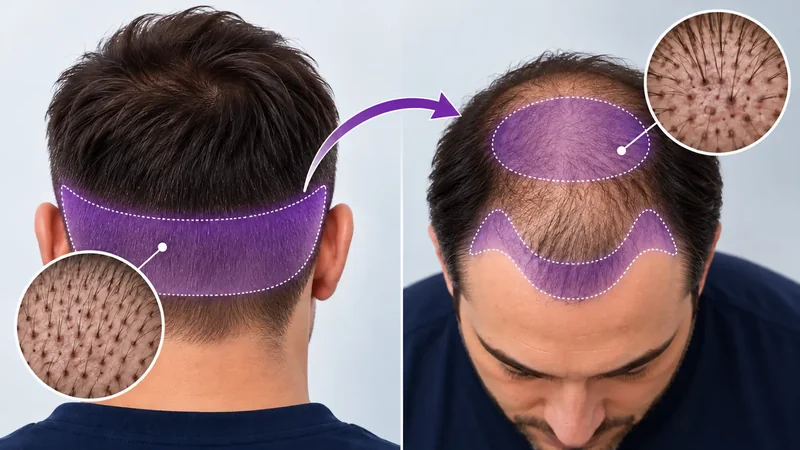
Most people need only one or two hair transplants, because the true limit is a lifetime donor supply of about 6,000 grafts (roughly 4,000 to 8,000+ depending on donor density), which covers about three sessions at average session sizes. There is no limit on the number of procedures. The limit is how many grafts your donor area can safely provide before it looks thin. The donor area is the band of hair on the back and sides of the head that resists pattern hair loss.
How Many Hair Transplants Does the Average Person Need?
Most patients require only one or two procedures. According to the ISHRS Practice Census, most patients achieve their goals after a single procedure. Additional sessions are usually needed because hair loss progresses, not because the transplant failed. Patients with extensive baldness, crown loss, or ongoing androgenetic alopecia may need a second or third procedure.
How Many Hair Follicles Are in One Graft?
A graft, or a follicular unit, contains 1 to 4 hairs and averages 2 hairs. A 2,000-graft procedure typically moves about 4,000 hairs. A study in Dermatologic Surgery found 65 to 85 follicular units per square centimeter in the donor scalp.
ISHRS data reported an average of 2,347 grafts for a first procedure and 1,637 grafts for a subsequent procedure. A 6,000-graft supply covers about three sessions.
Why Do Some Patients Need a Second Hair Transplant?
A second procedure rarely means the first one failed. Transplanted hair typically remains permanent, while surrounding native hair may continue to thin. The American Academy of Dermatology (AAD) notes that hair loss can continue after transplant. Medication may help maintain results.
Common reasons for a second session:
- Ongoing hair loss behind or around the transplanted area
- A crown that needs more density than one session can provide
- A staged plan, where the hairline comes first, and density is added later
How Long Should You Wait Between Procedures?
The AAD reports that most patients see results 6 to 12 months after surgery. Dr. Lo’s patients see their final result at about 9 to 12 months. If additional grafts are needed, a second procedure is usually discussed after that point.
Will I Have Shock Loss After a Second Transplant?
Yes, you may experience shock loss after a second transplant procedure. The AAD says transplanted hair falls out between two and eight weeks after surgery. Temporary shedding and thinning are common and typically followed by new growth as the follicles start their next growth cycle.
FUE vs. FUT: How the Technique Affects Future Sessions
The donor limit is the same regardless of technique.
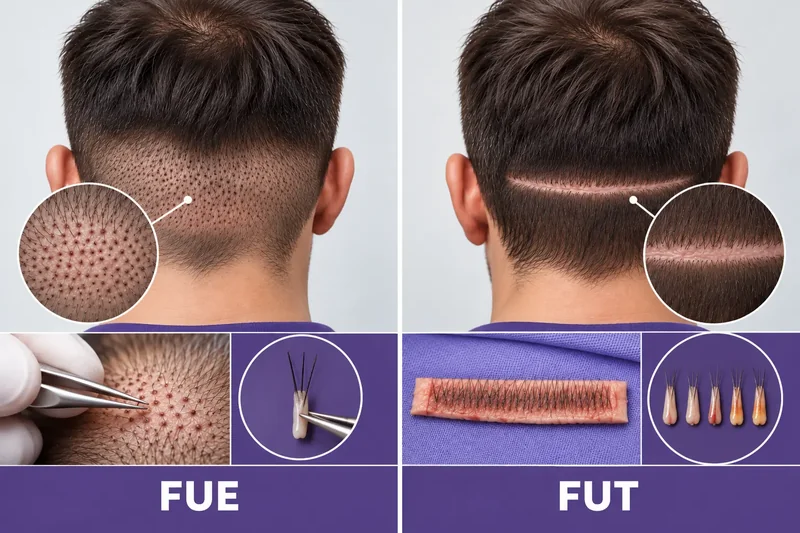
FUE (follicular unit excision) removes single follicular units using a tiny round punch. It leaves small dot-like marks spread across the donor area and lowers density across the entire zone. Studies suggest that about one in four follicular units can be removed without creating a noticeable reduction in hair density, allowing the donor area to continue looking full. For an average scalp, this translates to roughly 4,000 to 4,500 FUE total grafts.
FUT (follicular unit transplantation) removes a thin strip of scalp, leaving a fine linear incision line. The remaining donor area keeps its original density so that you can follow with FUE or another FUT later. Combining the two methods may yield more total grafts than either one alone.
Overharvesting is the main risk of repeat sessions. Taking too many grafts from one zone, or from outside the safe donor zone, can leave permanent thinning. Dr. Lo utilizes the ARTAS robotic hair restoration system, which uses advanced imaging and artificial intelligence-assisted follicle selection to select follicles evenly throughout the donor area. This technology improves harvesting consistency and helps reduce the risk of donor overharvesting compared to manual FUE.
You do not need to match your original density. About 35 to 40 grafts per square centimeter looks full to most people, which is roughly half of natural density.
Before booking another session, ask:
- Is there thinning the first transplant did not address?
- Has a plastic surgeon measured your donor density and confirmed grafts remain?
- Would more grafts change how you look, or would medicine to protect your current hair help more?
Dr. Lo’s Perspective on Lifetime Hair Restoration Planning
“A successful hair transplant is not about using the most grafts possible. It’s about protecting your donor supply and planning for how your hair may change over the next 10 to 20 years.”
— Dr. Adrian Lo
Plan Your Hair Restoration With a Personalized Consultation
How many hair transplants one can get always starts with a donor evaluation. Dr. Adrian Lo is a board-certified plastic surgeon with more than 30 years of experience and an attending physician at Pennsylvania Hospital. Dr. Adrian Lo performs ARTAS robotic hair transplantation for patients from Philadelphia, Cherry Hill, Main Line communities, South Jersey, Delaware, Bucks County, and Montgomery County.
During your consultation, Dr. Lo will evaluate donor density, map your hair loss, and develop a long-term graft plan.
Ready to find out how many grafts your donor area can support? Schedule a consultation with Dr. Lo for a donor density evaluation, graft estimate, and customized hair restoration strategy.

FAQs
Is 25 Too Early to Get a Hair Transplant?
For many men, yes. The AAD says men in their 20s may be asked to wait and start hair loss medication first. In the ISHRS 2025 census, 73% of members reported a minimum age for surgery, with an average cutoff of 22. A hairline designed too aggressively at 25 may look unnatural at 45 if future hair loss occurs.
According to the AAD, finasteride slows hair loss in about 80% to 90% of men. The effect lasts only as long as you keep taking it. Dr. Lo requires hair loss to be stable for at least six months before recommending surgery.
How Much Does a Hair Transplant Cost?
In the United States, a single hair transplant session commonly costs $4,000 to $15,000, with graft count driving the cost. At Dr. Lo’s practice, an ARTAS robotic hair transplant ranges from $8,000 to $18,000 or more, depending on graft count and complexity.
Cost depends primarily on graft count, technique (robotic FUE, manual FUE, or FUT), and the number of sessions. Dr. Lo offers patient financing options for hair restoration.
How Much Does 5,000 Grafts Cost?
A 5,000-graft plan is more than twice the average first session, so it is usually split into two procedures. Ask for a written quote that lists the graft count for each session.
Is 2,500 Hair Grafts A Lot?
Yes. 2,500 grafts is slightly above the ISHRS average for a first procedure and often enough to rebuild a receding hairline. Crown hair grows in a swirl pattern and often requires more than 2,500 grafts. As a result, 2,500 grafts may be only the first stage of treatment when both the hairline and crown need correction.
Can You Run Out of Donor Hair?
Yes. Every patient has a limited donor supply. Once too many follicular units are harvested, the donor area may appear permanently thin. This is why experienced hair transplant surgeons carefully calculate graft usage and preserve donor reserves for potential future procedures.