

For many people considering a hair transplant, one question outweighs all others:
“How painful is a hair transplant?”
The good news is that, for most patients, modern hair transplant surgery is far less uncomfortable than they expect. In fact, the majority of patients describe the hair transplant surgery as a manageable experience with the most discomfort during the initial numbing process rather than the procedure itself.
Understanding how painful hair transplant surgery is requires examining three distinct phases: the procedure, the immediate postoperative period, and the weeks that follow as the scalp heals. Hair transplant surgery itself causes little to no pain; the scalp is fully numbed with local anesthesia before grafts are harvested and placed. The only real discomfort is a brief sting during the numbing injections (rated 3–6/10). After surgery, mild soreness and itching are common for a few days and can be easily managed with over-the-counter pain relievers.
If concerns about pain are preventing you from restoring your thinning hair, hairline and confidence, this guide is for anyone considering hair loss treatment and explains what to expect during hair transplant surgery, recovery, and healing, based on real patient experiences and decades of surgical expertise. With a clear understanding, you can move forward with confidence and make an informed decision about your hair restoration journey.
Does Hair Transplant Surgery Hurt During the Procedure?
The answer is almost never.
Before your procedure begins, local anesthesia is carefully administered to numb both the donor area and the recipient area. Once the anesthetic takes effect, patients typically feel:
- Mild pressure
- Occasional vibration
- A pulling or tugging sensation
- Awareness of movement on the scalp
What patients generally do not feel is sharp pain.
How Painful Is Hair Transplant Surgery Itself? The Most Uncomfortable Part: The Numbing Injections
The initial anesthesia injection is the most uncomfortable and briefest moment during the entire hair transplant procedure. Most patients describe it as a mild pinching or stinging sensation, similar to a dental numbing injection. To keep this moment as comfortable as possible, many plastic surgeons use techniques such as applying a cold pack to the injection site beforehand, tapping or gently vibrating the skin as a distraction, warming the anesthetic to body temperature, and injecting slowly to reduce the sting.
Once the local anesthesia takes full effect, the scalp becomes numb, and the remainder of the procedure involves little to no pain.
Does an FUE Hair Transplant Hurt More or Less Than FUT?
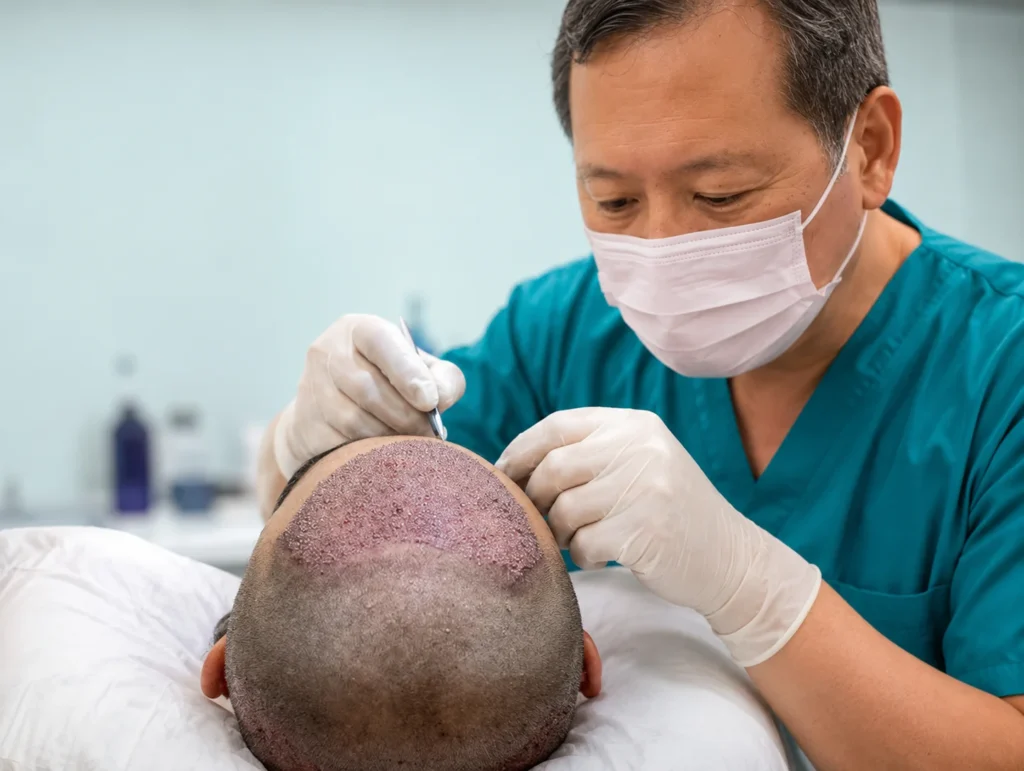
For patients asking, “Does an FUE hair transplant hurt?. Generally, FUE (Follicular Unit Extraction) causes less postoperative discomfort than FUT (Follicular Unit Transplantation). FUE generally produces less tension and pulling than FUT, as FUE involves individually extracting follicles rather than removing a strip of scalp tissue. Hair transplant discomfort during FUT may include a mild tugging sensation along the donor strip area, though this, too, is significantly dulled by anesthesia.
Throughout the FUT procedure, patients may notice pressure, vibration, or awareness of movement on the scalp, but sharp or intense pain is uncommon once the anesthesia is active. The surgery is performed with the patient awake, so communicating any discomfort to the plastic surgeon allows for additional anesthesia as needed. In summary,
FUE Hair Transplant
FUE involves harvesting individual hair follicles directly from the donor area.
Benefits include:
- Smaller wounds
- Minimal scarring
- Less tension in the scalp
- Faster healing
- Reduced soreness after surgery
FUT Hair Transplant
FUT involves removing a strip of scalp tissue from the donor area.
Patients may experience:
- More tightness in the donor region
- Increased soreness during healing
- A linear scar
- Longer recovery time
For patients who prioritize comfort, recovery, and minimal downtime, advanced FUE techniques are often the preferred option.
Hair Transplant Pain Post-Op: How Much Pain Should You Expect During Recovery?
Hair transplant pain after the procedure follows a predictable and manageable recovery timeline.
During days 1–3: Peak Soreness
During the first several days, patients typically experience the most noticeable soreness, particularly in the donor area.
Patients commonly experience:
- Mild tenderness
- Tightness in the donor area
- Minor swelling
- Sensitivity when resting or sleeping
Keeping the head elevated, such as sleeping at a 45-degree angle, helps reduce swelling, ease pressure on the treated areas during this early recovery phase, and improve comfort.
Over-the-counter pain medications, such as acetaminophen, are generally sufficient to manage discomfort at this stage and can be taken as directed to stay ahead of soreness.
By days 4–7: Improvement Begins
By the end of the first week, most patients report hair transplant discomfort begins to subside noticeably. During this initial healing period, common symptoms in the scalp include:
- Mild itching
- Tightness
- Light scalp sensitivity
- Scabbing around graft sites
Most patients find this manageable and no longer require pain medication by the end of the first week.
During weeks 2–4: Minimal Remaining Discomfort
Most soreness has resolved by this point.
The residual sensitivity fades, and the focus shifts from managing discomfort to protecting the newly transplanted follicle grafts. Any lingering scalp tenderness at this stage is mild and intermittent.
Patients who follow their plastic surgeon’s post-operative care instructions consistently report a smooth recovery with no significant ongoing pain.

What Else to Expect During Recovery
Here are some additional factors to keep in mind about hair transplant post-operative care:
- Soreness and tenderness: Typical duration: lasts 3–5 days. Easily managed with over-the-counter pain relievers and head elevation. Improved substantially during the first week.
- Mild bleeding: Typical duration: 24–48 hours. Small amounts are normal initially. Avoid touching or picking at the graft and follow the aftercare guidance.
- Swelling: Typical duration: 3–5 days. Most common around the forehead. Improved with head elevation and cold compresses.
- Itching: Typical duration: 1–2 weeks. A normal sign of healing. Use a saline spray, gentle shampoo, and avoid scratching.
- Scabbing: Typical duration: 3–10 days. Allow scabs to flake off naturally during gentle washing.
- Shedding: Typically begins around 2–3 weeks. Often called shock loss, this is a completely normal part of the growth cycle before a new growth begins. Regrowth usually follows within months.
Factors Affecting Hair Transplant Surgery Pain
Not everyone experiences recovery the same way. Several factors influence discomfort levels.
| Factor Affecting Pain | What It Means |
| Surgical technique (ARTAS FUE vs. FUT) | Advanced ARTAS Robotic FUE and other modern FUE techniques typically involve individual grafts, leaving tiny marks/smaller wounds and generally lighter discomfort with quicker healing. The traditional FUT procedure removes a strip of scalp, leaving a linear surgical incision and increased tension, which often leads to greater soreness afterward. |
| Plastic surgeon’s skill and experience | A skilled surgeon handles tissue carefully and delivers anesthesia with care and control, which helps minimize trauma and soreness.A highly experienced hair restoration surgeon can significantly improve patient comfort through:Precise tissue handlingEfficient graft harvestingGentle placement techniquesThoughtful anesthesia administrationThe difference in recovery between an experienced surgeon and an inexperienced provider can be substantial. |
| Anesthesia quality | Pain increases if numbing medication is insufficient. Needle anxiety can make the injection sting feel worse. |
| Procedure Size | Larger sessions requiring thousands of grafts naturally take longer in the patient chair, can place greater stress on the scalp, and may increase post-operative tenderness. |
| Individual pain tolerance | Pain perception varies from person to person. Factors such as age, anxiety, stress levels, health conditions, and natural pain sensitivity can influence how discomfort is experienced. |
| Post-Operative Care: Healing and Aftercare | Post-surgical swelling can cause tightness, irritation or soreness in the forehead and scalp. Poor scalp hygiene increases the risk of infection (e.g., folliculitis), which can cause additional pain. |
How to Reduce Hair Transplant Discomfort and Recover More Comfortably
While every patient heals differently, a few simple steps can meaningfully reduce soreness and speed up comfort during the first week after surgery.
Before the Procedure:
- Avoid caffeine and alcohol the night before, as both can increase sensitivity and affect anesthesia response.
- Stay well hydrated
- Wear a button-up or zip-front shirt so you don’t have to pull anything over your head afterward.
During the First 72 Hours:
- Keep the head elevated at a 45-degree angle while sleeping or resting to reduce swelling and pressure on the scalp.
- Avoid sudden head movements, bending over, or lifting heavy objects, which can increase soreness and put grafts at risk.
- Refrain from strenuous activity
- Take over-the-counter pain relievers as directed to stay ahead of discomfort rather than waiting for it to build.
As Healing Progresses:
- Use a saline spray to relieve itching without disturbing the healing scalp.
- Avoid scratching or picking at scabs, since this can dislodge grafts and prolong healing.
Patients who follow these steps consistently tend to experience a smoother, more comfortable recovery overall.
Hair Transplant Patient Reviews: What Real Hair Transplant Patients Say
On the r/HairTransplants forum, in the “does it hurt and which steps” thread, most patients say this:
| u/No-Scientist-1962 wrote that the injections hurt the most, especially around the crown and front area. Other than that, they watch Blade Runner 2049 during the entire procedure. They also mentioned it is “rough” to sleep, but a travel neck pillow helped. | u/Ok-Butterscotch9752 shared: “Not really, sleeping is difficult” | u/Suspicious-Trick1399 explained that the injection is similar to a bee sting; their head ached for 2-3 days but nothing they lost sleep over. They also mentioned the pain is so low that pain should not even be a factor in whether or not one gets a hair transplant. | u/hairburner4 mentioned: “After the numbing shots I slept through most of it” |
These experiences closely mirror what we hear from patients every day in consultation and follow-up visits.
Learn more about whether hair transplant surgery is worth it in our detailed guide!
Surgical Experience Matters: Find Out About Your Specific Situation with a Hair Transplant Consultation
Not every patient experiences hair transplant surgery the same way, and understanding what to expect in terms of pain requires accounting for individual variables. Anxiety levels play a meaningful role: patients who arrive at their procedure tense or apprehensive tend to perceive discomfort more acutely than those who are relaxed and well-prepared. Scalp sensitivity, overall pain tolerance, the total graft count, and the technique selected all contribute to how a patient experiences the procedure.
While hair transplant pain is generally minimal, comfort depends heavily on the plastic surgeon performing your procedure.
Dr. Adrian Lo is a board-certified plastic surgeon with over 30 years of experience. Dr. Lo’s experience gives you careful, personalized anesthesia and pain management planning. Nurses and physicians frequently refer their own family members and colleagues to Dr. Lo, a strong reflection of the trust placed in his care.
Schedule Your Hair Transplant Consultation
When considering a hair transplant, the goal should not simply be to find a provider who can perform the procedure; it should be to find a surgeon who can deliver natural-looking results while maximizing safety, comfort, and long-term success.
Hair transplant patients who want to understand their personal risk factors and prepare effectively can be fully informed by a professional plastic surgeon during their consultation process.
Get started today!
FAQs about Hair Transplants
Here are some frequently asked questions about hair transplant pain.
How Painful Is a Hair Transplant on a Scale of 1 to 10?
Most patients rate it 1 to 4. The numbing injection is the worst part, at 3-6.
How Long Is the Pain After a Hair Transplant?
Soreness usually peaks on day one and fades significantly by day 4 or 5.
What Is the Most Painful Part of the Procedure?
The local anesthesia injection, which causes a brief sting or pinch before the scalp goes numb.
Will I Feel Pain During Hair Transplant Surgery?
No significant pain. The scalp is numbed, so most patients feel only pressure or a tugging sensation.
Does a Hair Transplant Hurt After the Anesthesia Wears Off?
Mild soreness and tenderness are common for a few days and are easily managed with over-the-counter pain relievers.
How Long Does Hair Transplant Soreness Last?
Typically 3 to 5 days, with most discomfort gone by the end of the first week.
Does Sleeping Hurt After a Hair Transplant?
Sleeping is often uncomfortable rather than painful, especially the first several nights. A travel neck pillow can help.