
Aging, pregnancy, and weight changes loosen the skin and stretch the Cooper’s ligaments that hold the breasts in place, so the breast and nipple gradually sit lower on the chest. Plastic surgeons call this change breast ptosis, and chest exercises cannot lift breast tissue once it has descended.
A breast lift (mastopexy) is the main treatment, and the technique depends on how far the nipple has dropped below the breast crease.
Defining Breast Ptosis

Understanding breast ptosis requires knowledge of breast anatomy.
Breast ptosis occurs when breast tissue descends below its natural position on the chest wall. The medical community defines this condition through the relationship between the nipple position and the inframammary fold (IMF) – the natural crease beneath the breast.
Common signs of breast ptosis include:
- Nipples that sit at or below the breast crease
- Nipples that point downward instead of forward
- Breast tissue that hangs below the crease
- Areolas that look larger or stretched
Some degree of ptosis is natural and expected over time. However, the extent of ptosis can sometimes impact a woman’s confidence and comfort.
Related: All the Different Types of Breast Lifts
Understanding Breast Anatomy
Before exploring treatment options for breast ptosis, it’s crucial to understand the complex architecture of breast tissue. The breast’s natural position and shape depend on an intricate network of supportive structures working in harmony.
Cooper’s Ligaments and Support Structures
Cooper’s ligaments — named after Sir Astley Cooper — act as nature’s internal scaffolding for breast tissue. These fibrous bands connect breast tissue to the chest wall, creating a natural suspension system.
Think of them as biological suspension bridges: when healthy and taut, they maintain breast position effectively. However, these ligaments can stretch over time, like a rubber band losing its elasticity. Once stretched, they cannot naturally return to their original tension.
Role of Skin Elasticity
Skin elasticity serves as the breast’s primary external support system. Young, healthy skin contains abundant collagen and elastin fibers that allow it to stretch and retract efficiently. However, several factors affect skin elasticity:
- Age-related collagen breakdown
- UV damage from sun exposure
- Hormonal changes
- Rapid weight fluctuations
- Genetic predisposition
- Environmental factors
When skin loses elasticity, it cannot adequately support breast tissue, contributing to ptosis development.
This process accelerates after age 40, when collagen production naturally decreases.
Muscle and Tissue Interaction
The pectoralis major muscle lies beneath the breast tissue but doesn’t directly support breast position. Instead, breast tissue rests on this muscular foundation, surrounded by fat cells that provide volume and shape.
This relationship explains why:
- Chest exercises alone cannot prevent or correct ptosis
- Breast tissue moves independently of muscle
- Weight loss affects breast volume but not necessarily position
- Surgical procedures must address both tissue and skin for optimal results
Understanding these anatomical relationships helps explain why certain treatments work — and why others don’t. It also highlights why a comprehensive approach to breast ptosis treatment often yields the most successful outcomes.
Related: Pancake Breasts After Baby: What Really Causes the Flat Appearance
Grades of Breast Ptosis
Plastic surgeons grade breast ptosis by where the nipple sits compared with the IMF. Understanding breast ptosis grades helps determine the most appropriate treatment approach.
Grade I (Mild Ptosis)
In mild ptosis, the nipple descends to the level of the IMF but remains above the bulk of the breast tissue. This initial stage often presents subtly, with many women noticing minor changes in breast shape and position, particularly when unsupported.
At this stage, a donut lift around the areola may be enough, and in some cases breast implants alone can be sufficient.
Grade II (Moderate Ptosis)
As ptosis progresses to Grade II, the nipple falls below the IMF but remains above the lower breast contour. At this stage, changes become more noticeable, and women may experience increased difficulty with clothing fit and breast support.
Moderate sagging is typically treated with a vertical (lollipop) lift.
Grade III (Severe Ptosis)
The most advanced form of breast ptosis involves the nipple falling significantly below the IMF, with the nipple pointing downward. Grade III ptosis typically presents with substantial breast tissue descent and can affect both physical comfort and emotional well-being.
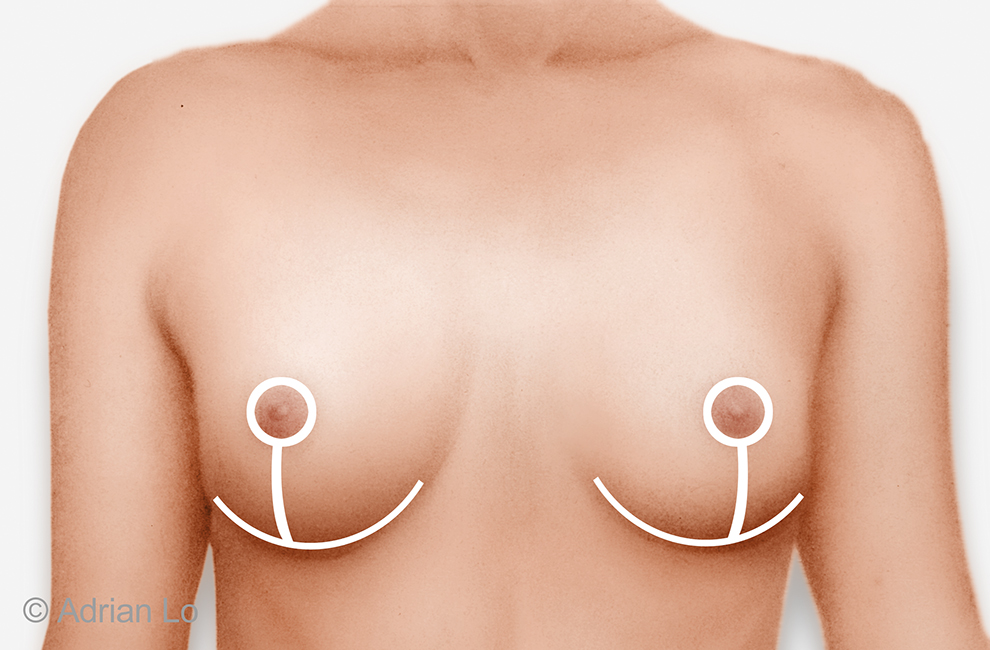
Severe sagging generally requires an anchor lift, which removes the most excess skin.
Pseudoptosis
Distinct from true ptosis, pseudoptosis occurs when the breast tissue sits below the IMF while the nipple maintains its position above it. This condition often develops after pregnancy or significant weight loss, creating a deflated appearance without actual nipple descent.
Restore your breast profile with Dr. Lo’s personalized treatment for natural-looking results. Contact us today!
Common Causes of Breast Ptosis

Let’s examine some of the most common breast-sagging causes.
Natural Aging Process
Many factors contribute to breast ptosis development.
Time inevitably affects breast tissue through the gradual breakdown of collagen and elastin fibers. These proteins provide structural support to breast tissue, and their diminishment leads to decreased skin elasticity.
After age 40, these changes typically accelerate due to hormonal shifts associated with perimenopause and menopause.
Pregnancy and Breastfeeding
During pregnancy, breasts undergo significant changes as they prepare for milk production.
The tissue expands and contracts throughout this process, potentially stretching the skin and Cooper’s ligaments — the supportive structures within the breast.
While breastfeeding itself does not cause ptosis, the breast changes during pregnancy and subsequent loss of breast tissue can contribute to tissue laxity.
Significant Weight Changes
Substantial weight fluctuations stress breast tissue, much like repeatedly stretching and relaxing an elastic band. The skin’s ability to retract becomes compromised with multiple cycles of weight gain and loss, potentially accelerating ptosis development.
This effect becomes particularly pronounced with weight changes of 10 pounds or more.
Treatment Options for Breast Ptosis

When considering breast lift options, patients should explore modern sagging-breast treatment options that range from surgical procedures to preventive measures.
Breast Lift (Mastopexy)
Ptosis correction surgery using mastopexy techniques remains the most effective long-term solution, allowing for maximum breast lift and breast reshaping.
A mastopexy procedure repositions and lifts breast tissue and removes excess skin to restore a more youthful breast position. This surgical approach involves carefully placed incisions that allow for tissue reshaping while minimizing visible scarring.
The before-and-after photo gallery shows breast lift results from Dr. Lo’s patients.
Breast Lift with Implants
For patients seeking both improved position and enhanced volume, combining a breast lift with a breast implant placement offers comprehensive rejuvenation. There are many options for implants although a highly cohesive silicone or “gummy bear” implant is preferred.
This dual approach addresses multiple concerns simultaneously, creating fuller, more proportionate results. The procedure requires careful planning to achieve optimal implant placement and tissue reshaping.
Internal Bra Technique
This innovative approach incorporates biological or synthetic mesh material to create additional internal support during breast lift surgery.
The internal bra technique provides enhanced long-term results by supporting the newly positioned breast tissue, which is particularly beneficial for patients with significant ptosis or thin tissue quality. However, this technique is still controversial in its effectiveness.
Preventing Further Breast Ptosis
While natural breast lifting exercises may help tone chest muscles, they cannot address or correct significant breast ptosis or saggy breasts.
Supportive Undergarments
Proper breast support plays an essential role in minimizing progressive ptosis. Professional bra fitting ensures optimal daily support, while high-impact sports bras become particularly important during exercise.
The right undergarment should provide comfortable support without creating pressure points or restrictions.
Weight Management
Maintaining a stable body weight helps preserve breast tissue integrity. Focus on gradual, sustainable weight management through balanced nutrition and regular exercise.
Aim for weight fluctuations no greater than 5-10 pounds to protect skin elasticity and breast tissue position.
Skin Care Practices
A comprehensive skincare routine supports breast skin health and elasticity. Key ingredients include:
- Retinoids for collagen production
- Peptides for skin firmness
- Hyaluronic acid for hydration
Sun protection becomes particularly important for décolletage areas exposed to UV radiation, which can accelerate collagen breakdown.
Restore Your Breast Profile with Dr. Lo
Dr. Adrian Lo offers various breast drooping solutions tailored to each patient’s needs. With extensive experience in breast enhancement procedures, each treatment plan reflects careful consideration of individual anatomy, lifestyle factors, and aesthetic goals.
Take the first step toward achieving your desired breast profile by contacting Dr. Lo at our Philadelphia plastic surgery offices today!
FAQs About Breast Sagging
Can Stretched Cooper’s Ligaments Be Tightened Again?
Not on their own. Once these ligaments stretch, they cannot return to their original tension, and chest exercises do not reach them because the breast rests on top of the muscle. A breast lift repositions the breast tissue and removes loose skin so the breast sits higher on the chest.
Can Breast Sagging Run in the Family?
Genetics can play a role. Inherited skin quality affects how well the skin stretches and recovers, which is one of the factors behind sagging. Aging, pregnancy, and weight changes still add to it over time.