
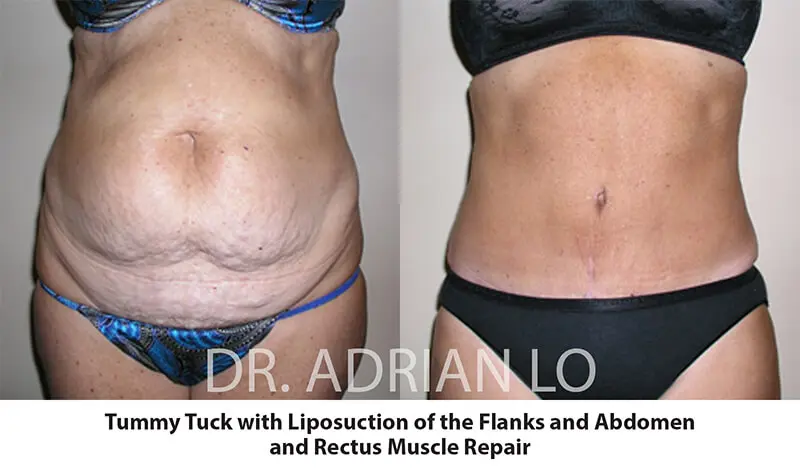
A tummy tuck (abdominoplasty) is an effective cosmetic surgery procedure to restore a flatter, firmer abdomen after pregnancy, significant weight loss, or age-related skin laxity. Understanding the tummy tuck procedure step by step and what recovery involves can help you make an informed decision.
This guide explains how a tummy tuck is performed, what to expect before, during, and after surgery, and why choosing an experienced, board-certified plastic surgeon is critical to achieving natural-looking results.
What Is a Tummy Tuck?
A tummy tuck is a surgical body contouring procedure designed to:
- Remove excess abdominal skin and fat
- Repair separated abdominal muscles (diastasis recti)
- Improve abdominal contour and waistline definition
- Correct loose skin following pregnancy or major weight loss
- Create a smoother, firmer midsection
Many modern tummy tuck procedures also include abdominal, flank, and mons pubis liposuction to enhance overall body proportions and deliver more natural-looking results.
Before You Begin: How to Prepare for Abdominoplasty
Before surgery day, patients should:
- Schedule a consultation with a board-certified plastic surgeon
- Complete required lab tests
- Obtain medical clearance, if necessary
- Stop smoking and nicotine use at least 2 weeks before surgery
- Temporarily discontinue blood-thinning medications as directed
- Arrange a caregiver for the first few days post-surgery
- Prepare recovery space with a recliner, loose clothing, and compression garments.
Patients with diastasis recti will discuss muscle repair options during their consultation. Patients with significant weight loss should maintain a stable weight before surgery to optimize long-term results.
Learn more about the different types of tummy tucks.
Tummy Tuck Operation Step-by-Step
Step 1: Type of Anesthesia
Most tummy tucks are performed under general anesthesia to keep patients comfortable throughout surgery. Some mini tummy tuck patients may qualify for IV sedation depending on the extent of the correction needed.
Step 2: Creating the Surgical Incision
The incision is customized to the amount of loose skin and tissue removed.
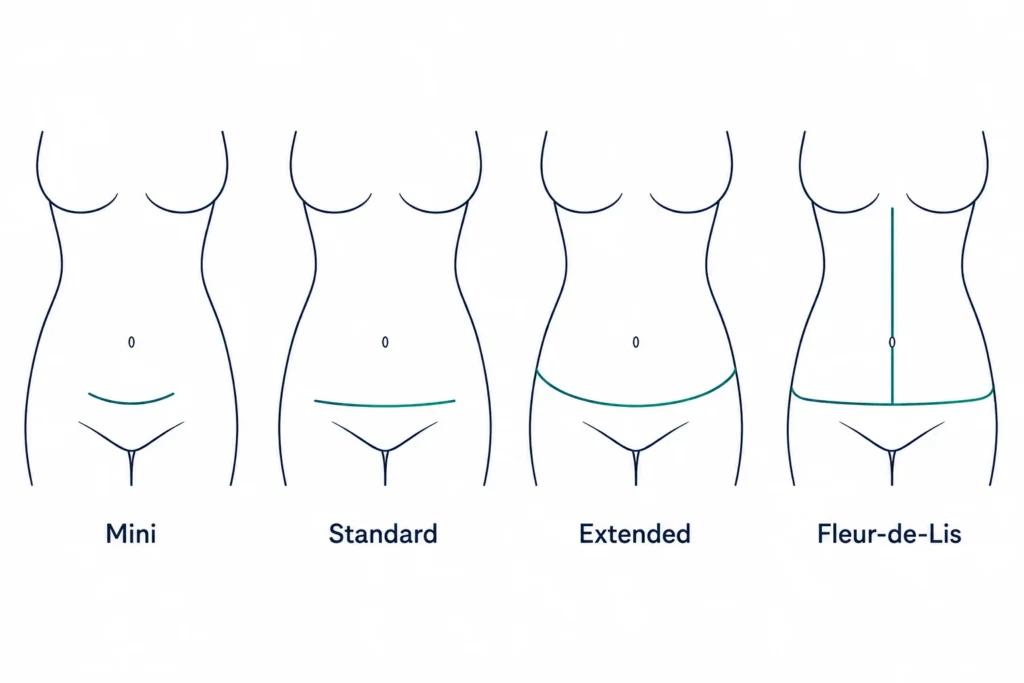
- Standard tummy tuck: Low horizontal incision running hip to hip, typically hidden beneath undergarments or swimwear.
- Mini tummy tuck: Shorter incision when correction is limited to the area below the belly button.
- Extended abdominoplasty: Extends towards the flanks to address excess skin and fullness around the waist and love handles.
- Fleur-de-Lisa abdominoplasty: Horizontal and vertical incisions (forming an inverted T or anchor) for significant excess skin after major weight loss, allowing for maximum contour improvement.
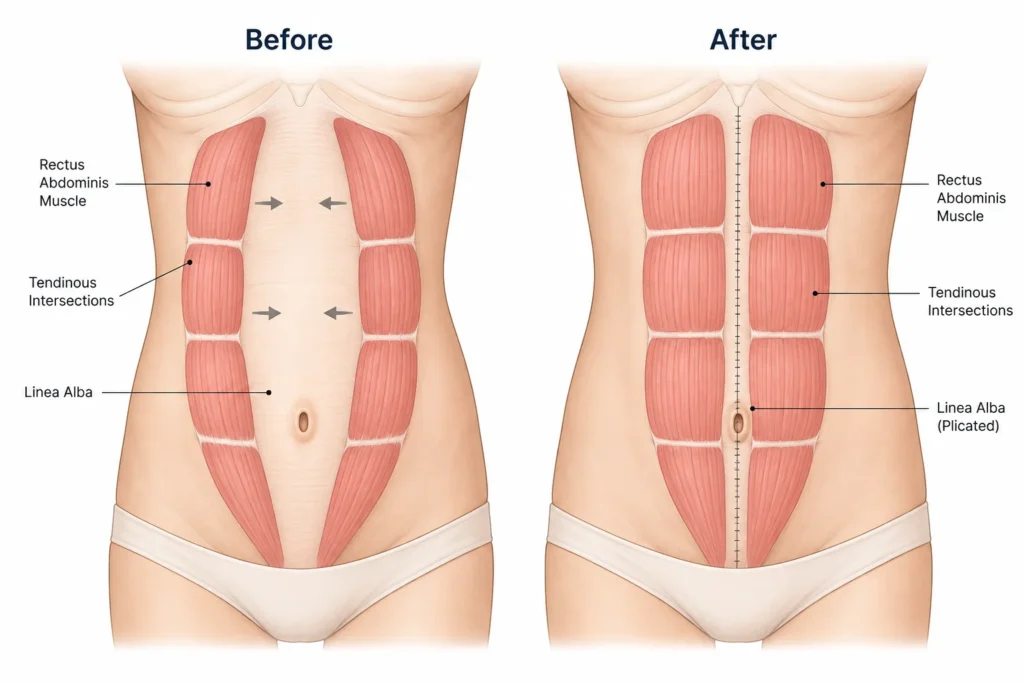
Step 3: Repairing Separated Abdominal Muscles
One of the most important components of a tummy tuck is repairing the abdominal muscles.
Pregnancy and weight fluctuations can cause the abdominal muscles to separate, causing a bulging appearance that exercise alone cannot correct, a condition called diastasis recti.
The right and left rectus abdominis muscles are drawn together toward the midline and tightened. The diastasis recti repair restores core support and improves abdominal contour.
Step 4: Removing Excess Skin and Fat
Excess skin and fat in the lower part of the abdomen, also called the pannus, is removed after muscle repair.
This addresses:
- Hanging abdominal skin
- Pregnancy-related stretched skin
- Weight loss skin excess
- Lower abdominal fullness
The remaining skin is then repositioned to create a smoother contour.
Step 5: Liposuction for Enhanced Contouring
Modern abdominoplasty frequently combines liposuction with abdominoplasty to improve body proportions.
Liposuction can sculpt:
- Upper abdomen
- Waist
- Flanks “love handles”
Liposuction of the mons pubis may be performed to address fullness in the area, which can become more prominent after abdominal skin is tightened.
Rather than focusing on the abdomen alone, this combination creates a more sculpted, natural-looking contour for post-pregnancy or post-weight-loss patients.
Step 6: Belly Button Repositioning
A natural-looking belly button is important to the overall result.
In a standard tummy tuck, the navel remains attached to the abdominal wall and is brought through a new opening after the abdominal skin is tightened, a step called umbilicoplasty.
The floating belly button technique, which detaches the belly button from its stalk and repositions it, may benefit mini tummy tuck patients or those with limited skin laxity.
The goal is a natural appearance that avoids the “operated on” look.
Step 7: Closing the Incisions
The surgeon then meticulously closes the incisions using a multilayer technique to reduce tension and support healing.
Temporary surgical drains may be placed to reduce fluid accumulation during recovery.
A compression garment is applied to minimize swelling and support the newly contoured abdomen.
Recovery and Results: What Happens After Your Tummy Tuck
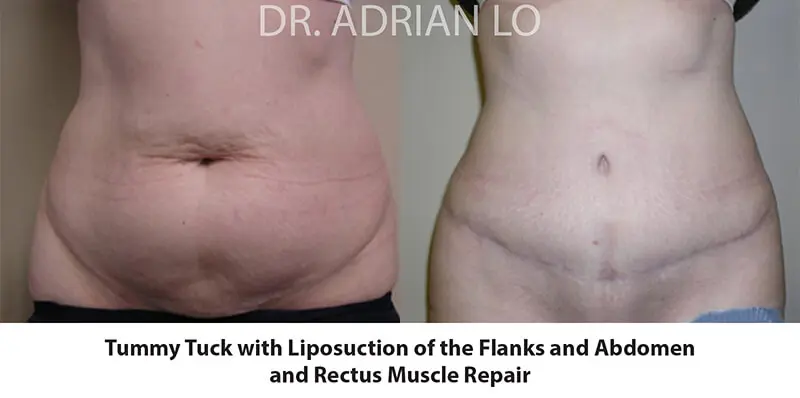
Tummy tuck recovery timeline follows a predictable progression:
- The first 48 hours focus on rest, graduated mobility, and drain management.
- Through the first two weeks, wear a compression garment continuously and avoid strenuous movement. Swelling and discomfort gradually improve.
- Weeks 2–4: A gradual return to light activity such as walking. Continue to avoid strenuous activity, heavy lifting, and intense exercise.
- Around 3–6 months, final tummy tuck contour is visible as swelling resolves. Scar maturation progresses.
Returning to strenuous activity too soon can disrupt sutures, increase swelling, and compromise contour results.
See Dr. Adrian Lo’s before-and-after tummy tuck results.
Why the Steps Before and After Your Tummy Tuck Matter
While tummy tuck surgery follows established surgical principles, outcomes vary significantly based on surgical judgment, technique, and experience.
Achieving exceptional results requires proper patient selection, surgical technique, muscle repair, liposuction contouring, and comprehensive post-operative care.
Dr. Adrian Lo is a board-certified plastic surgeon with more than 30 years of surgical experience helping patients from Pennsylvania, New Jersey, and Delaware achieve natural-looking body contouring results.
Every procedure is customized to the patient’s anatomy, skin quality, and aesthetic goals to achieve natural-looking, long-lasting results.
Schedule Your Tummy Tuck Consultation
If you’re considering tummy tuck surgery and want to understand which procedure is best for your goals, schedule a consultation with Dr. Adrian Lo. During your consultation, Dr. Lo will evaluate your anatomy, discuss your goals, and recommend a customized surgical plan designed to meet your aesthetic goals.
Schedule a consultation with Dr. Lo to find out if a tummy tuck is right for you and learn what your personalized procedure plan would look like.