


Deciding between a mini tummy tuck vs. full tummy tuck tuck depends on your body’s current condition and the goals you would like to achieve from the procedure. Both procedures remove excess skin and fat from the abdomen and repair or tighten the abdominal muscles. The two procedures differ in the extent of correction and each has a different recovery period.
Understanding tummy tuck differences is essential in making an informed decision about this body contouring. In this article, we’ll take a closer look at the various tummy tuck procedures and what sets them apart.
Related: What Is a Body Lift: Questions to Ask Your Surgeon Before Scheduling
What Is a Mini Tummy Tuck?
How Mini Abdominoplasty/Tummy Tuck Addresses the Lower Abdomen
A mini tummy tuck, or mini abdominoplasty focuses on the area below the navel or belly button. This procedure works well for patients with loose skin and skin rolls limited to the lower abdomen.
The plastic surgeon removes excess skin and rolls between the pubic area and belly button. Muscle tightening is performed only in the lower abdominal region, when needed. To enhance overall contouring, liposuction of the abdomen and sides (called the love handles) is often performed at the same time.
Most patients who benefit from a mini tummy tuck procedure have good abdominal appearance above the belly button and mainly have small amounts of excess skin and skin rolls below the belly button that diet and exercise cannot eliminate.
Incision Placement and Length in Mini Procedures
The incision for a mini tummy tuck is generally placed just above the pubic hairline. It measures about 6 to 8 inches long which is significantly shorter than a tummy tuck incision.
The plastic surgeon keeps the incision low to be hidden by underwear and swimwear. The belly button remains in its original position as the upper abdomen is not treated in a mini tummy tuck.
This smaller incision means less disruption to the overall abdomen. Compared to a full tummy tuck, a mini tummy tuck preserves more of the upper abdomen.
Recovery Timeline for Mini Tummy Tuck Procedures
Mini vs. full tummy tuck recovery differs significantly in duration and intensity. Most mini tummy tuck patients resume light activities within one to two weeks. No lifting objects over 10 lbs for the first two weeks. Driving is generally permitted after approximately one week. Strenuous exercise is to be avoided for six to eight weeks, especially if lower abdominal muscles are repaired.
Full recovery takes approximately two months. Swelling will be completely resolved. The incision continues to heal and fade over the first year. Following post-operative instructions is essential to promote optimal healing and to achieve the best aesthetic outcome..
What Is a Full Tummy Tuck?
How Full Abdominoplasty Treats the Entire Abdominal Wall
A full abdominoplasty or full tummy tuck addresses the entire abdomen from the ribcage to the pubic area, including your sides or lateral flanks. This comprehensive approach removes excess skin, skin rolls (also called a pannus) and fat from the upper, lower and side regions. Liposuction of the abdomen and sides or flanks is frequently performed at the same time to give you the best contouring result and achieve optimal aesthetic results.
A full tummy tuck procedure allows the plastic surgeon to create a smoother, firmer abdominal contour. Patients with significant loose skin, skin rolls and fat collections across the entire midsection benefit most from this option.
Women who have experienced multiple pregnancies often require full abdominoplasty as they have loose skin, skin rolls and muscle separation. Patients who have experienced significant weight loss often present with severe abdominal laxity and contour irregularities, making a full abdominoplasty the most appropriate corrective procedure.
Full Muscle Repair Included in Full Abdominoplasty Procedures
Full tummy tuck surgery typically includes repair of separated abdominal muscles, a condition called diastasis recti. This occurs when the vertical abdominal muscles pull apart causing a full look, especially when viewed from the side, and patients may appear pregnant even though they are not. Beyond aesthetics, diastasis recti can lead to functional issues such as reduced core strength, difficulty performing sit-ups, and even lower back pain. Correcting diastasis recti during a full tummy tuck not only improves the abdominal contour but also helps restore core stability.
The plastic surgeon brings these abdominal muscles back together and secures them with sutures. This repair strengthens the abdominal wall and creates a flatter appearance. Many patients experience improved core strength and reduced back discomfort after this correction. Muscle repair addresses both aesthetic and functional concerns.
Incision Size and Belly Button Repositioning Requirements
The incision for a full tummy tuck extends from hip to hip across the lower abdomen. The full tummy tuck incision length measures longer than a mini tummy tuck. The longer length is necessary to allow for complete removal of the excess skin, fat and skin rolls.
A second incision is made around the belly button or navel to release it from the surrounding skin. The belly button (or umbilicus) remains attached to the underlying muscle and tissue. After the excess skin and skin roll is removed, the belly button is brought through a newly created opening in the repositioned skin for a natural appearance.
Key Differences Between Mini Tummy Tuck vs. Full Tummy Tuck

Treatment Area Coverage Comparison and Rectus Abdominus Muscle Repair.
The primary distinction between these tummy tuck surgery options involves the treatment zone. A mini tummy tuck addresses only the lower abdomen below the navel or belly button.
A full tummy tuck treats the entire abdominal area from top to bottom. This comprehensive coverage makes it suitable for patients with cosmetic issues of the entire abdomen.
Consider where your excess skin, skin rolls and fat concentrate. If loose skin appears primarily below your belly button, a mini tummy tuck procedure may be all that is needed. Extra skin, fat and skin rolls above and below the belly button is best corrected with a full tummy tuck.
Surgical Time and Anesthesia Requirements
A mini tummy tuck typically takes about 1 to 1 ½ hours and is performed under twilight sedation or general anesthesia. On the other hand, a full abdominoplasty requires two to three hours of surgical time. The procedure involves general anesthesia due to its more extensive nature.
Longer surgical time does not indicate higher risk when managed by an experienced anesthesia team with the plastic surgeon. It simply reflects the more extensive nature of the procedure and including the additional skin removal and muscle tightening that is performed.
Scarring Patterns and Placement
Both procedures create incisions that leave permanent scars that usually fade with time and are well hidden by clothing. However, the length and number of incisions differ between a mini tummy tuck and a full tummy tuck.
Mini tummy tuck scars measure shorter and sit low on the abdomen. You will have one incision that hides beneath most clothing and swimwear.
Full tummy tuck patients have a longer hip-to-hip incision plus a circular incision around the belly button.
According to the American Society of Plastic Surgeons, proper incision care can significantly improve scar appearance with most scars fading significantly over 12 to 18 months. Additionally, most of your incisions or cuts are positioned to be covered by standard underwear and clothing.
Long-Term Results and Body Changes
Both mini and full tummy tuck procedures can deliver long-lasting results when patients maintain a stable weight and a healthy lifestyle. The removed skin, fat and skin rolls are permanently removed, however remaining skin and fat can still change with future weight fluctuations.
A full abdominoplasty provides a more complete abdominal makeover addressing several issues at once—like loose skin, skin rolls, and excess fat across the entire midsection. For patients with major concerns, this is the most transformative option.
A mini tummy tuck delivers a more targeted approach but can still create significant improvement. This option works well for patients who need lower abdominal correction only making it a great choice for those with mild concerns and who want a quicker recovery.
How to Determine Which Tummy Tuck Procedure Fits Your Needs
Evaluating Your Extra Skin, Fat and Skin Rolls and Abdominal Muscle Separation
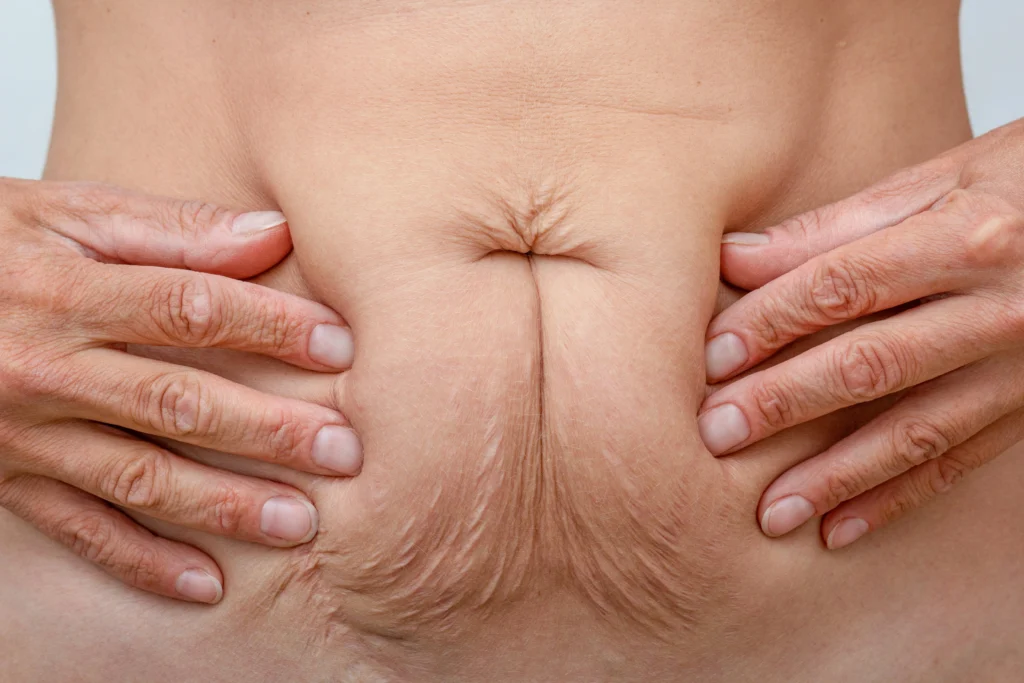
The amount and location of excess skin, fat and rolls will guide on which procedure will best address your concerns. A simple way to start is by standing in front of a mirror and noting where loose skin, fat and rolls appear most. If your concerns are mainly below the belly button, a mini tummy tuck may be enough. If you have loose skin across your entire midsection, a full tummy tuck will likely give you the best results.
During your consultation, the plastic surgeon will assess the amount and distribution of loose skin, skin rolls, fat bulges and love handle fat to recommend the most suitable procedure to achieve your aesthetic outcome. If extra skin and skin rolls, sometimes called a pannus, concentrate below your navel, a mini tummy tuck may achieve your goals. However, if there is loose skin and rolls above the belly button in addition to the lower abdominal cosmetic issues then a full abdominoplasty or tummy tuck would be recommended for comprehensive correction..
Considering Your Aesthetic Goals and Lifestyle
When deciding between a mini and full tummy tuck, start by considering the changes you want to see in your body. Patients seeking more dramatic transformation and correction often choose a full tummy tuck procedure.
Those looking for a more subtle improvement with a shorter recovery period may prefer the mini tummy tuck approach, especially if your upper abdomen looks fairly good. Your daily activities and responsibilities may also influence the decision of which type of tummy tuck procedure is selected.
Lifestyle factors also play a role. If you cannot take time away from work or family, a mini tummy tuck procedure offers a quicker return to normal activities. However, convenience should not be the only deciding factor as choosing the less comprehensive option may limit your satisfaction with the final appearance or result.
Understanding Your Body Type and Problem Areas
Your body shape and fat distribution play a major role in determining which tummy tuck procedure will deliver the best results for you. Patients with weight concentrated in the lower abdomen may benefit from targeted mini abdominoplasty.
Those with extra loose skin and fat extending across the entire abdominal midsection typically need comprehensive treatment. Previous surgeries, such as cesarean sections can influence the recommended approach.
Multiple cesarean incisions often require full abdominoplasty to properly address scarring and loose skin or overhanging skin folds over the C-section scar. During your consultation, the plastic surgeon will carefully evaluate these factors to create a personalized surgical plan.
Discussing Medical History and Functional Concerns
Certain health conditions and medications can impact surgical planning and safety so it is important to share your complete medical history with the plastic surgeon during your consultation.
If you have separated abdominal muscles causing a rounded or full look appearance, poor core strength or lower back pain, a full abdominoplasty or tummy tuck with muscle repair can address these functional concerns. A mini tummy tuck includes limited abdominal muscle tightening in the lower region only, it does not correct upper muscle separation.
Future pregnancy plans are another key consideration when choosing between procedures. If you plan to have children, the plastic surgeon may recommend waiting until after completing your family. This timing helps to preserve your results long-term.
Schedule Your Tummy Tuck Consultation With Dr. Adrian Lo
Choosing between a mini tummy tuck vs full tummy tuck requires expert evaluation to help you achieve the best outcome. Dr. Adrian Lo provides personalized assessments for patients seeking body contouring procedures in Pennsylvania, New Jersey, and Delaware.
During your consultation, Dr. Lo will carefully examine your abdominal area and discuss your aesthetic goals. He explains which approach will deliver the results you envision while maintaining natural-looking proportions.
With extensive experience in both mini and full abdominoplasty, Dr. Lo provides honest recommendations based on your anatomy and your aesthetic goals.
Philadelphia plastic surgery patients trust Dr. Lo for his meticulous approach and commitment to achieving exceptional results.Dr. Adrian Lo (Marlton) welcomes patients ready to achieve their body contouring goals through personalized surgical planning. Schedule a consultation to explore your tummy tuck surgery options today!