
Does liposuction hurt? It’s one of the most common questions patients ask before surgery and can be a concern preventing people from taking the next step.
Quick Answer: How Painful is Liposuction?
The reassuring reality is that liposuction is not painful during the procedure itself as liposuction is performed under anesthesia by a board-certified plastic surgeon. Most patients rate liposuction discomfort between 3 and 5 out of 10 during recovery.
The procedure itself is painless because anesthesia prevents you from feeling the surgery. After surgery, patients typically describe:
- Deep muscle soreness
- Bruising and tenderness
- Swelling-related tightness
- Mild stiffness when moving
Even after the procedure, most patients are pleased to learn that liposuction recovery feels less like sharp pain but more like deep soreness and stiffness, commonly compared to the feeling of having completed an exceptionally strenuous workout.
The most noticeable discomfort typically occurs during the first 48 to 72 hours, with significant improvement by the end of the first week.
Modern liposuction techniques, refined anesthesia protocols and advanced recovery strategies have dramatically improved patient comfort. According to the American Society of Plastic Surgeons’ 2024 Plastic Surgery Statistics Report, liposuction ranked as the most popular surgical cosmetic procedure in the United States, with demand remaining steady and patient outcomes continuing to improve alongside advances in technique and postoperative care.
If you’re considering liposuction in Philadelphia or South Jersey, understanding what to expect at each stage, what recovery actually feels like and what is normal versus concerning, can help you approach surgery with confidence and realistic expectations.
Is Liposuction Painful During the Procedure?
No. Liposuction should not hurt during surgery.
Liposuction is performed under anesthesia. Depending on the treatment area and the extent of correction Dr. Adrian Lo may recommend tumescent local anesthesia, IV sedation, or general anesthesia, so there is no pain during the procedure.
Why Tumescent Liposuction Is More Comfortable
Tumescent anesthesia, the most widely used approach remains the gold standard for many liposuction procedures. It involves injecting a specialized numbing solution directly into the treatment area before fat removal begins.
This technique helps:
- Minimize discomfort
- Reduce bleeding
- Minimize tissue trauma
- Decrease bruising
- Extend post-operative numbness, which can reduce early liposuction soreness.
Tumescent anesthesia often prolongs this numbness for several hours post-procedure, so most patients don’t begin to experience soreness until later the same day, after the numbing effects gradually wear off.
How Anesthesia Type Affects your pain experience:
- Tumescent (local anesthesia): No sedation, no general anesthesia, faster recovery immediately after surgery, reduced post-op grogginess, extended postoperative numbness for several hours post-procedure with the earliest onset of soreness typically delayed until that evening.
- IV sedation: Moderate sedation combined with tumescent anesthesia; comfortable procedure experience, recovery experience is similar to tumescent, but patients are slightly more drowsy immediately post-op.
- General anesthesia: Full unconsciousness; often recommended for larger volume liposuction or combined procedures. Temporary nausea or fatigue from anesthesia can contribute to early discomfort.
Dr. Lo discusses anesthesia selection with each patient during the consultation, as the right approach depends on the treatment area, volume, and whether liposuction is combined with another procedure.
Does Liposuction Hurt and What Does Liposuction Recovery Feel Like?

One of the biggest misconceptions about liposuction is that recovery involves severe pain. In reality, most patients progress through a predictable healing timeline.
Liposuction recovery pain is real but manageable, and it follows a well-documented arc that most patients find less intense than anticipated. Recovery tends to feel like a progression from deep muscular soreness toward residual tightness, rather than acute surgical pain.
Days 1–3: Peak Discomfort
The first few days are typically the most uncomfortable. Common sensations include: deep bruising or severe muscle ache or soreness, rather than sharp surgical pain. Swelling and tightness may occur with tenderness when standing or moving. Swelling is usually responsible for most of this discomfort, not the incision sites. Over the counter pain medication is usually all that is required. For more discomfort, prescription pain medication may be prescribed.
Days 4–7: Noticeable Improvement
By the end of the first week, swelling begins to decrease, mobility improves, tenderness or soreness lessens considerably and sleeping becomes easier. Most patients transition off any pain medications during this phase and the compression garment becomes easier to tolerate.
Most patients report feeling 70 to 80 % better by day seven.
Week 2: Return to Normal Routines
During the second week, tenderness remains but is considerably more manageable. Most patients return to light daily activity during this phase. Energy levels increase and the swelling continues to gradually decrease.
Most patients return to work and resume normal activities during this phase, depending on the extent of treatment.
Weeks 3–6: Tightness Replaces Soreness
As the healing continues, soreness largely disappears and is replaced by residual tightness. Mild swelling is normal. Compression garments are typically worn for four to six weeks. Some patients experience temporary numbness or hypersensitivity in treated areas during this phase. These sensations are entirely normal and represent ongoing healing of tissues and nerves.
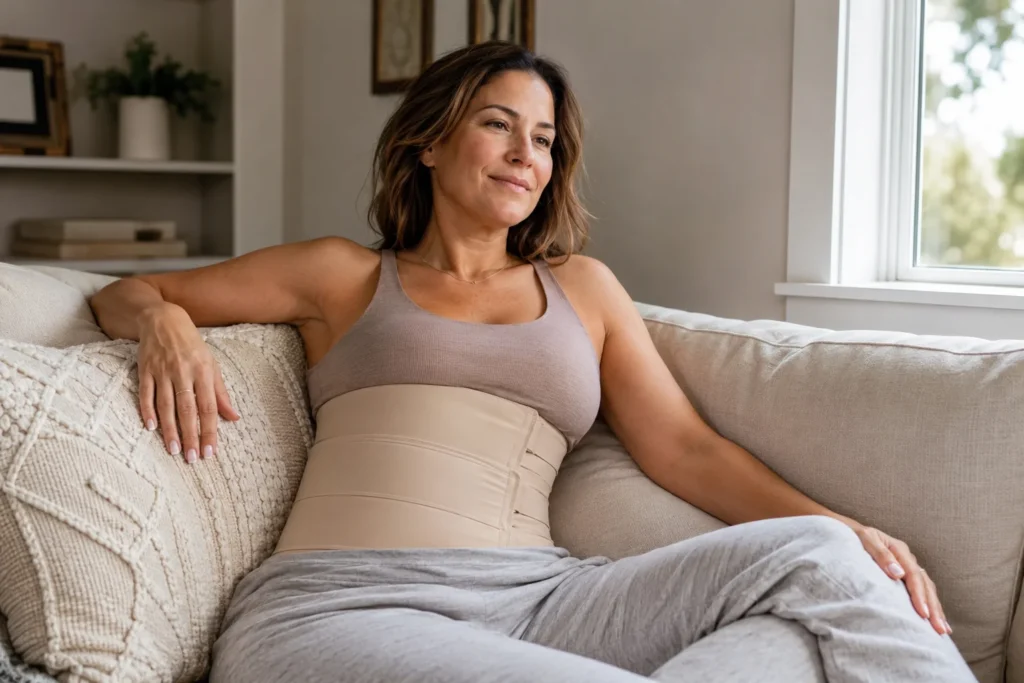
Closely follow your postoperative instructions, prioritize rest while staying mobile, wear compression garments, stay hydrated, and nourish your body to support faster recovery.
What Does Liposuction Feel Like the Day After Surgery?
Most patients describe the first 24–48 hours as the most uncomfortable phase. The treated area feels bruised, swollen, tight and tender to the touch.
Drainage from the surgical incision sites is normal and expected. This often indicates the tumescent solution is leaving the body.
Despite being the most uncomfortable phase, most patients find recovery far easier than anticipated and are comfortable with using mild pain medications.
How Painful Is Liposuction on a Scale of 1–10?
Most patients rate liposuction recovery discomfort between 3 and 5 out of 10. The procedure itself is painless due to anesthesia. Mild to moderate soreness in the first 48–72 hours is the most uncomfortable phase, but most patients find it significantly more manageable than anticipated.
How Long Does Liposuction Soreness Last?
Most patients notice meaningful improvement by day 3-5. Mild tenderness can persist for 3–6 weeks, particularly in larger treatment areas like the abdomen or thighs.
Does Liposuction Hurt More Than Other Body Contouring Procedures?
Liposuction is generally considered one of the least painful body contouring procedures when performed alone. Combined procedures, such as liposuction with a tummy tuck or mommy makeover, involve a more involved recovery because multiple areas are treated simultaneously.
Is Liposuction More Painful Than a Tummy Tuck?
No. A tummy tuck involves muscle repair in addition to fat removal and skin excision, which can make recovery more intense. Liposuction focuses specifically on fat removal and does not require muscle repair. Liposuction alone is considered one of the least painful body contouring procedures. As a result, liposuction recovery is typically faster and less restrictive than tummy tuck recovery.
Learn more about liposuction vs tummy tuck here.
Can You Sleep Comfortably After Liposuction?
Most patients find sleeping on their back with pillows elevating the treated area most comfortable in the first week. Compression garments may feel restrictive initially, but become easier to tolerate by days 4–7.
Liposuction Pain Levels by Treatment Area
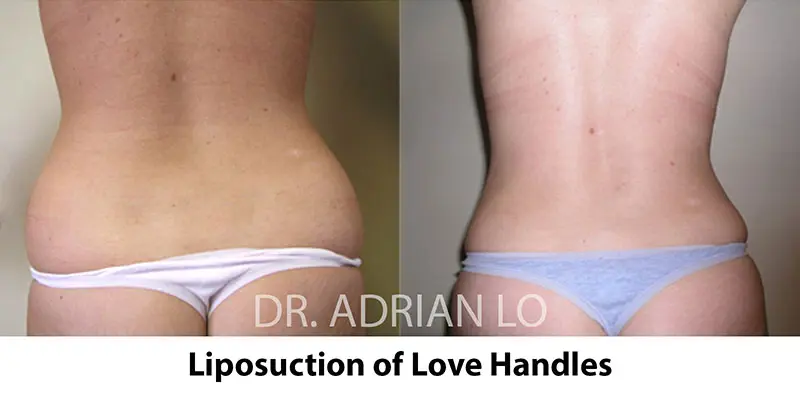
Some body regions naturally experience more postoperative soreness than others.
In general, larger treatment areas involve more post-operative discomfort because a greater volume of tissue has been manipulated. Nerve density, tissue thickness and the extent to which an area moves during daily activity further influence liposuction pain levels by area.
Dr. Lo performs liposuction on the abdomen, flanks, thighs, arms, back, and other areas and adjusts the technique to each treatment site to minimize trauma and support a smoother recovery.
- Abdomen and flanks (“ love handles”) often produce moderate soreness. Because the core muscles are involved in nearly every movement throughout the day, patients may notice discomfort when sitting, standing, twisting and getting out of bed.
- Thighs and inner thighs tend to be among the more sensitive, tender areas due to higher nerve density in the soft tissue. Walking can temporarily increase soreness particularly during the first several days.
- Arms typically involve milder post-operative discomfort. Less dense tissue results in most patients experiencing less postoperative swelling, faster mobility and easier recovery compared to larger areas in the lower body.
- Back and flanks soreness is amplified by posture and prolonged sitting, which places consistent pressure on treated tissue. Sitting, driving, sleeping positions and daily posture can feel uncomfortable. Fortunately, soreness generally improves quickly during the first week.
Does the Type of Liposuction Affect Pain Levels?
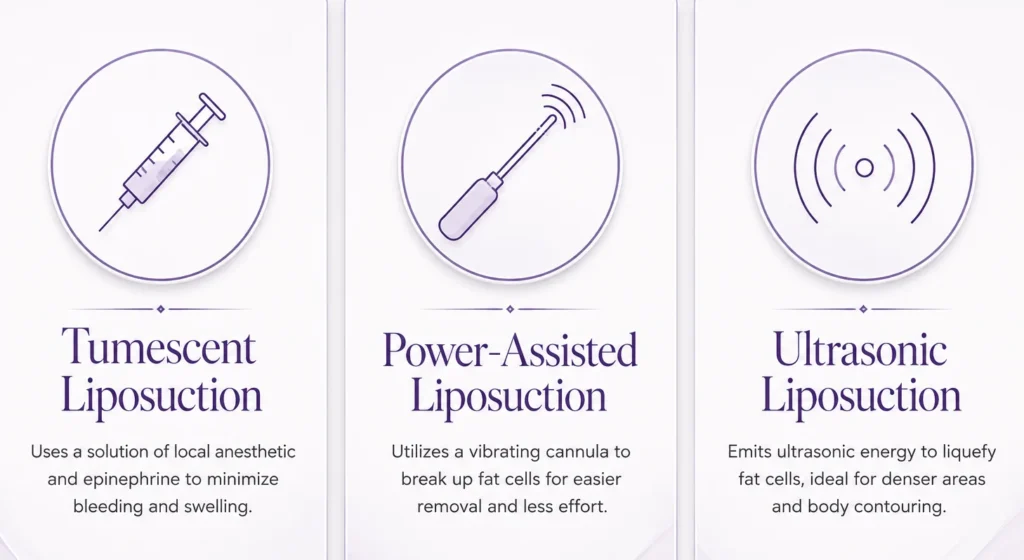
Yes. The technology and technique used determines how much tissue trauma occurs during the procedure, which directly influences post-operative soreness.
- Traditional Tumescent liposuction with Traditional Blunt Cannula: The most widely performed technique. A numbing solution is injected before fat removal, which reduces bleeding, minimizes trauma and extends post-operative numbness, resulting in a more comfortable recovery for most patients.
- Power-assisted liposuction (PAL): Uses tumescent technique with a mechanized cannula that vibrates to break up fat more efficiently. Potential advantages include less manual force is required, reduced tissue disruption, faster recovery and improved precision.
- Ultrasonic liposuction (UAL): Uses tumescent technique with ultrasonic energy to liquefy fat before removal. This is often helpful for fibrous areas such as the back, dense, fibrous fat deposits and male chest reduction surgery. Recovery soreness can be slightly more pronounced due to the heat generated during the procedure.
As a surgeon experienced with tumescent, ultrasonic, and power-assisted liposuction, Dr. Lo will recommend the most appropriate technique that offers the safest approach and most refined results for your treatment areas during consultation.
What Factors Influence How Much Liposuction Hurts?
Every patient’s recovery experience is unique.
Beyond the treatment area, several patient-specific factors shape the recovery experience:
- Volume of fat removed: Larger-volume procedures involve more tissue manipulation and generally create more swelling and post-operative soreness than smaller, targeted treatments.
- Whether liposuction is combined with another procedure: Patients undergoing liposuction alongside a tummy tuck, mommy makeover or body lift will typically experience a more involved recovery than those having liposuction alone.
- Individual healing response and pain tolerance: Recovery timelines and comfort levels vary between patients, even when the same procedure is performed under identical conditions. Pain tolerance, inflammation levels and healing speed vary from person to person.
- Plastic surgeon experience and technique: One of the most important and often overlooked factors is surgeon expertise. A board-certified plastic surgeon with extensive liposuction experience will use approaches that minimize unnecessary tissue trauma, reduce swelling, and contribute directly to a smoother, comfortable recovery.
Choosing a board-certified plastic surgeon with extensive liposuction experience can make a meaningful difference in both comfort and final results.
How to Reduce Pain After Liposuction
Pain management after liposuction is straightforward when you follow your plastic surgeon’s postoperative plan. The most effective strategies include:
- Compression Garments: Worn continuously for the first 2–3 weeks, compression controls swelling, the primary driver of post-operative discomfort. Compression garments support healing tissues, improves contour formation and reduces discomfort.
- Follow Medication Plan: Many plastic surgeons prescribe short-term pain medication for the first 3–5 days although for many patients mild over the counter medications may be all that is necessary. Transitioning to over-the-counter options like acetaminophen or ibuprofen is typical by day 4–7. Never take ibuprofen without your plastic surgeon’s approval, as it can affect bleeding.
- Stay Mobile: Short, gentle walks beginning the day after surgery help promote circulation, reduce swelling, lowers risk of blood clots and encourages faster recovery without stressing the treated tissue.
- Stay Hydrated: Proper hydration supports healing and reduces fatigue.
- Elevation: Elevating treated areas when resting reduces fluid accumulation and associated pressure.
- Consider Lymphatic Drainage Massage: When appropriate, manual lymphatic drainage, typically beginning 48–72 hours post-op, can help move fluid buildup and can meaningfully reduce swelling-related discomfort. Dr. Lo’s team provides specific postoperative guidance on whether lymphatic drainage is appropriate based on your procedure and healing progress.
When Liposuction Pain Is a Warning Sign

Soreness, swelling, and bruising after liposuction are expected for the first two to four weeks. However, certain symptoms fall outside normal recovery and require prompt attention from your plastic surgeon.
Contact your plastic surgeon if you experience:
- Worsening pain after day 3: Pain after liposuction should improve, not intensify, after the first 72 hours.
- Fever above 101°F: This may indicate infection and should be reported to your plastic surgeon immediately.
- Sudden increase in swelling or excessive fluid accumulation: Rapid or asymmetric swelling that develops after initial improvement can signal a seroma or other complication.
- Unusual skin changes: Discoloration beyond standard bruising, blistering or skin that appears to be breaking down are red flags requiring your plastic surgeon’s same-day attention.
Prompt evaluation helps ensure a safe and successful recovery.
Recognizing warning signs early is essential to protecting your health and recovery; fortunately, serious complications from liposuction are rare when performed by a qualified board certified plastic surgeon. According to a peer-reviewed analysis of 246,119 liposuction cases performed at accredited ambulatory surgery facilities, published in Aesthetic Surgery Journal Open Forum, the overall confirmed complication rate was 0.40%, and the mortality rate was 0.009%, making serious outcomes from liposuction exceptionally rare.
The Bottom Line on Liposuction Pain
For most patients, liposuction hurts far less than expected. Recovery follows a clear arc from peak soreness in the first three days to meaningful relief by the end of week one. Knowing what is normal and when something is not positions you to recover with clear expectations and the right support in place.
Why Patients Choose Dr. Adrian Lo for Liposuction in Philadelphia and South Jersey
When considering liposuction, the question isn’t simply “Does liposuction hurt?” It’s also “Who is performing my surgery?”
Recovery experience, safety and final results are heavily influenced by surgeon expertise.
Dr. Adrian Lo, M.D., FACS, FRCS(C), is a double board-certified plastic surgeon with over 30 years of experience performing liposuction in Philadelphia and in the Cherry Hill and Marlton New Jersey area. He has been recognized by Newsweek as one of America’s Best Plastic Surgeons in liposuction across multiple years, Dr. Lo combines surgical precision with a highly personalized approach to patient care.
You can review liposuction before-and-after photos in Dr. Lo’s photo gallery prior to your consultation.
Patients choose Dr. Lo because he offers:
- Over three decades of body contouring experience
- Advanced tumescent, PAL, and ultrasonic liposuction techniques
- Detailed recovery planning and postoperative support
- Natural-looking, refined results
- Personalized treatment recommendations rather than one-size-fits-all solutions
If you’re considering liposuction in Philadelphia or South Jersey, the best way to understand your personalized recovery experience is through a comprehensive consultation.
During your consultation, Dr. Lo will review your treatment areas, walk you through what recovery will realistically look like for your specific procedure. Every consultation includes a thorough discussion of expected recovery, pain management strategies and realistic outcome planning so you know exactly what to expect before making any decisions.
Schedule a consultation with Dr. Adrian Lo to discuss your goals, review before and after photos, receive a customized treatment plan and learn what recovery will look like for your unique procedure.