

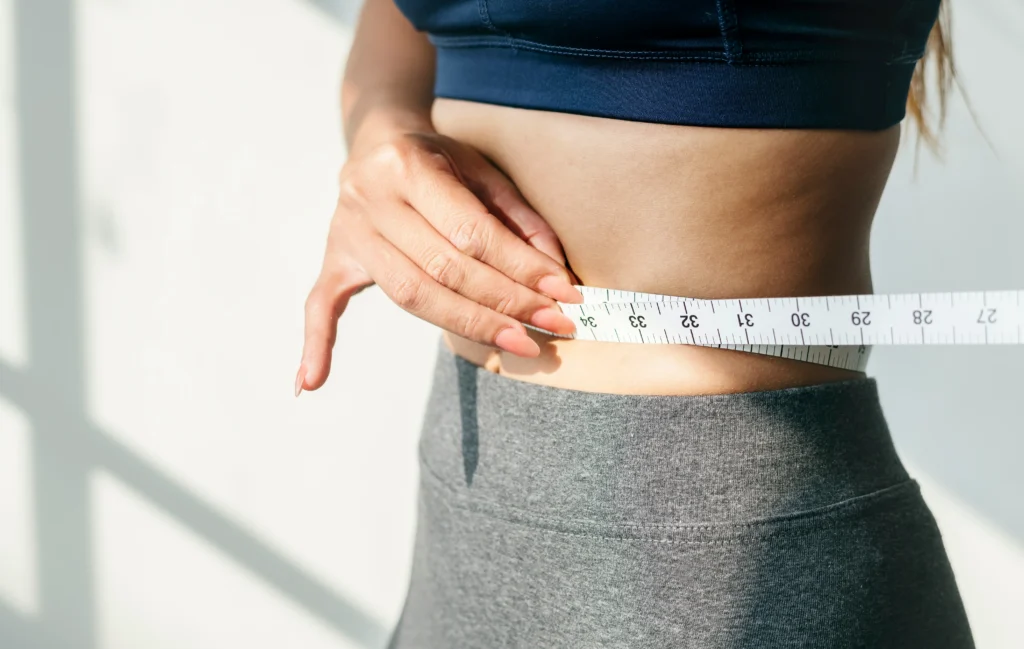
Liposuction is one of the most frequently performed cosmetic procedures in the United States and when it is performed within established safety guidelines parameters by a board certified plastic surgeon, the risk of serious complications is low.
High-volume liposuction presents a different risk profile. This technique, which involves removing significantly larger amounts of fat than standard procedures, has fallen largely out of favor among plastic surgeons. The reason is simple: the potential complications and life-threatening risks outweigh the benefits. As a result, most experts discourage high-volume fat removal in favor of safer, evidence based approaches to body contouring.
Related: How Much Fat Does Liposuction Remove?
What Is High Volume Liposuction?
High volume liposuction refers to a surgical procedure that removes a significantly larger amount of fat than what is typically taken during a single standard liposuction session. Understanding how this technique works and how it differs from traditional fat removal methods is essential before evaluating whether it is safe or appropriate.
How High Volume Liposuction Differs From Standard Liposuction and How Much Fat It Removes
Standard liposuction generally removes between 1 to 3 liters of fat in a single session. It is intended to refine and contour specific areas of the body such as the abdomen, flanks, thighs, or arms and is not intended for dramatic weight loss. The goal is controlled reshaping, performed within well‑established safety parameters.
High-volume liposuction on the other hand involves removing much larger amounts of fat across multiple areas in a single operation. This procedure involves removing more than five liters of fat, roughly eleven pounds of tissue. High-volume procedures can exceed this threshold by a substantial margin, sometimes targeting ten liters or more thus dramatically increasing surgical demands.
Key differences between standard and high-volume liposuction include:
- Greater scope: Multiple large areas treated at once
- Longer surgical time: Extended exposure to anesthesia
- Higher physiological strain: Greater fluid shifts and blood loss
- Higher complication risk: Due to the large volume of fat removed
The body must work significantly harder to recover from such an extensive procedure, which is why many experts view it with caution. Removing such large amounts of fat causes major fluid and electrolyte shifts, increases blood loss, and extends exposure to general anesthesia making it much riskier than standard liposuction.
Why Most Plastic Surgeons No Longer Perform High Volume Liposuction
The plastic surgery community has largely moved away from this approach over the past decade. The risks associated with removing very large fat volumes outweigh the benefits for the vast majority of patients.
Board‑certified plastic surgeons today strongly favor staged liposuction procedures performed across multiple sessions which allow for meaningful fat reduction and body contour refinement without exposing the patient to the risks associated with removing high volumes of fat in a single session . Many board-certified plastic surgeons today view high‑volume fat removal not aligned with evidence‑based patient safety standards.
High Volume Liposuction Risks Every Patient Should Know
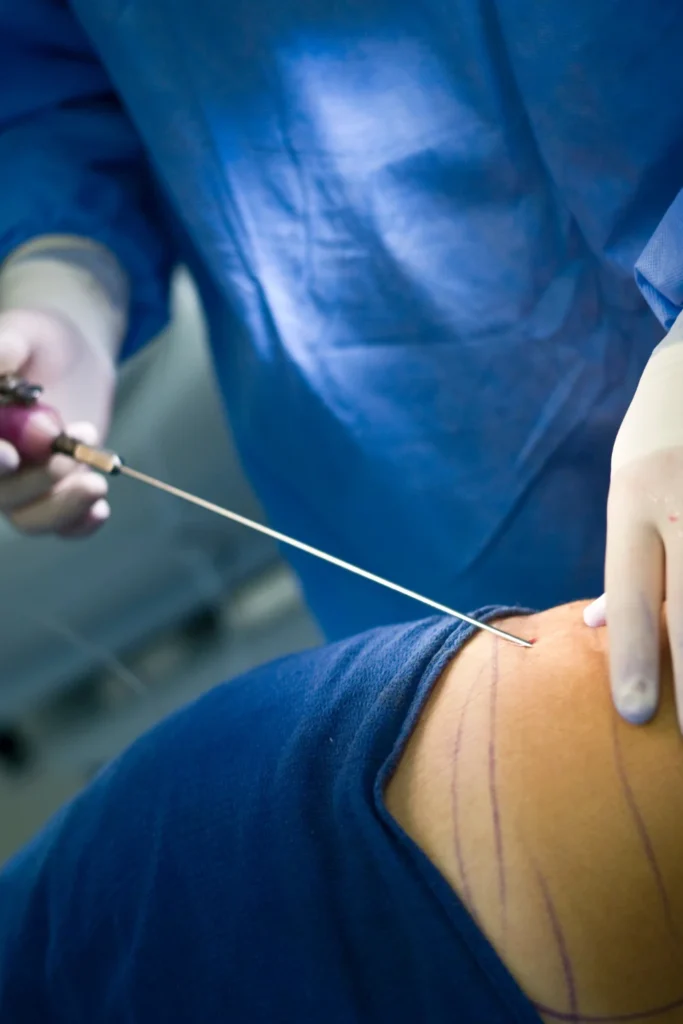
High volume liposuction is not simply a ‘bigger’ version of standard liposuction, it is also a higher risk surgical procedure. The complications associated with removing extremely large volumes of fat are not rare outliers, they are predictable physiological consequences of the body responding to an extreme physical event. Patients considering this procedure must understand the specific risks that make high‑volume liposuction significantly more dangerous than standard contouring.
Fluid Imbalance, Shock, and Anesthesia-Related Complications
One of the most serious high-volume liposuction risks is fluid imbalance. The procedure requires the infusion of a wetting solution called tumescent solution into the tissue before fat is removed. When large volumes are involved, managing the relationship between infused fluid and fluid removed becomes far more complex.
If fluid balance is not carefully maintained, the patient can develop hypovolemia (a dangerous drop in blood volume) or fluid overload that stresses the cardiovascular system. Either condition can escalate rapidly. In severe cases, fluid imbalance contributes to shock, which is a life-threatening emergency.
Large-volume procedures also take significantly longer than standard liposuction, often lasting several hours. The longer a patient is under general anesthesia, the greater the exposure to anesthesia-related complications. These include respiratory depression, dangerous drops in blood pressure that can progress to shock and an increased risk of blood clots — a condition called deep vein thrombosis (DVT). A DVT can travel to the lungs as a pulmonary embolism (PE), which is one of the leading causes of liposuction-related fatalities.
Contour Irregularities and Skin Surface Distortion
The more fat that is removed in a single session, the harder it is for the skin to retract smoothly. High volume fat removal can lead to visible contour irregularities such as surface waviness, dimpling, uneven depressions and asymmetry between treated areas.
The skin requires an adequate supportive layer of underlying fat for a smooth contour. Removing too much fat too aggressively leaves the skin without a smooth foundation. The result can be a lumpy or uneven surface that is difficult to correct and may require additional surgery. Upon reviewing high volume-liposuction before and after results, patients are often surprised to find the contouring outcomes far less smooth than they expected.
Increased Risk of Infection and Healing Complications
Larger volume liposuction surgical areas create more tissue trauma, more incision or drainage sites leading to more potential entry points for infection and a longer inflammatory response. Patients face a longer recovery window during which open incisions or drainage sites must be managed.
Healing is also more demanding on the body’s resources when the procedure is extensive. Patients with underlying health conditions such as diabetes, cardiovascular disease, poor circulation, immune disorders or obesity related comorbidities are at considerably higher risk. Because of these risks, many plastic surgeons will decline to perform high volume procedures on patients who do not meet the strict health criteria for surgery.
What High Volume Liposuction Recovery Looks Like
High-volume liposuction recovery is more involved than recovery from a standard procedure. Patients often underestimate the recovery timeline.
Extended Downtime Compared to Traditional Liposuction
Standard liposuction typically involves a recovery period of one to two weeks before patients return to light activity. Recovery from extensive, large-volume liposuction procedures is often much longer.
Patients may require several weeks of limited activity, compression garment use, and close monitoring. Swelling is more pronounced and persists longer than traditional liposuction. The body is managing a greater overall physical response, and this is reflected in the healing timelines.
Managing Swelling, Drains, and Long-Term Monitoring
Because the tissue disruption is more extensive, large-volume procedures frequently require surgical drains to prevent fluid accumulation beneath the skin. Managing these drains requires daily attention.
Swelling can be severe and long-lasting and at times, persisting for several months. Discomfort tends to be more intense, often requiring prescription pain management for a longer period than standard procedures.
The risks do not end when the patient leaves the surgical facility. The weeks following the procedure require monitoring for delayed complications, including seroma formation, infection, and skin changes. A National Institutes of Health review of large-volume liposuction procedures found that fluid-related complications can develop well into the postoperative period.
What to Expect From High Volume Liposuction Before and After
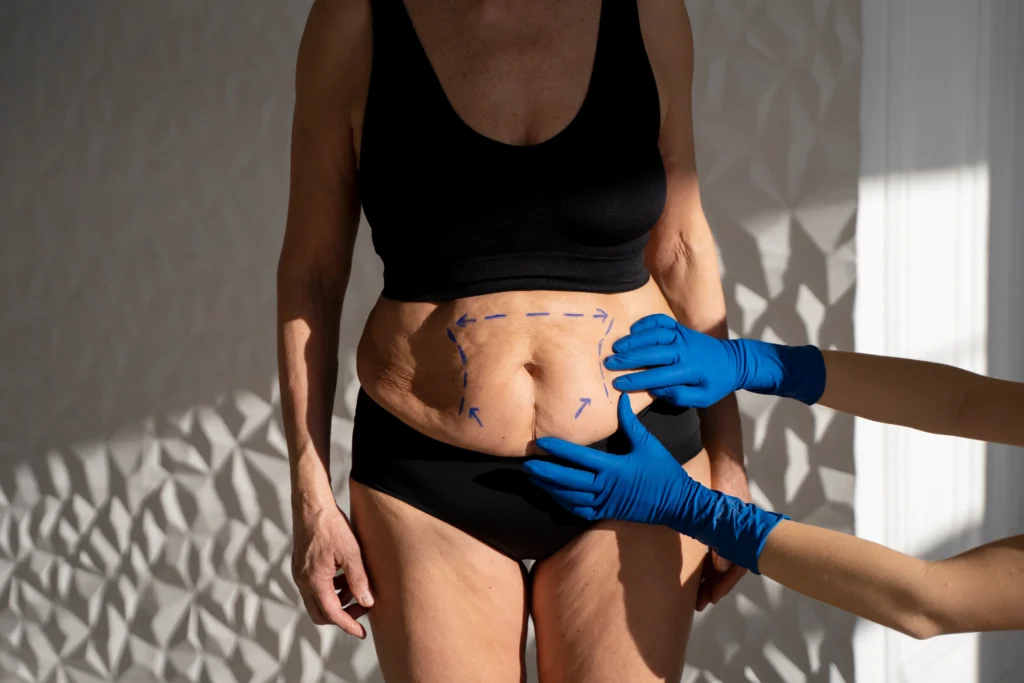
Patients who consider this high volume liposuction often focus on the potential dramatic results. Understanding what high-volume liposuction results actually look like, compared to expectations is an important part of making an informed decision.
Why Results Are Less Predictable at Higher Fat Volumes
The more fat that is removed, the harder it is to achieve smooth, even results. Fat is not distributed uniformly beneath the skin, and the response of surrounding tissue to aggressive removal is not always easy to anticipate.
At standard volumes, an experienced plastic surgeon can control contour with a high degree of confidence. At extreme volumes, the variables multiply. Uneven healing, unexpected skin laxity, and asymmetry between treated areas can become outcomes.
High Volume Liposuction Cost and Realistic Outcomes
High volume liposuction cost tends to be significantly higher than standard procedures, reflecting the increased operating time, accredited facility requirements, and extended post-operative monitoring. Many patients discover that staged procedures where contouring is achieved across two or three separate sessions can deliver comparable or superior results at a comparable or lower total cost. Staged liposuction also allows time for the body to recover between procedures, reduces anesthesia exposure making each session safer and results more refined.
Loose or Sagging Skin: A Common Aftermath of High‑Volume Fat Removal
Another important consideration is that large-volume fat removal procedures do not address skin laxity. Patients who undergo significant fat removal in a single session often find that:
- The skin may appear loose
- Redundant skin folds that were previously filled by fat tissue may form
- Stretch marks may be more visible
Patients may require additional procedures such as a tummy tuck, body lift or arm lift. These surgeries add complexity, cost, potential more scarring and a longer recovery time. Understanding realistic expectations from high volume body contouring procedures is essential.
Reach Out to Dr. Adrian Lo to Explore Safer Liposuction Options
Aggressive, high-volume fat removal carries risks that most board-certified plastic surgeons no longer consider appropriate for elective cosmetic procedures. Fortunately, safer and more advanced alternatives exist that can deliver impressive, natural-looking body contouring results for the right candidates.
Dr. Adrian Lo is a board-certified plastic surgeon serving patients across Pennsylvania, New Jersey, and Delaware. His practice focuses on achieving outstanding body contouring results that prioritize both safety and outcome quality.
If you are considering liposuction and want expert guidance on safe and effective options for your goals, schedule a consultation with Philadelphia plastic surgery with Dr. Adrian Lo, a trusted Philadelphia plastic surgeon.
Explore your options, ask questions, and receive a customized treatment plan tailored to your concerns and anatomy. Contact Dr. Adrian Lo’s practice today to begin your body‑contouring journey with confidence and safety.