
Restore Your Abdomen After Pregnancy with Expert Surgical Care
Many women find that despite returning to a healthy weight after pregnancy, a persistent lower abdominal shelf or roll is still there. If you’re struggling with a C-section overhang (C-section shelf or pouch) that won’t go away, no matter how much weight you lose, you are not alone.
For many women, the lower abdominal bulge after pregnancy is not a weight issue, it’s a structural issue involving skin, muscle, and scar tissue.
A tummy tuck (abdominoplasty) is the most effective, long term solution to correct these changes and restore a flatter, smoother abdomen. This procedure removes excess skin and fat above the C section scar while tightening weakened abdominal muscles, changes that diet and exercise cannot achieve. A board-certified plastic surgeon can evaluate whether a full or mini tummy tuck is right for your situation.
If you are considering a tummy tuck for C-section skin overhang, you are not alone. Abdominoplasty or tummy tuck surgery consistently ranks among the top 5 most-performed cosmetic surgical procedures in the US.
This guide explains what causes the C-section pouch, when surgery is appropriate, what the procedure involves, and what realistic results look like, so post-pregnancy women can make a well-informed decision about their next step.
At his Philadelphia practice, Dr. Adrian Lo, board-certified plastic surgeon with 30+ years of experience specializes in post-pregnancy abdominal restoration, delivering natural, precise, and long-lasting results.
What Is a C-Section Overhang and Why Does It Happen?
The C-section overhang, also called a C-section shelf or roll, C-section pouch, or hanging belly after C-section, refers to the fold of skin and tissue that forms and droops over your lower abdominal surgical scar after a cesarean delivery. It often described as:
- C-section shelf
- C-section pouch
- Hanging belly after pregnancy
The names differ, but the problem is the same: a visible, often uncomfortable skin and fat roll that’s always there despite weight loss or exercise.
This condition typically results from four distinct structural causes that contribute to belly overhang after C-section, and they frequently appear in combination.
- Scar Tethering (Adhesions): When the C-section incision heals, internal scar tissue can anchor the skin to the underlying fascia, creating a “pulled” effect downward like a tent peg securing a sheet to the ground. The tissue above bulges outward because it has nowhere else to go, creating the characteristic shelf or roll.
- Diastasis Recti: Pregnancy stretches the abdominal muscles apart. The separation of your “ab muscles” or rectus abdominis muscles along the abdominal midline is caused by stretching and thinning of the connective tissue between them. This muscle gap creates a bulging protrusion. No amount of core exercise can repair the gap once the connective tissue has stretched or separated.
- According to a 2026 study published in PMC, diastasis recti affects up to 60% of postpartum women at six weeks post-delivery, with a significant proportion experiencing persistent separation beyond one year.
- According to a 2026 study published in PMC, diastasis recti affects up to 60% of postpartum women at six weeks post-delivery, with a significant proportion experiencing persistent separation beyond one year.
- Skin Laxity (Loose, Stretch Skin): Skin loses elasticity after pregnancy as pregnancy stretches the abdominal skin considerably. Once elasticity is lost, particularly after multiple pregnancies or significant weight fluctuation and even genetic factors, the skin does not rebound to its original position and just hangs!
- Stubborn Lower Abdominal Fat Deposits: In the lower abdomen, these pockets of subcutaneous fat are often resistant to dietary changes and exercise, particularly directly above the C-section scar.

Most C-section overhangs are cosmetic and structural in nature. However, some abdominal bulges indicate a hernia, a defect in the abdominal wall through which internal contents protrude. Warning signs that warrant medical evaluation include a bulge that increases when straining or coughing, pain, nausea, or visible changes with position shifts.
A hernia requires surgical repair for functional reasons and is a distinct condition from the cosmetic C-section shelf. If you are uncertain which applies to your situation, a consultation with a plastic surgeon will provide clarity before you proceed with any treatment planning.
Can a Tummy Tuck Get Rid of Belly Overhang After a C-Section?
Yes – completely. A tummy tuck is the gold-standard treatment as it addresses all causes of the C-section pouch at once:
- Removes excess lower abdominal skin and fat between the pubic area and the navel
- Repairs diastasis recti or the separated abdominal muscle by suturing the rectus abdominis back to the midline
- Releases and removes tethered C-section scar
- Restores a flatter, more supported abdominal wall increasing your core strength
- Improves the overall abdominal appearance and contour
The C-section scar sits low on the abdomen, often in a position that aligns closely with where a tummy tuck incision is placed. In most cases, many patients find their existing C-section scar is removed and replaced with a new single, lower surgical tummy tuck incision. Thus you will only have one scar after the tummy tuck procedure, that is strategically placed to be hidden under clothing.
Mini vs. Full Tummy Tuck: Which Do You Need? Could Liposuction Alone Address Your Belly Overhang?
Your anatomy determines the right procedure for your situation.
Mini Tummy Tuck
Best if:
- If your concerns are confined to the lower abdomen with minimal upper abdominal skin issues
- No significant upper abdominal muscle separation above the navel
- Minimal skin laxity
A mini tummy tuck may be appropriate for the conditions listed above. This procedure does not involve repositioning the belly button and has a shorter recovery.
Full Tummy Tuck (Abdominoplasty)
Recommended if:
- Muscle separation or diastasis recti extends above the navel or there is excess upper abdominal skin
- Significant loose skin is present
- Full abdominal reshaping is needed
A full tummy tuck provides comprehensive correction and dramatic improvement in contour and core strength.
This decision is made by the plastic surgeon following clinical assessment and understanding your goals. Dr. Lo tailors each procedure to your unique anatom, optimizing your final aesthetic outcome rather than a one-size-fits-all-approach.
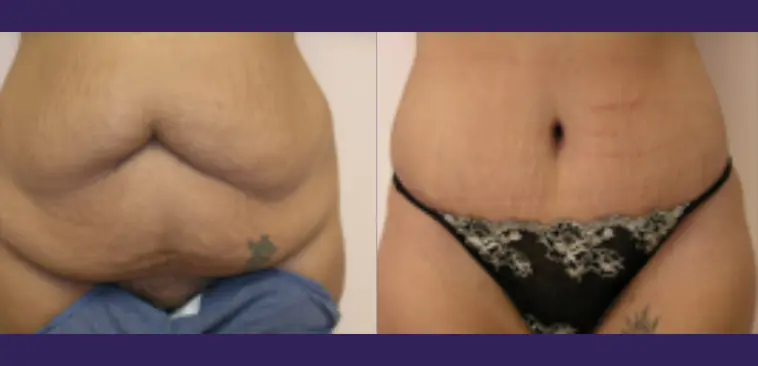
To see real patient results, visit Dr. Lo’s tummy tuck before and after photo gallery.
Could Liposuction Alone Address Your Belly Overhang?
In most cases: No.
Liposuction can be appropriate when fat is the main component of the lower abdominal bulge, there is no loose skin, skin tone is good and there is no significant scar tethering or diastasis recti. In fact, liposuction performed on a patient with meaningful skin laxity or excess skin can worsen the appearance of the overhang by removing volume without addressing the loose skin.
How Long Does It Take to Lose Belly Overhang After a C-Section Naturally?
For most women, natural resolution of postpartum belly changes takes six to twelve months. Fat deposits and mild skin laxity may improve with consistent lifestyle measures such as pelvic floor physiotherapy, abdominal compression wear and a nutrient-dense diet are the most evidence-supported starting points. Scar tethering and diastasis recti, however, rarely resolve on their own. For women whose lower abdominal bulge persists beyond 12 months despite these efforts, further waiting is unlikely to yield meaningful improvement in the underlying structural causes.
When Is the Right Time for a Tummy Tuck after C-Section?

For optimal safety and results, the optimal surgical window for a tummy tuck typically is:
- 6-12 months post-delivery
- After breastfeeding is completed
- At a stable weight
- After completing planned pregnancies
Understanding the full postpartum timeline helps you plan effectively and ensures your body is ready for surgery.
During months zero through three, focus entirely on healing. Gentle walking and pelvic floor rehabilitation under the guidance of a physiotherapist are appropriate. Your primary goal is to allow the C-section incision and surrounding tissues to begin their healing process.
From three to six months, progressive core rehabilitation becomes appropriate. Scar massage, applying gentle pressure and circular movements along the healed scar, can improve scar mobility and reduce tethering over time. A physiotherapist can assess whether your separated abdominal muscles or diastasis recti is responding to targeted exercise.
From six to twelve months post-delivery, reach your stable weight and begin consulting with a board-certified plastic surgeon for a tummy tuck. It allows the plastic surgeon to assess your situation and provide guidance on timing. Attempting surgery too early increases complication risk, as tissues are still changing and scars are still maturing.
Between six to twelve months and the cessation of breastfeeding, the surgical window is considered optimal. Tissue maturation is well advanced, scar settling is complete, hormonal levels have stabilized, and weight is more likely to be stable. The plastic surgeon will also assess the position and mobility of your C-section scar from the previous delivery, as this directly influences incision placement for the tummy tuck. Surgery is strongly recommended after a patient has completed their family.
Why Timing Matters: Your body needs time for:
- Hormonal stabilization
- Tissue healing
- Scar maturation
Surgery performed too early increases complication risk and can compromise results.
How a Plastic Surgeon Evaluates Your C-Section Shelf: The Clinical Assessment
When you present to a plastic surgeon for a consultation about your C-section shelf, the assessment goes well beyond a visual inspection. A structured clinical evaluation of four key factors determines which procedure, or combination of procedures, will address your specific anatomy.
- Scar Mobility: The plastic surgeon will physically assess whether your C-section scar moves freely or whether it is tethered to the underlying fascia. If the scar is anchored, it must be carefully released as part of the procedure before removal of the C-section scar.
- Muscle Separation: The plastic surgeon evaluates whether abdominal muscle separation or diastasis recti is present, how wide the separation is and whether it extends above or below the navel. This determines whether muscle repair needs to be performed and influences the extent of surgery required.
- Skin Elasticity: The plastic surgeon assesses both the degree of loose skin and the amount of fat contributing to the lower abdominal bulge, often using a skin pinch test. Removing fat through liposuction when there is loose skin will make the overhang look worse rather than improve it.
- Fat Distribution:
- Subcutaneous fat, the fat just beneath the skin of your C section roll or shelf, can be improved through liposuction.
- Visceral fat, which sits deep within the abdominal cavity, cannot be surgically removed. Weight loss is the only way to reduce visceral fat, and the plastic surgeon will evaluate this so you have realistic expectations.
This level of analysis is what separates average outcomes from exceptional results.
Most patients presenting with a C-section overhang have more than one contributing factor. A patient with diastasis recti, scar tethering, and skin excess cannot be fully corrected by liposuction alone. Conversely, a patient whose overhang is primarily fat-dominant with good skin tone and a freely mobile scar may not require skin excision at all. Different tummy tuck options are available based on your specific situation.
What to Expect: Preparing for and Recovering From Your Tummy Tuck

Proper preparation and realistic recovery expectations for a tummy tuck are foundational to a successful outcome. Recovery is predictable and manageable, especially for mothers familiar with C-section healing.
Reaching and maintaining a stable weight for at least 3 to 6 months before surgery provides the plastic surgeon with a stable anatomical foundation to work with. Ceasing smoking at least two weeks before surgery is essential, as nicotine impairs blood flow and wound healing, increasing complication risk. You will not be able to lift your child during early recovery, and attempting to do so risks tearing internal sutures. Pre-operative blood work, medical clearance, and a review of current medications and certain supplements may be performed in the weeks before surgery.
The recovery timeline proceeds in predictable phases.
- During weeks one and two, rest is the primary focus,with limited movement and drainage tubes may be in place.
- Weeks two through six involve a gradual return to light activity with a compression garment worn continuously.
- From weeks six through twelve, a progressive return to exercise is appropriate, and core abdominal workouts are started at 8 weeks.
- Between three and six months, final swelling resolves and the final contour becomes visible.
- Full scar maturation takes up to twelve months.
Starting walking early with gentle movement, wearing the compression garment as directed, and attending all follow-up appointments are the three most important things a patient can do to support their recovery. Patients who have previously recovered from a C-section will find some aspects of abdominal recovery familiar. Still, a tummy tuck is a different procedure but recovery is very similar or easier than a C-section recovery,
Realistic Expectations: What a Tummy Tuck Can (and Cannot) Fix
What it CAN Do:
A tummy tuck for a C-section pouch or roll can produce meaningful, lasting improvements, but understanding its limitations is equally important.
Abdominoplasty can:
- Repair separated abdominal muscles (diastasis recti) to restore a flatter abdominal wall
- Eliminate the C-section pouch directly
- Improve the appearance of the C-section scar by incorporating it into the new incision
- Reduce skin laxity in the lower abdomen
- Restore core support
- Enhance waistline definition and improve overall abdominal contour
- Improve body confidence
Liposuction is often performed on the flanks or love handles and the front of the abdomen as part of your tummy tuck procedure.
What it CANNOT Do:
A tummy tuck cannot:
- Remove all stretch marks. Stretch marks above the navel typically remain, as only the skin below the navel is removed.
- Improve cellulite
- Remove internal (visceral) fat. Weight loss before or after surgery produces better overall results for patients with a significant visceral component.
Future pregnancy is a consideration for the longevity of results. A subsequent pregnancy will stretch the repaired muscles and tightened skin which may reverse the improvements achieved with the tummy tuck procedure.
A tummy tuck involves a surgical incision along the lower abdomen. While placed to be concealable beneath underwear or swimwear, it is an inherent aspect of the procedure. A tummy tuck is also not a weight loss tool. The ideal candidate is at or near their goal weight before surgery. For patients who have experienced significant body image distress related to the C-section roll or shelf, discussing this openly during consultation is entirely appropriate. A board-certified plastic surgeon can address both the physical and emotional dimensions of your goals.
For patients in the Philadelphia and South Jersey area, a full tummy tuck typically costs between $10,500 and $16,000 all-in. For a complete breakdown of what is included, visit our guide on how much a tummy tuck costs.
Combining a Tummy Tuck With Other Postpartum Procedures
A tummy tuck to address C-section overhang is frequently performed as part of a broader postpartum body-contouring plan, commonly referred to as a mommy makeover. The primary advantage is practical: a single anesthetic event and a single recovery period addresses multiple concerns simultaneously. It typically includes a tummy tuck to remove excess skin and repair separated abdominal muscles; breast surgery to restore size or address sagging; liposuction to contour the back or thighs (particularly relevant for patients whose body proportions shifted during pregnancy); and labiaplasty, if needed.
Combined procedures increase total operative time, which the plastic surgeon weighs carefully against the patient’s overall health status. Not all patients are candidates for extended combined surgery, and the plastic surgeon’s assessment determines whether a combined approach is appropriate or whether a staged plan across separate procedures is safer.
Dr. Lo carefully evaluates safety before recommending combined surgery.

Why Patients Choose Dr. Adrian Lo for Their Post-C-Section Tummy Tuck Surgery
Selecting the right plastic surgeon is one of the most consequential decisions in addressing your C-section overhang surgically.
Board certification by the American Board of Plastic Surgery (ABPS) in the United States is the baseline qualification to begin with. Look for a plastic surgeon who regularly performs tummy tucks and has experience managing post-C-section cases. The anatomy in these cases differs from that in standard tummy tuck presentations due to existing scar tissue, potential fascial adhesions and altered tissue layers resulting from the previous C-section.
Preparing specific questions for your consultation helps you evaluate whether a plastic surgeon is the right fit.
Consider asking:
- How many post-C-section tummy tucks have you performed?
- Will you incorporate my existing scar into the new incision?
- What technique do you recommend for my specific situation, and why?
- What are the most common complications in cases like mine?
- What does recovery realistically look like for a mother with young children at home?
Schedule a Tummy Tuck Consultation Today
A C-section overhang is a common, structurally complex condition that affects many women regardless of their fitness level or postpartum effort. Understanding the anatomy behind the roll or shelf, allowing adequate time for natural recovery and working with a board-certified plastic surgeon who can personalize a treatment plan to your specific anatomy are the foundations of a safe and satisfying outcome.
If you are ready to explore whether a tummy tuck is the right path for you, Dr. Adrian Lo, M.D., FACS, FRCS(C) brings over 30 years of experience performing tummy tucks for patients across Pennsylvania, New Jersey, and Delaware.
When it comes to post-C section tummy tuck surgery, experience matters.
What sets Dr. Adrian Lo apart:
- Board-certified by the American Board of Plastic Surgery and the Royal College of Physicians and Surgeons of Canada
- In practice since 1991: 30+ years performing abdominoplasty and postpartum body contouring
- Named Newsweek America’s Best Plastic Surgeon four times (2021, 2023, 2024, 2025)
- All procedures performed at Pennsylvania Hospital or Pennsylvania Hospital Surgery Center with physician anesthesiologists present
- Nurses and doctors choose Dr. Lo for their own surgery
- Recognized by Philadelphia Magazine as a Top Doc multiple years
- Featured in CNN, CNBC, USA Today, and Men’s Health
Many surgeons perform tummy tucks, few specialize in post-C section anatomy with this level of experience and precision.
Is It Time to Fix Your C-Section Overhang?
If you have done everything right in terms of diet, exercise, time and the pouch is still there, it’s not your fault. It’s structural and it’s fixable.
Schedule a consultation today to receive a personalized assessment and take the first step toward a smoother, more confident you.