

Many men notice unwanted fullness in their chest area but are not sure what is causing it. While extra chest fat and true gland gynecomastia can appear similar, there are different underlying issues and knowing which one is essential for determining which treatment will be effective.
Understanding the key difference between gynecomastia vs. chest fat helps you make informed decisions about addressing your concerns and achieving a more balanced chest appearance.
Two primary conditions create excess chest volume in men. Let’s break down and compare gynecomastia vs chest fat characteristics and how to identify them so you can decide which treatment option will help you..
Related: Does Gynecomastia Go Away On Its Own?
Gynecomastia vs. Chest Fat: What Is Gynecomastia and How Does It Develop
The Hormonal Imbalance That Causes Breast Tissue Growth
Gynecomastia is the development of actual breast gland tissue in men. This condition occurs when hormonal levels shift, causing an imbalance between testosterone and estrogen. While estrogen is often associated with women, men naturally produce small amounts of estrogen.
When estrogen levels increase relative to testosterone, breast gland tissue can grow and can form a disc-shaped mass beneath the nipple. This can feel firm and rubbery and may be tender or sensitive.
Unlike chest fat which can decrease with diet and exercise, gland growth occurs at a cellular level and cannot be eliminated through diet, exercise, weight loss or lifestyle changes.. Once the gland tissue forms, it typically remains unless treated through surgical intervention. This permanent nature is a key distinction between true gynecomastia and fat accumulation.
Common Age Groups When Gynecomastia Appears
Gynecomastia can develop at several predictable stages of life due to natural hormonal fluctuations.
- Newborns
Some newborn boys experience temporary breast tissue enlargement by exposure to estrogen maternal hormones. This typically resolves on its own within a few weeks.
- Adolescence
Puberty is the most common period for gynecomastia to appear, affecting up to half of teenage boys to some extent. Many cases resolve naturally on their own as hormone levels stabilize, though some persist into adulthood.
- Older Adults
As men age, testosterone production naturally gradually declines. This hormonal shift can create an imbalance that leads to breast gland growth, even in men who never experienced gynecomastia during their younger years.
Medical Conditions That Can Trigger the Condition
Certain health issues disrupt the normal balance between testosterone and estrogen and affect how your body processes and eliminates hormones.
- Liver or Kidney Disease can affect the body’s ability to regulate hormones
- Thyroid Disorders may affect hormone production that may trigger gland growth
- Pituitary or Testicular Tumors, though rare, can release hormones that stimulate breast tissue growth and require medical evaluation.
Medications and Substances Linked to Gynecomastia
A number of medications list gynecomastia as a possible side effect due to their influence on hormone levels. These may include:
- Certain heart and blood pressure medication
- Some ulcer or GERD treatments
- Specific mental health medications
- Anabolic steroids
When these substances alter the testosterone-estrogen balance, gland tissue can develop and persist unless the underlying cause is treated.
What Is Chest Fat and How Does It Develop?
Understanding Chest Fat (Pseudogynecomastia)
Chest fat, also referred to as pseudogynecomastia, is the buildup of fatty tissue in the chest area. Unlike true gynecomastia, which involves gland growth, chest fullness caused by fat is soft, movable, and evenly distributed rather than firm or disc‑shaped.

Chest fat develops when the body stores excess fat in the upper torso. Men naturally vary in where they accumulate fat, and the chest is a common storage area for many. Because fatty tissue responds to weight changes, chest fat typically decreases with diet, exercise, and overall fat loss.
Why Chest Fat Develops
Chest fat can build up for several reasons:
- Excess Body Weight or Weight Gain Increases Fat Deposits
When overall body fat increases, the chest is one of the areas where fat may be stored. Men who carry extra weight often accumulate fat in their chest area creating a softer, fuller appearance. This represents general weight gain rather than a hormonal condition and often improves with consistent weight loss.
- Genetics and Fat Distribution
Fat distribution pattern varies based on genetics and overall body composition. Some men are genetically predisposed to store more fat in their chest, even at healthy weight. This explains why two men with the same body fat percentage may have very different chest appearances.
- Sedentary Lifestyle
Low levels of physical activity reduce calorie expenditure, making fat accumulation more likely, especially in genetically predisposed areas like the chest.
- Dietary Habits
High‑calorie, high‑carbohydrate, or high‑fat diets contribute to weight gain and chest fat buildup. Even small daily surpluses accumulate over time and increase fat storage.
Chest Fat vs. Gynecomastia (Gland Tissue): What’s the Difference?
Unlike glandular tissue, fat feels soft and moveable. It spreads more diffusely across the chest rather than concentrating around the nipple area as in true gynecomastia. The entire chest area may appear fuller rather than showing enlargement around the nipple/areola.
The Difference Between Fat Tissue and Gland Tissue
Fat and gland tissue have completely different cellular structures.
Fat tissue (also known as adipose tissue) consists of fat cells that expand and contract based on energy storage needs. Your body can break down these cells when you burn more calories than you consume. Chest fat feels soft, uniform and is spread out across the chest. This tissue can be reduced through weight loss.
Gland tissue contains specialized cells designed to produce milk. In men, these cells do not function but can still grow in response to hormonal signals. Glandular breast tissue feels dense, rubbery and firm. In men, these glands can enlarge due to hormonal changes. Gland tissue does not shrink with weight loss, feels firm like a disc under the nipple, often causes nipple puffiness or projection and may be tender or sensitive. This tissue requires surgical removal to correct.
This fundamental difference determines which treatment approaches work. Weight loss can reduce fat deposits but has no effect on true gland tissue. Understanding this distinction prevents frustration from pursuing ineffective solutions.
Why Weight Loss Affects Chest Fat and Gynecomastia Differently
When you create a caloric deficit through diet and exercise, your body breaks down stored fat for energy. Chest fat will decrease along with fat in other areas of your body. The reduction may not happen as quickly in the chest as you would like, but consistent weight loss eventually reduces fat deposits.
Gynecomastia vs chest fat becomes clear when observing how each condition responds to weight loss. Men with true gynecomastia often find that losing weight makes the gland tissue more noticeable. Gland tissue remains unchanged. As surrounding fat decreases, the firm tissue beneath the nipple can become more prominent making the chest look pointed, puffy and more defined in the nipple area. This is why some men discover they have true gynecomastia only after losing weight.
![[puffy nipple]how to tell if you have gynecomastia](https://www.dradrianlo.com/wp-content/uploads/2026/02/puffy-nipplehow-to-tell-if-you-have-gynecomastia-576x1024.webp)
Some men may have both conditions simultaneously. A layer of chest fat can conceal underlying gland tissue. Weight loss reveals the gynecomastia that was present all along but less visible when surrounded by fatty tissue. Medical evaluation is important in these situations.
How to Tell If You Have Gynecomastia or Chest Fat
Physical Self-Exam
A simple chest fat vs gyno test involves examining the tissue texture.
Lie on your back to flatten the tissue and reduce fat thickness. Use your thumb and forefinger to pinch the tissue around your nipple.
- Gynecomastia: True gynecomastia feels like a firm, rubbery circular mass directly under the nipple/areola. This mass typically measures one to two inches in diameter. The gland tissue may feel tender when pressed. This tenderness results from the active tissue responding to hormonal stimulation.
- Chest fat feels soft and compressible between your fingers. You can easily pinch and move it. No firm mass exists beneath the surface, and the tissue lacks the defined borders that characterize glandular growth.
Visual Signs That Point to Gland Enlargement
How to tell if you have gynecomastia often involves observing the shape and location of the fullness.
- Signs of Gynecomastia:
- Fullness focused around the nipple, appearing puffy or projects forward
- Puffiness or projection of the areola
- Cone or triangular shape centered around the nipple/areola
- Firm appearance even at low body fat
- Develops symmetrically in both breasts, though one side may be slightly larger
- Fullness concentrates in the chest area rather than extending into the underarm or lower chest regions.
- Signs of Chest Fat:
- Fullness across the entire chest
- Softer, rounded contour
- No obvious lump under the nipple
- Often extends into the side chest or underarm
When to Seek A Professional Evaluation
While self-examination provides initial clues, professional evaluation offers definitive answers. A plastic surgeon experienced in treating male breast concerns can determine exactly what tissue types are present. The examination combines visual assessment with careful palpation of the chest area.
If needed, imaging studies help confirm the diagnosis. Ultrasound can distinguish between gland tissue and fat deposits. These tests become particularly useful when both conditions exist simultaneously or when the clinical examination yields ambiguous results.
Blood tests may be ordered to check hormone levels and rule out underlying medical conditions. A comprehensive evaluation helps identify any treatable causes of hormonal imbalance that could be addressed before considering surgery.
Treatment Options for Chest Fat and Gynecomastia
Diet and Exercise for Reducing Chest Fat
Men dealing primarily with chest fat can achieve improvement through lifestyle modifications. Creating a caloric deficit through reduced food intake and increased physical activity prompts your body to burn stored fat. This process gradually reduces chest fullness along with fat in other areas.
Cardiovascular exercise burns calories and helps create the deficit needed for fat loss. Activities like running, cycling, and swimming increase your overall calorie expenditure. Aim for at least 150 minutes of moderate-intensity cardio each week.
Strength training builds muscle mass, which increases your resting metabolic rate. More muscle means your body burns more calories even at rest. Chest exercises like pushups and bench presses develop the pectoral muscles, which can improve chest contour as fat decreases.
When Surgery Is Necessary: Treating True Gynecomastia
True gynecomastia vs pseudogynecomastia (chest fat) requires different treatment approaches. Gland tissue can not shrink with diet or exercise because it is not fat. Surgical removal is the only way to eliminate true gynecomastia.
Many men spend months or years attempting to eliminate their chest fullness through fitness efforts. When the issue is caused by gland tissue rather than fat, these efforts prove frustrating and ineffective. Recognizing signs of gynecomastia early helps you avoid wasting time on approaches that cannot work.
The surgical procedure for gynecomastia typically involves making a small incision around the areola. Through this opening, your plastic surgeon removes the gland tissue that creates the unwanted fullness. The incision heals to become barely noticeable over time.
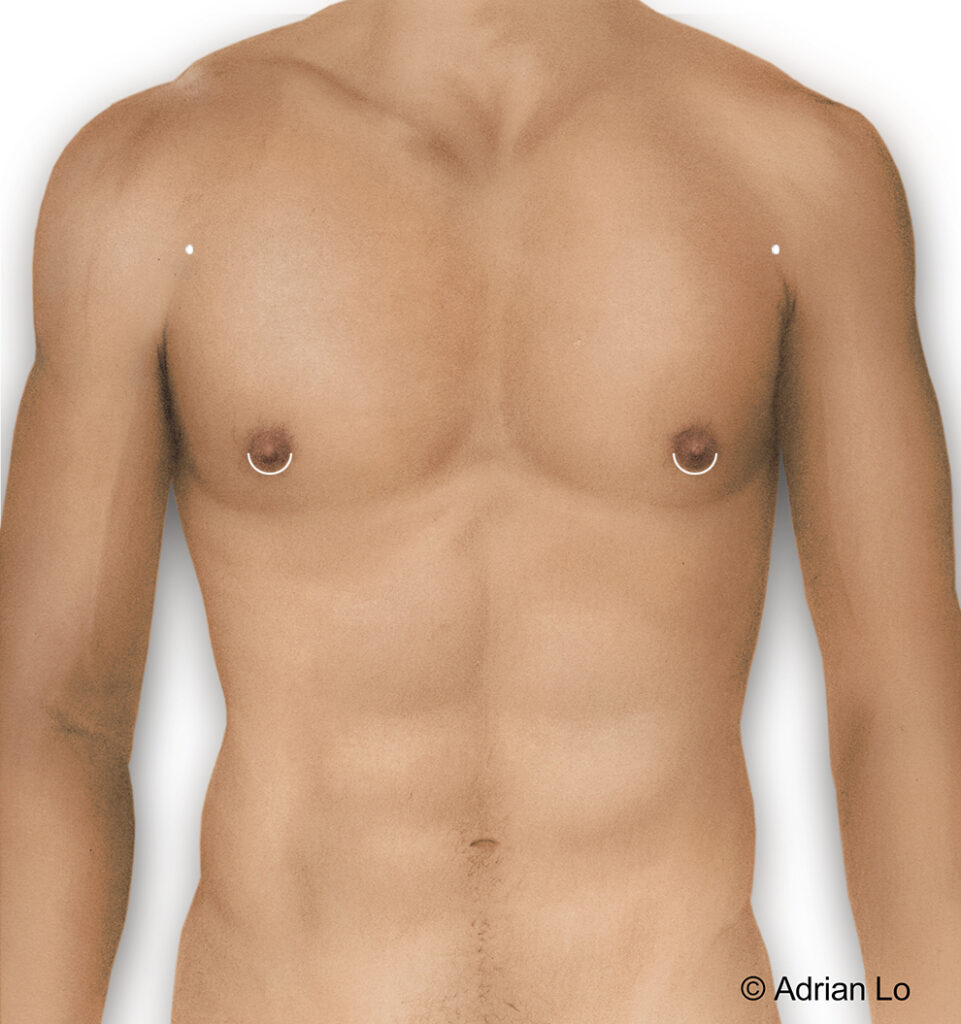
How Gynecomastia Surgery Addresses Excess Tissue Permanently
Gynecomastia surgery is usually a combination of gland tissue removal called subcutaneous mastectomy and advanced liposuction. . This comprehensive approach addresses both components of chest fullness with liposuction removing excess fat and surgical excision eliminates the firm gland tissue.
The procedure typically takes one to two hours under general anesthesia. Your plastic surgeon sculpts a masculine chest contour that appears natural and proportionate to your body. The results are permanent, as the removed gland tissue does not grow back.
Recovery requires approximately 3- 7 days away from work for most patients. You will wear a compression garment to control swelling and support the healing tissues. Most men return to normal activities within 1 week, though strenuous exercise should wait until your plastic surgeon clears you, normally at the 2 week mark.
Dr. Adrian Lo specializes in gynecomastia treatment and understands the unique concerns men face when dealing with unwanted chest fullness. His surgical approach focuses on creating natural-looking results that restore confidence and comfort.
Gynecomastia vs. Chest Fat: Expert Care with Dr. Adrian Lo

Understanding gynecomastia vs chest fat to determine the cause of chest fullness represents the first and most important step toward choosing the correct treatment. Whether your concerns stem from gland tissue, excess fat, or a combination of both, accurate diagnosis guides appropriate treatment planning.
Many men live with chest concerns for years because they feel embarrassed or uncertain. This hesitation only prolongs discomfort and self-consciousness. A professional evaluation provides clarity and opens the path to real, effective improvement.
Dr. Adrian Lo is a leading specialist in gynecomastia surgery and male chest contouring. His experience, surgical precision and customized treatment plans help men achieve natural, masculine and permanent results. Dr. Lo offers comprehensive consultations to men concerned about their chest appearance. His evaluation determines exactly which tissues are present and explains your treatment options in detail. Every plan is customized to address your specific anatomy and aesthetic goals.
If you are ready to understand your condition fully, discuss your chest concerns and explore the most effective options, schedule a consultation with Dr. Adrian Lo. His practice serves patients throughout Pennsylvania, New Jersey, and Delaware with convenient office locations.
Take control of your appearance and confidence. Contact Philadelphia plastic surgery specialist Dr. Adrian Lo today to discuss how gynecomastia surgery or male breast reduction could help you achieve the masculine chest contour you desire.