

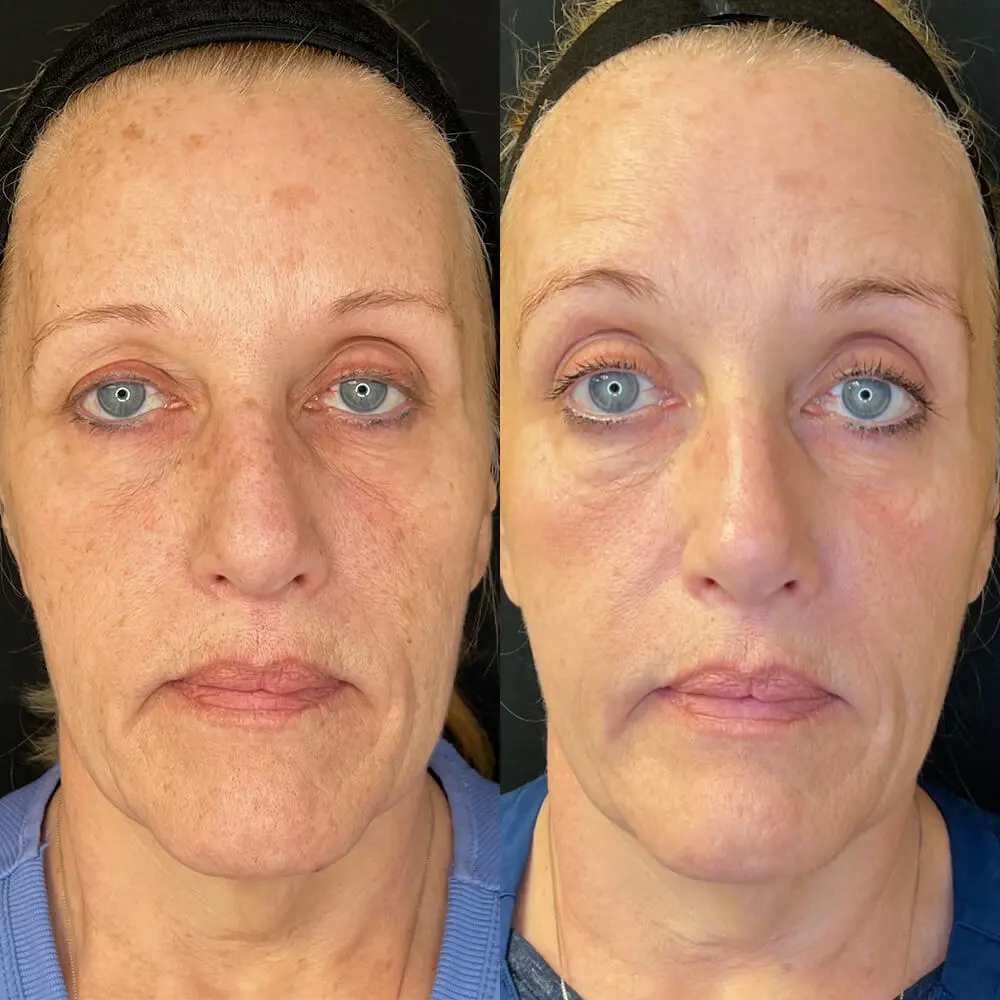
Laser resurfacing technology has evolved rapidly, offering more precise, customizable and effective options for improving skin quality. Among the most sought-after treatments to address skin concerns are HALO hybrid fractional laser and the Fraxel fractional lasers. These two advanced options offer distinct approaches targeting concerns such as skin texture, fine lines, pigmentation and overall tone.
While both treatments deliver noticeable skin rejuvenation, they work in different ways. Understanding how Halo vs. Fraxel lasers compare in technology, results, downtime and who are ideal candidates can help you choose the best option that best aligns with your skin concerns and lifestyle.
Let’s explore the key differences between Halo vs. Fraxel lasers so you can confidently determine which treatment may be right for you.
Learn About: What Is a Body Lift: Questions to Ask Your Surgeon Before Scheduling
What the HALO Laser Treatment Is
The HALO laser represents a modern approach in laser skin resurfacing technology. The HALO is a hybrid fractional laser which means the system combines two laser wavelengths in a single treatment session to address both surface and deeper skin issues. The treatment name reflects its hybrid design that merges ablative and non-ablative technologies.
This dual wavelength allows providers to address both surface-level concerns like texture and pigmentation while also stimulating deeper collagen production. This dual wavelength design distinguishes HALO from the traditional fractional laser systems and contributes to its reputation for delivering powerful results with controlled downtime.
Hybrid Fractional Laser vs Fraxel Technology
When comparing hybrid fractional laser vs. Fraxel technology, the key difference lies in how each system delivers energy into the skin.
HALO (Hybrid Fractional Laser)
HALO uses both ablative and non-ablative wavelengths simultaneously with each pass.
This dual approach allows the treatment to:
- Improve texture, fine lines and pigmentation at the surface
- Stimulate collagen remodeling deeper within the dermis
- Treat multiple layers of the skin in one appointment
- Offer more customizable intensity and downtime options
Because both wavelengths fire at once, targeting different skin depths at the once, HALO can deliver comprehensive results more efficiently and often with fewer overall sessions compared to non-ablative only devices.
Fraxel (Traditional Non-Ablative Laser)
Traditional Fraxel devices use non-ablative technology only. This technology penetrates beneath the skin surface to stimulate collagen without removing outer layers.
Fraxel is effective for:
- Mild to moderate texture concerns
- Early signs of aging
- Pigmentation irregularities
- Preventative skin maintenance
Because Fraxel does not remove damaged surface skin, Fraxel may require multiple sessions to achieve results comparable to hybrid systems such as HALO.
Dual Wavelength Capabilities of HALO
HALO operates at two specific wavelengths: 1470nm and 2940nm.
- 1470nm (non-ablative) penetrates deeper layers to stimulate collagen, strengthen skin structure and improve overall firmness
- 2940nm (ablative) removes addresses surface-level concerns such as rough texture, discoloration and visible skin imperfections by removing damaged outer skin layers
One of the key advantages of HALO is the adjustable wavelength ration. Providers can adjust the ratio of ablative to non-ablative energy based on your concerns.
Providers can increase:
- Ablative energy for more aggressive texture resurfacing
- Non-ablative energy for deeper rejuvenation
This customization capability makes HALO adaptable to treat a variety of skin conditions with tailored recovery times, all within a single device.
Treatment Coverage and Depth Control
HALO creates controlled microscopic treatment zones while leaving surrounding tissue intact. This fractional approach supports faster healing compared to fully ablative lasers. This fractional technology combined with dual wavelengths offers:
- Larger surface area coverage per pass than older laser systems
- Shorter treatment sessions for full face or targeted areas
- Depth control allowing customizable outcomes ranging from light refreshers to deeper resurfacing
This adaptability makes HALO ideal for addressing concerns such as sun damage, pigmentation, fine lines, enlarged pores and uneven skin texture.
What the Fraxel Laser Treatment Is
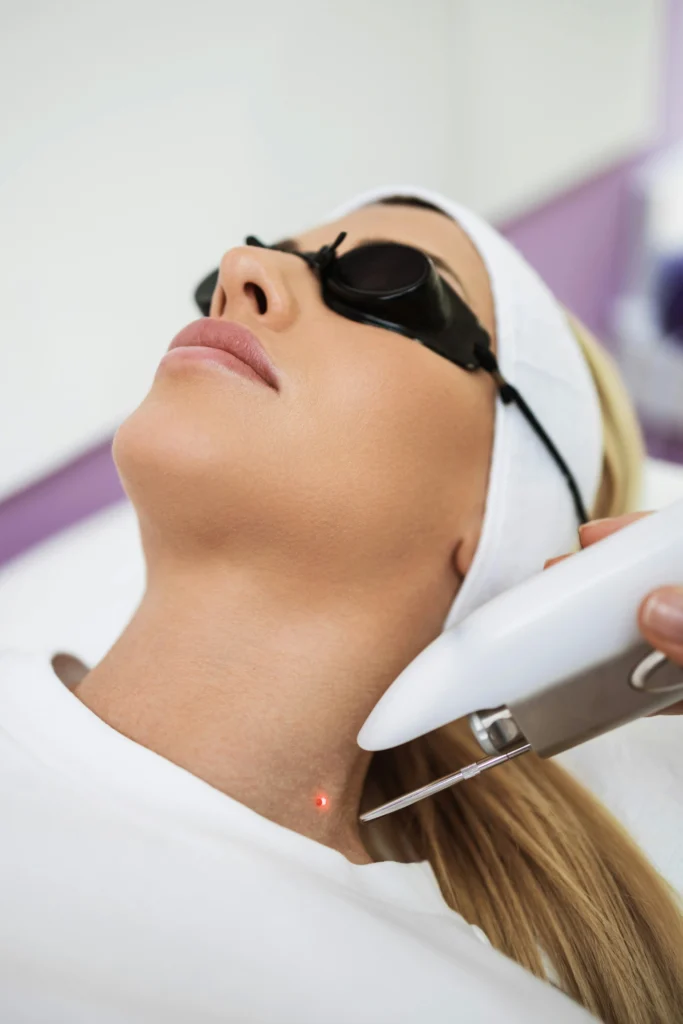
Fraxel laser technology is one of the most established and trusted technologies in non-ablative skin resurfacing. Known for its ability to rejuvenate the skin with minimal downtime, this non-ablative fractional laser works by stimulating your skin’s natural healing response to improve texture, tone, fine lines and pigmentation over time.
Unlike ablative lasers which remove surface layers of the skin, Fraxel targets deeper tissue, beneath your skin’s surface to improve texture and tone, and will keep the outer surface layer intact. This makes Fraxel a popular choice for patients seeking a gradual, natural looking improvement.
Fractional Resurfacing Mechanism
Fraxel uses fractional laser technology, delivering energy in thousands of microscopic treatment columns. Each microcolumn penetrates to controlled depths in the dermis while leaving surrounding tissue untouched. This design allows the skin to heal more quickly than with fully ablative resurfacing, making fractional lasers a preferred option for patients who want results without extended recovery.
As these micro-injuries active the body’s repair mechanisms, the skin responds to these microscopic treatment zones by producing new collagen and elastin, improving:
- Overall skin texture
- Fine lines and wrinkles
- Sun damage and pigmentation
- Acne scare and other textural irregularities
This process gradually improves skin quality over several weeks following treatment.
This controlled fractional approach allows for targeted correction with reduced downtime compared to traditional ablative lasers. Untreated areas between columns speeds healing and minimizes downtime.
Microscopic Treatment Zones (MTZs)
Every Fraxel pulse creates a tiny microscopic treatment zone (MTZ) which is a narrow column of treated tissue thermal energy surrounded by healthy, untreated skin. These microscopic treatment zones are extremely small, often only a fraction of a millimeter in width, allowing for precise coverage and predictable results..
Providers are able to adjust density, depth and energy settings based on your concerns:
- Higher density allows for more aggressive resurfacing
- Lower density allows for gentler treatments with faster recovery
Multiple passes are used to achieve appropriate coverage density.
As Fraxel relies solely on non-ablative wavelengths, it generally requires multiple treatment sessions to achieve the same level of improvement that hybrid systems like HALO can deliver in fewer sessions.
Natural Healing Timeline
Fraxel results develop gradually as the skin undergoes natural regeneration. After treatment, the body replaces damaged tissue with new, healthy cells while ongoing collagen remodeling enhances results for months.
Patients can expect:
- Early improvements within the first week as rough texture softens and surface texture smooths.
- Progressive enhancement over three to six months as new collagen forms
- Natural-looking results that improve steadily rather than suddenly
Most treatment plans include three to five treatment sessions spaced four to six weeks apart allowing the skin to recover fully between visits. Each session builds upon the last, creating cumulative improvement in tone, texture and overall skin quality.
How HALO vs. Fraxel Laser Compare in Treatment Results

Both HALO and Fraxel address common skin concerns and improve skin tone, texture and overall quality but differ significantly in how they deliver results. Your ideal option depends on your skin concerns, goals and how much downtime you can accommodate.
BBL vs Fraxel vs Halo for Pigmentation
Pigmentation correction varies widely depending on the energy source and depth of treatment. Each technology approaches pigmentation issues differently.
Fraxel targets pigmentation by delivering non-ablative fractional energy into the deeper skin layers breaking up melanin below the skin surface.
HALO addresses pigmentation at both surface and deeper levels simultaneously. The ablative wavelength removes pigmented surface cells while the non-ablative wavelength targets deeper discoloration and stimulates collagen.
BBL (BroadBand Light) differs from both as it uses intense pulsed light (IPL) rather than laser energy. BBL specifically targets pigmented lesions and vascular concerns and can treat:
- Brown spots
- Redness and vascular lesions
- Overall complexion improvement
In general,
- HALO is best for moderate to severe pigmentation or pigmentation concerns on patients with darker skin types
- Fraxel is best for mild to moderate pigmentation with minimal downtime
- BBL is best for surface level pigment and redness
Downtime and Recovery Differences
Downtime can vary significantly when comparing HALO vs. Fraxel laser treatments due to their different technologies.
Fraxel downtime for most patients typically involves three to four days of redness and mild swelling. Your skin may feel rough or “bronzed” sandpaper-like for several days after Fraxel. Flaking may occur as the new skin develops.
HALO recovery depends on the treatment intensity selected. Mild settings have downtime similar to Fraxel while moderate to aggressive treatments may require up to one week of redness, swelling and peeling.
HALO patients often experience more visible shedding which reflects the ablative resurfacing removes the outer damaged skin. This visible shedding indicates the treatment is working.
Both treatments allow most patients to return to normal activities within a week. However, you should avoid sun exposure and both treatments require strict sun protection during healing and avoidance of intense heat or sweating. Wearing protective sunscreen during healing is very important.
Number of Treatment Sessions Needed
Treatment frequency is another difference when considering the laser resurfacing comparison.
Fraxel typically requires 3 to 5 treatments spaced 4-6 weeks apart to allow complete healing. This extended timeline means results are gradual and full results build over several months.
HALO often produces comparable results in one to two sessions. The hybrid wavelength technology accomplishes more per session. Aggressive settings may require longer recovery but with few appointments.
HALO appeals to those who desire faster, more dramatic improvement with fewer sessions. This appeals to patients with limited time for appointments and recovery. However, more aggressive HALO settings require a longer recovery period after each session.
Your provider will recommend the number of sessions based on your skin condition, goals and desired downtime. Mild concerns may need only one HALO treatment while more significant damage generally requires multiple sessions of either technology.
Best Laser for Skin Resurfacing by Concern
Different skin concerns respond best to specific technologies.
For fine lines and texture, both HALO and Fraxel produce excellent results. HALO’s ablative component makes it more effective for rough texture and visible enlarged pore. The surface-level treatment immediately smooths skin.
For deeper wrinkles and significant sun damage, HALO’s dual wavelengths offer a more comprehensive approach by treating both and deeper tissues. The dual wavelength allows more dramatic improvement in fewer sessions.
For treating melasma and other stubborn pigmentation, Fraxel is preferred since the non-ablative approach reduces risk of post-inflammatory hyperpigmentation. Multiple sessions offer controlled improvement.
For general skin rejuvenation, maintenance and prevention, both HALO and Fraxel are excellent options for regular treatments to maintain skin quality without significant downtime.
Schedule Your Laser Resurfacing Consultation with Dr. Adrian Lo

Choosing between HALO vs. Fraxel laser is not a one-size fits all decision – a professional assessment of your skin type, concerns and treatment goals all determine which technology will deliver the best results for you. A personalized evaluation is essential and begins with a consultation. The practice of Dr. Adrian Lo offers advanced laser treatments customized to each patient’s needs.
During your consultation, your skin condition will be evaluated and your goals will be discussed. The technology that will produce the best aesthetic results for your specific situation will be discussed.
Anne Newbert BSN RN, a highly skilled aesthetic nurse on Dr. Lo’s team provides expertise in non-surgical rejuvenation including laser treatments. Her experience in advanced treatment planning and precise techniques helps ensure safe, effective and natural looking outcomes.
Philadelphia plastic surgery patients benefit from access to multiple technologies under one practice. This comprehensive approach allows for customized treatment plans.
Understanding the differences between HALO and Fraxel helps you make informed decisions about your skin care. Each technology offers unique advantages depending on your concerns and lifestyle.
Ready to Improve Your Skin?Schedule a personalized consultation to discuss which laser resurfacing option best addresses your skin concerns. Together, you will develop a treatment plan designed to help you achieve smoother, clearer, healthier-looking skin with confidence.